

The Overlooked Art: Mastering Patience in a Hyper-Speed World
Golden Hook & Introduction
SECTION
Nova: We’re told that speed is success. Faster internet, faster cars, faster careers. But what if our relentless pursuit of lightning-fast results is actually the slowest way to get anywhere truly meaningful?
Atlas: Whoa, Nova, that’s a pretty bold claim to kick us off! It feels like everything around us, from our apps to our ambitions, is screaming "faster, faster, faster!" So, are you saying we’ve been lied to?
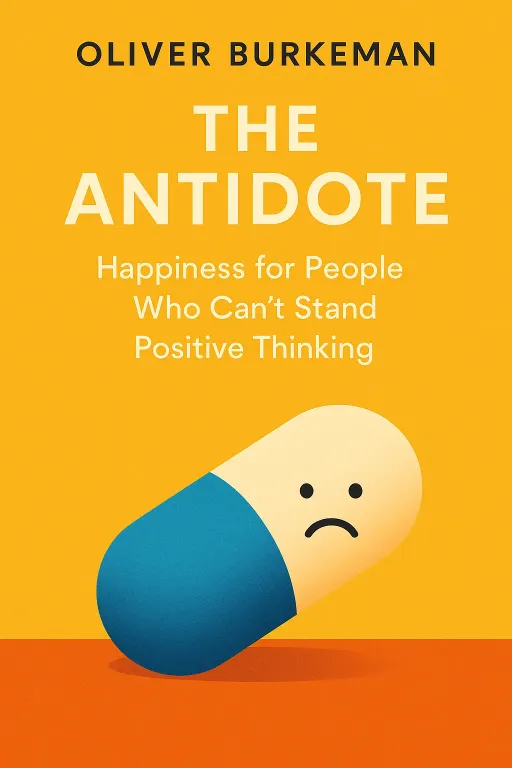
Nova: Not lied to, Atlas, but perhaps… misdirected. That’s the radical reframe we’re exploring today, drawing insights particularly from Oliver Burkeman’s and Ryan Holiday’s. What's fascinating about Burkeman is his background as a journalist, meticulously dissecting self-help culture, which gives a really grounded, skeptical yet profoundly helpful perspective. He doesn’t just tell you to be happy; he shows you a more resilient path.
Atlas: I like that. A journalist taking on happiness, that’s a fresh angle. It suggests he’s seen a lot of the superficial advice out there and is digging deeper.
Nova: Exactly. And both authors, in their own ways, reveal that our modern obsession with constant motion creates a massive blind spot: we overlook the profound, transformative power of patience. We think slowing down is a weakness, but it’s often the fastest path to genuine progress and inner peace.
The Hyper-Speed Blind Spot: Why Our Culture Misses the Power of Patience
SECTION
Atlas: Okay, so a blind spot. I can definitely relate to feeling that constant pressure. It’s like we’re all runners in a race where no one told us the finish line moved, or that maybe we should have walked some of it. What are some of the hidden costs of this hyper-speed culture?
Nova: It's a fantastic analogy, Atlas. Think of it like this: imagine a gardener who's planted a seed. They’re so impatient for it to grow, they keep digging it up every day to check on its progress, to see if the roots are forming, if a sprout is emerging. What happens?
Atlas: Oh, I know that feeling. The seed never gets a chance to establish itself. It dies from constant disturbance.
Nova: Precisely! And that's what we often do with our ideas, our relationships, our careers. We initiate a project, then before it has a chance to develop, we're already re-evaluating, pivoting, or abandoning it because we're not seeing "instant gratification." We rush decisions, push for quick wins, and then find ourselves having to backtrack, fix mistakes, or restart entirely. The "fast" path often leads to more mistakes, more rework, and ultimately, a slower, more frustrating journey.
Atlas: That’s going to resonate with anyone who’s ever tried to force a creative project or even just rushed an email and hit send too soon. But Nova, isn't being fast often necessary in today's world? How do you even to slow down when the whole system is built for speed? When your inbox is overflowing, and deadlines are looming?
Nova: That’s the critical tension, isn't it? Our culture has conditioned us to believe that speed equates to productivity and success. We see "busyness" as a badge of honor. But Burkeman and Holiday both highlight that this isn't true productivity; it's often frantic activity masking a lack of clarity. The blind spot is thinking that is always better. The cost is often deeper thinking, genuine connection, and robust, lasting solutions. We sacrifice depth for superficial breadth. The "deep question" for all of us is: where in your week could you intentionally slow down and allow patience to guide your next decision?
Atlas: That’s a tough question, because it feels like there’s nowhere! But I get your point about the superficiality. It’s like eating fast food versus a slow-cooked meal. One fills you up quick, the other nourishes you deeply. So, if frantic acceleration is often a trap, what's the actual antidote? What do these authors suggest we do instead of just speeding up?
Embracing Stillness: The Path to Resilient Happiness and Clearer Decisions
SECTION
Nova: That's a perfect segue, Atlas. The antidote isn't just "go slow" for the sake of it, but rather to cultivate qualities like stillness and acceptance. Burkeman, in, challenges the pervasive idea that we must always be positive, always optimistic. He argues that embracing negative emotions—acknowledging uncertainty, accepting setbacks—can lead to a more realistic and resilient form of happiness. It's not about being happy challenges, but finding a deeper sense of contentment understanding and accepting them.
Atlas: That sounds almost counter-intuitive, Nova. Embracing negative emotions? My whole life I’ve been told to "look on the bright side" or "just think positive." What do you mean by resilient happiness?
Nova: He means a happiness that isn't fragile, that doesn't shatter at the first sign of trouble. Instead of fighting against reality, Burkeman suggests leaning into it. When you accept that life is uncertain, that things will go wrong, that you'll experience sadness or anxiety, you stop wasting energy on futile resistance. This patient acceptance allows you to respond more effectively, rather than being constantly thrown off balance. It’s about building a psychological immune system.
Atlas: So, it’s not about being a Debbie Downer, but about being realistic, and that realism actually makes you stronger? I can see that. And how does Ryan Holiday’s "Stillness Is the Key" tie into this? Is it just about meditating?
Nova: Not just meditating, though that can be a part of it. Holiday draws on ancient philosophy, particularly Stoicism, to argue that stillness—mental and spiritual calm—is not inaction, but a profound source of power. He shows how cultivating patience and quiet reflection leads to clearer thinking, better decisions, and greater self-control. Think of it like a deep, still lake versus a turbulent, choppy one. Which one can you see clearly through?
Atlas: The still lake, obviously. It’s amazing how much wisdom is in that simple image. But how does someone in a high-pressure environment, say, a startup founder with a thousand things pulling at them, actually this? Without just falling behind, or looking like they're slacking off?
Nova: That's the real challenge, and where the "art" of patience comes in. It's about intentionality. For a founder, it might mean dedicating the first 30 minutes of their day to quiet reflection, planning, or simply a walk, before diving into their inbox. Or, when faced with a critical decision, instead of reacting immediately, they might consciously "sleep on it," or take a walk to gain perspective, rather than letting urgency dictate their response. It’s a deliberate choice to create space for clarity. Holiday highlights historical figures, from Abraham Lincoln to Seneca, who carved out moments of stillness in profoundly chaotic times to make their most impactful decisions. It’s about understanding that sometimes, the most productive thing you can do is do more.
Atlas: That makes me wonder, how does this link back to the deep question you posed earlier? Where in my week could I intentionally slow down? Because it feels like if I did that, I'd just be piling more onto my plate for later.
Nova: It’s not about adding more, Atlas, but about making the time you have more effective. If you intentionally slow down to make one critical decision, that decision is likely to be better, saving you time and stress down the line. It's about prioritizing depth over speed, quality over quantity. It's about understanding that often, the of patience is what creates the pile-up in the first place.
Synthesis & Takeaways
SECTION
Atlas: So, it’s not just about waiting, it’s about a mindful, strategic approach to life. It’s reframing what productivity and effectiveness truly mean. That’s actually really inspiring.
Nova: Absolutely. Patience is not passive; it’s an active, deliberate cultivation of wisdom. It’s understanding that true growth, true insight, and lasting success emerge from deep roots, not from frantically pulling at the leaves. In a world that often rewards instant gratification and superficial wins, cultivating patience and stillness becomes a strategic superpower—a profound act of rebellion against the noise and a pathway to a more resilient, meaningful existence. It's about creating space for clarity, for wisdom, and ultimately, for a more authentic and enduring sense of well-being.
Atlas: That’s a powerful reframe. So, for our listeners, where in your week could you intentionally slow down and allow patience to guide your next decision? Think about that for a moment.
Nova: And let that thought percolate. This is Aibrary. Congratulations on your growth!









