

The 'Always On' Mentality: Finding Your Edge Through Strategic Rest and Focus.
Golden Hook & Introduction
SECTION
Nova: What if the very thing you've been told defines success—being "always on," constantly available, perpetually busy—is actually sabotaging your most strategic thinking and long-term impact?
Atlas: Oh man, Nova, that hits home for anyone trying to lead a dynamic team or build a groundbreaking vision in today's environment. It feels like the air we breathe.
Nova: It absolutely does, Atlas. That relentless pace can feel overwhelming, leading to scattered focus and mental fatigue. And this isn't just about cranking out more tasks; it's about protecting your capacity for genuine strategic thought and sustained, meaningful impact.
Atlas: Right. For our listeners who are culture architects and resilient innovators, the idea of being constantly pulled in different directions is a daily reality. How do we even begin to combat that noise?
Nova: Well, today, we're diving into two brilliant minds who offer a powerful counter-narrative. First, we'll explore the insights of Cal Newport, an MIT-trained computer scientist and Georgetown professor who famously lives by the principles he advocates, actively avoiding social media and shallow work. Then, we'll turn to Ryan Holiday, who, interestingly, isn't an academic but a master of modern Stoicism, known for popularizing ancient wisdom for contemporary life.
Atlas: I'm curious how an academic's approach to focus and a philosopher's take on ancient wisdom converge to help someone leading a modern, high-stakes tech environment. It sounds like a fascinating blend.
Deep Dive into Core Topic 1: The Power of Deep Work
SECTION
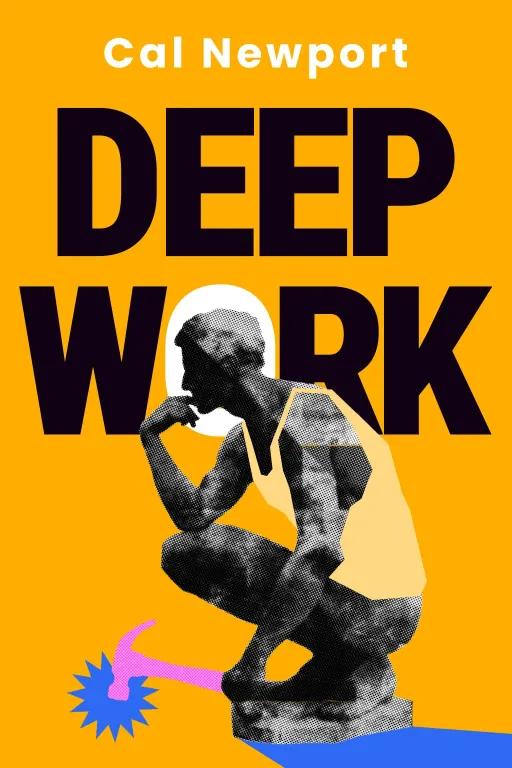
Nova: It is, and they actually complement each other beautifully. Let's start with Newport’s groundbreaking concept of "Deep Work." He argues that the ability to focus without distraction on a cognitively demanding task is, in our hyper-connected world, a true superpower.
Atlas: Undistracted focus. For a strategic builder who's constantly managing metrics and guiding growth, that sounds almost utopian. How is that even possible when the world is screaming for constant communication and immediate responses?
Nova: That's precisely the challenge he addresses. Newport isn't advocating for quiet weekends; he's talking about intentionally carving out blocks of time where you are fully immersed in a single, important task, free from all digital pings, email notifications, and open office interruptions. It’s about creating a 'maker's schedule' within a 'manager's schedule.'
Atlas: So, it's not just about trying harder to concentrate, it's about strategically designing your environment and your time to that concentration.
Nova: Exactly. He outlines strategies like scheduling your deep work, creating rituals around it—maybe it's a specific time of day, a particular location, or even a pre-work routine. He also champions embracing boredom, resisting the urge to constantly check your phone during downtime, allowing your mind to wander and process.
Atlas: That's a powerful idea. I can imagine a leader, instead of getting bogged down in reactive emails all day, uses a dedicated deep work block to tackle a complex strategic initiative, perhaps a new market entry strategy or a key product roadmap. The quality of thought in that hour would far outweigh hours of scattered effort.
Nova: Precisely. Think of a CEO, let's call her Evelyn, who used to spend her mornings constantly putting out fires and responding to every urgent email. She felt productive, but her strategic vision was always a step behind. After adopting deep work principles, she started blocking out two hours every Tuesday and Thursday morning. During these times, she'd turn off all notifications, close her office door, and focus solely on long-term planning, competitive analysis, or refining her company's core values.
Atlas: And the outcome? I'm guessing it wasn't just a calmer Tuesday.
Nova: Far from it. That protected time allowed her to develop a new, innovative product line that redefined her industry, rather than just reacting to competitors. She also found she was making clearer, more confident decisions because she had the mental space to think through implications deeply. It wasn't about working more hours; it was about the of thought she cultivated.
Atlas: So, it's not just about spending more hours; it's about the of those hours. For our listeners focused on metrics mastery, how do they even begin to track the of deep work? It’s not always immediately quantifiable, is it?
Nova: It's often not in direct output, but in the, the, and the. Evelyn saw it in her team's renewed sense of direction and her own reduced stress levels, which are hard to put a number on, but undeniably impactful.
Deep Dive into Core Topic 2: The Wisdom of Stillness
SECTION
Nova: And that commitment to quality, Atlas, actually leads us perfectly to our second guide, Ryan Holiday, who brings an ancient perspective to this modern challenge in "Stillness Is the Key." While Newport gives us the 'how to focus,' Holiday gives us the 'why and how to pause.'
Atlas: Stillness. That word often gets misinterpreted as 'doing nothing.' For a resilient innovator, that sounds like the opposite of impact. What does Holiday actually mean by 'stillness' in this context?
Nova: That's a great distinction. Holiday's stillness isn't about passive inaction; it's about cultivating mental, spiritual, and physical calm to achieve clarity, perspective, and inner peace amidst chaos. He draws from Stoicism, Buddhism, and other ancient philosophies, showing how leaders throughout history have used moments of quiet to gain profound insight.
Atlas: So, it's a proactive, strategic form of rest, rather than just collapsing from exhaustion. It's about creating space for the mind to process, to plan, to breathe, as our listeners often need.
Nova: Precisely. Think of Winston Churchill during World War II. Despite leading a nation through its darkest hour, he famously took afternoon naps and dedicated time to painting. These weren't luxuries; they were strategic tools that allowed his mind to process immense pressure, gain perspective, and return to his duties with renewed vigor. He understood that constant activity leads to burnout, not brilliance.
Atlas: That’s actually really inspiring. It’s what our user profile calls "reflection time"—to process, to plan, to breathe. It’s not about being less productive; it’s about being more and.
Nova: Exactly. Or consider Abraham Lincoln, who often sought solitude, walking alone or spending time reading and reflecting. These weren't idle moments; they were periods of profound mental recalibration that allowed him to navigate the immense moral and political complexities of the Civil War with unparalleled clarity and resolve.
Atlas: Wow, that gives me chills. It highlights how leadership presence, a key destination for our listeners, isn't just about what you say or do, but the inner calm and clarity you project, which can only come from this kind of intentional stillness.
Nova: It’s the foundation. Holiday argues that without stillness, we're simply reacting to external stimuli, constantly chasing the next urgent thing. With it, we gain the perspective to choose our responses, to think strategically, and to lead with wisdom rather than just speed.
Synthesis & Takeaways
SECTION
Nova: So, bringing these two powerful ideas together, Atlas, Nova's take is that true mental resilience and sustained impact come not from just working harder, but from working smarter consciously building in moments of profound focus and restorative stillness. It's the symbiosis of deep work and strategic rest that truly protects your capacity for strategic thought.
Atlas: That’s a masterful synthesis. For the strategic builder, it means their ultimate goal of sustainable success depends on this delicate balance. It's about fueling resilience, not just running on fumes. So, for the culture architect trying to integrate this into their team's ethos, what's one concrete, actionable step they can take this week to start? Something that doesn't require a complete overhaul of their entire company?
Nova: Start small, but start intentionally. This week, schedule a single 30-minute block dedicated solely to deep, focused work on one strategic task. And here’s the crucial part: free it from all distractions. Turn off notifications, close your email, put your phone away. Just 30 minutes.
Atlas: Just 30 minutes. That feels achievable. It's about demonstrating that commitment to focus and setting an example for their team, which directly builds leadership presence and fosters a culture of intentionality.
Nova: Absolutely. It's not about achieving perfection overnight, but about beginning the journey towards a more focused, more resilient, and ultimately, more impactful way of leading. What if those 30 minutes became the most valuable time in your week?
Atlas: I'm willing to bet they would. That’s a powerful challenge.
Nova: This is Aibrary. Congratulations on your growth!









