The 'Creative Block' is a Trap: Why You Need to Rethink Your Artistic Process.
Golden Hook & Introduction
SECTION
Nova: Hold on, I need to ask you something. What's the one thing you've been putting off, waiting for the perfect moment or a stroke of genius to start?
Atlas: Oh, Nova, you're hitting right where it hurts. I can think of at least three things just this morning! The pressure to have that 'aha!' moment before you even begin is immense.
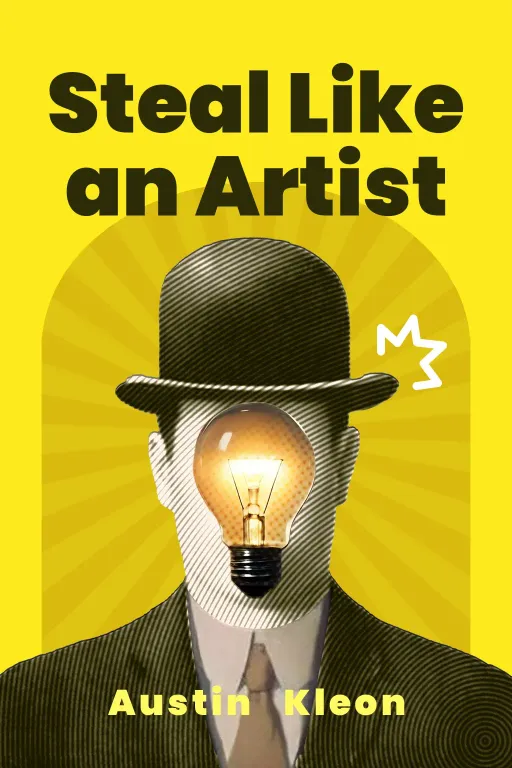
Nova: Exactly! And today, we're diving into an idea that fundamentally challenges that mindset. We're looking at the core ideas from Austin Kleon's "Steal Like an Artist" and Julia Cameron's "The Artist's Way," two books that have profoundly shifted how artists and creators view their work. Kleon's book, in particular, emerged from a viral lecture he gave which then exploded into this accessible manifesto that resonated with millions who felt stifled by the pressure to be purely 'original.'
Atlas: Ah, so we're talking about dismantling the very idea of a creative block. I'm already intrigued because I imagine a lot of our listeners, especially those who are curious learners and deep thinkers, often feel that paralysis when facing a new project.
Nova: Absolutely. And that leads us directly into our first core idea: the myth of the creative block and the illusion of pure originality.
The Myth of the 'Creative Block' and Pure Originality
SECTION
Nova: Many of us have this blind spot, this belief that creativity is some sudden, divine flash of genius. We wait for inspiration to strike like lightning, sitting there, staring at a blank page, or an empty screen, feeling utterly inadequate. It’s like a sculptor waiting for the marble to whisper the finished statue’s form, instead of picking up the chisel.
Atlas: That’s such a vivid image. I can almost feel the anxiety of that blank canvas. But wait, are you saying that waiting for inspiration is actually? Isn't that how some of the greatest ideas are born?
Nova: It's bad when it becomes an excuse for inaction. Austin Kleon, in "Steal Like an Artist," makes a pretty radical argument: nothing is truly original. All good creative work builds on what came before. Think of it like a chef. They don't invent new ingredients out of thin air. They take existing spices, vegetables, techniques, and they remix them, combine them in new ways to create something fresh and exciting. Or a musician sampling a beat from an old record to create a brand new track.
Atlas: So you're saying that the pressure to be 'purely original' is a trap? Because I imagine a lot of our listeners, especially in today's digital age, feel this immense pressure to constantly invent something, to stand out in a sea of content.
Nova: Precisely. This romanticized notion of the lone genius inventing something from scratch is actually a relatively modern idea. If you look back through history, artists openly learned from, copied, and built upon the masters who came before them, without shame. That's how traditions developed, how art evolved. Kleon's point is that embracing influence, rather than shying away from it, is incredibly liberating. It removes the paralyzing expectation that you have to conjure something out of nothing.
Atlas: That makes perfect sense. So, it's not about being a fraud, it’s about acknowledging your influences and then making something new them. But how do you go from acknowledging influences to actually creating something? That still feels like a leap for many of our listeners.
Embracing Influence and Consistent Practice as Creative Catalysts
SECTION
Nova: That’s a fantastic question, Atlas, and it leads us directly into our second core idea: how embracing influence and consistent practice are the true keys to unlocking your artistic process. If pure originality is a myth, then active borrowing and daily habits are our superpowers.
Atlas: Okay, so how do we actually 'steal like an artist' without just copying? Give me the playbook.
Nova: Kleon suggests actively seeking out influence. He talks about keeping a 'swipe file' – a collection of things that inspire you, whether it's an interesting turn of phrase, a striking photograph, or a clever marketing campaign. Then, you dissect it. Figure out it works. Don't just admire it; understand its mechanics. And then, you remix. You take elements from different sources and combine them in unique ways, adding your own perspective. It's like being a DJ for ideas, curating and blending sounds to create a new experience.
Atlas: I love that analogy, a DJ for ideas! But what about those moments when even with a full 'swipe file,' the internal well feels dry? That's where Julia Cameron comes in, right?
Nova: Exactly. Julia Cameron, in "The Artist's Way," offers a more internal, spiritual approach that beautifully complements Kleon's external methods. She introduces two cornerstone practices. The first are "Morning Pages."
Atlas: Oh, I've heard of these! Three pages of stream-of-consciousness writing, first thing in the morning. But honestly, three pages morning? What's the point if it's just rambling?
Nova: That's the magic, Atlas! It's not about crafting prose; it's about clearing the mental clutter, bypassing your inner critic, and simply getting whatever is in your head onto the page. It's a non-judgmental brain dump that helps you tap into subconscious thoughts and identify emotional blocks. It's like sweeping the dust out of your mental workspace so you can actually get to the creative work. Many acclaimed writers and artists swear by them.
Atlas: That makes a lot more sense. It's like a daily mental detox. And what's the second practice?
Nova: "Artist Dates." These are scheduled, solo excursions to experience something new and inspiring. It could be a visit to a museum, a walk in a new neighborhood, even just an hour alone at a coffee shop with a notebook. The key is that it's a date with your inner artist, a time to replenish your creative well and foster a sense of play and exploration.
Atlas: That sounds almost luxurious in our busy lives. So, on one hand, we have Kleon saying look outwards, steal, remix. On the other, Cameron says look inwards, clear your mind, nurture your soul. How do these seemingly different approaches work together?
Nova: They're two sides of the same coin, really. Kleon gives you permission and a method to engage with the external world of ideas. Cameron gives you the tools to ensure your internal world is clear and nourished enough to and those influences, and then to bravely put your own spin on them. True creativity, as Nova's take suggests, isn't about waiting for a mythical muse to strike; it's about consistent practice and courageous borrowing. It's about actively engaging with the world and with your own inner landscape.
Atlas: That's a powerful synthesis. It's not passive consumption, it's active engagement. And for someone who isn't necessarily in a traditional 'creative' field, like a software engineer or a business strategist, how do these ideas translate? How do they 'steal like an artist' or do 'morning pages' in a way that fuels their innovation?
Nova: It's completely applicable. A software engineer can 'steal' elegant code structures, design patterns, or problem-solving methodologies from open-source projects or other successful applications. They then remix them for their own unique challenges. Morning Pages can help anyone clear their mind of daily anxieties or strategic dead ends, allowing fresh solutions to emerge. Artist Dates could be exploring a new technology conference, visiting a unique local business, or even just spending time in nature to spark new connections. It's about cultivating a mindset of curiosity and consistent engagement.
Synthesis & Takeaways
SECTION
Nova: So, what we've really explored today is how the concept of a 'creative block' is often self-imposed, born from a misunderstanding of how creativity actually works. It's not about waiting for a singular, monumental flash. It's about a continuous, iterative process.
Atlas: It's liberating, honestly. It takes the pressure off. Instead of feeling like you have to invent the wheel, you're encouraged to build a better, more interesting vehicle with existing parts, and then drive it with a clear mind.
Nova: Exactly. True creative breakthroughs often come from the courage to borrow, to remix, and to cultivate daily habits that keep your mind fluid and open. It's the consistent, small actions – the 'Morning Pages,' the 'Artist Dates,' the active 'stealing' and remixing – that compound into significant creative output. It's a testament to the power of process over pure, mythical inspiration.
Atlas: That makes me wonder, Nova, and this is a question for all our listeners: What is one small idea you can openly 'borrow' or remix from an artist you admire this week? Don't overthink it, just try it.
Nova: Give it a shot. You might be surprised at what emerges when you stop waiting for the muse and start actively creating.
Atlas: Thanks for joining us on this journey to rethink creativity.
Nova: This is Aibrary. Congratulations on your growth!