

The Ever-Shifting Sands of Governance: Why Political Systems Are Never Static.
Golden Hook & Introduction
SECTION
Nova: You know, it’s a funny thing about history. We often look at monumental shifts—revolutions, collapses, new eras—and try to pinpoint that one charismatic leader, or that single spark that set everything ablaze.
Atlas: Oh, absolutely. The lone hero, the fateful decision, the dramatic speech. We love a good story with a clear beginning and end. It makes sense, right? We’re wired for narrative.
Nova: We are. But what if I told you that often, those visible moments are just the surface ripples of much deeper, almost tectonic plates shifting beneath the political landscape? That the real drivers of change are far more structural, almost inevitable, than we care to admit?
Atlas: That’s a fascinating, almost unsettling thought. It implies a kind of determinism that flies in the face of our belief in individual agency, or even the power of a single policy change. So, you’re saying it’s less about a person pushing a domino, and more about the entire table slowly tilting?
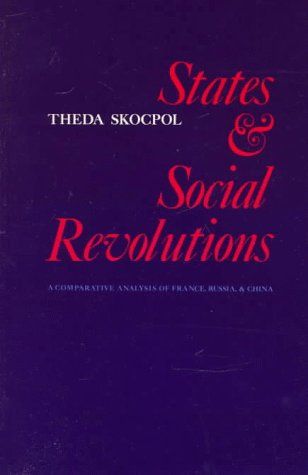
Nova: Precisely. And that’s exactly what we’re digging into today, inspired by some incredible thinkers. We’re talking about "The Ever-Shifting Sands of Governance: Why Political Systems Are Never Static." And we’ll be drawing heavily from two seminal works: Theda Skocpol’s "States and Social Revolutions" and Daron Acemoglu and James A. Robinson’s "Why Nations Fail."
Atlas: Skocpol, an intellectual powerhouse, wrote 'States and Social Revolutions' after a period of intense global upheaval, aiming to understand the underlying mechanics of revolution beyond just the actions of a few individuals. It was a really groundbreaking work for its time, challenging conventional wisdom about how these massive changes actually occur.
Nova: Absolutely. And Acemoglu and Robinson’s "Why Nations Fail" became a runaway bestseller, sparking huge debates globally because it offered such a clear, compelling framework for understanding economic and political inequality. It really provided a new lens for leaders, economists, and everyday citizens to see the world. It’s a book that’s frequently cited in policy discussions, and it fundamentally reshaped how many think about development.
Atlas: Wow. So we’re not just scratching the surface here. We’re going deep into the very DNA of political change. And I imagine a lot of our listeners, especially those who follow current events, are constantly trying to make sense of the chaos they see. These books sound like they offer a framework for that.
Nova: They do. And the core of our podcast today is really an exploration of why political systems are never static, constantly adapting, failing, or revolutionizing under the weight of internal and external forces. First, we'll explore the structural forces that ignite social revolutions, then we'll discuss how institutional choices dictate a nation's long-term destiny.
The Structural Drivers of Political Change
SECTION
Nova: So, let’s start with Skocpol and "States and Social Revolutions." She’s not interested in the 'great man' theory of history, or even just the motivations of revolutionaries. Instead, she argues that social revolutions—like those in France, Russia, and China—aren’t born out of sudden popular discontent alone.
Atlas: Okay, so it’s not just angry peasants with pitchforks, or a charismatic leader rallying the masses. That’s usually the story we get. What does she say is really going on?
Nova: She argues that these profound transformations are driven by a confluence of structural conditions. Think of it like a perfect storm. You need a state apparatus that is both highly centralized and highly vulnerable to external pressures, especially from more powerful nations.
Atlas: Hold on. So, a strong state, but also a weak state? That sounds like a contradiction.
Nova: It seems counterintuitive, right? But here’s the nuance: a centralized state has the power to implement widespread changes, but its very centralization can make it brittle. When it faces intense international competition—say, military threats or economic pressure—it often tries to extract more resources from its population and elite classes to compete.
Atlas: Ah, I see. So it’s like a pressure cooker. The state needs more from its people, but its ability to get it is compromised by its own internal structure and external threats.
Nova: Exactly. And this is where the agrarian structures come in. Skocpol emphasizes the role of a large, disenfranchised peasantry, often with traditional communal structures that allow them to act collectively once the opportunity arises. Plus, you need an elite class that is either unwilling or unable to defend the state, perhaps because their interests are no longer aligned with it, or they’re too fragmented.
Atlas: So, you have a state that's trying to extract more, but is weakened by international pressures. You have a massive, organized peasant class ready to move, and an elite that can't or won't prop up the old order. That's a recipe for disaster. Can you give us an example?
Nova: Let's look at Imperial Russia before 1917. The Tsarist state was highly centralized, but it was also deeply vulnerable on the international stage, especially after its defeat in the Russo-Japanese War and then the devastating losses in World War I. These external pressures forced it to try and extract more from an already struggling populace, particularly the peasantry.
Atlas: So the war really exposed the state's weaknesses and amplified its internal contradictions.
Nova: Precisely. The state’s attempts to modernize and compete internationally, especially militarily, led to policies that further alienated the peasantry and even parts of the nobility. The peasants, who had long-standing grievances over land and serfdom, had these communal village structures, the 'mir,' which, ironically, provided a ready-made organizational base for collective action when the moment came.
Atlas: Wow. So the very structures that had held society together for centuries became the conduits for its undoing. And the elite?
Nova: The Russian nobility, while powerful, was deeply divided. Many saw the writing on the wall but were too internally fragmented or too tied to their own narrow interests to effectively support or reform the Tsarist regime. When the crisis hit, the state couldn't count on their unwavering support. It was a perfect, tragic ballet of structural vulnerabilities.
Atlas: So it’s less about a singular event, and more about the systemic accumulation of these vulnerabilities until a breaking point?
Nova: Exactly. Skocpol's genius is showing us that these revolutions aren't just about revolutionary ideology or individual heroism. They are about the of the old regime's administrative and coercive capacities, often triggered by external crises, which then opens a window for societal groups, particularly organized peasants, to fundamentally reshape the state. It’s a profound shift in perspective. It challenges us to look beyond immediate causes and see the deeper, slow-moving currents that eventually erupt.
Atlas: That’s a really powerful way to frame it. It makes you realize that what we see on the news today, those protests, those political struggles, might be symptoms of something much larger brewing under the surface. It's not just about what's happening, but the conditions that it to happen.
Inclusive vs. Extractive Institutions: The Blueprint for Prosperity or Peril
SECTION
Nova: And that naturally leads us to the second key idea we need to talk about, which often acts as a counterpoint to what we just discussed: the long-term trajectories of nations, and why some thrive while others stagnate. Acemoglu and Robinson, in "Why Nations Fail," argue it all boils down to institutions.
Atlas: Institutions, as in, the rules of the game? The political and economic frameworks that societies operate within?
Nova: Exactly. They propose a powerful, yet simple, dichotomy: inclusive institutions versus extractive institutions. Inclusive institutions are those that allow and encourage participation by the great mass of people in economic activities that make the best use of their talents and skills. They feature secure private property rights, an impartial system of law, and a provision of public services that provides a level playing field.
Atlas: So, basically, a system where everyone has a fair shot, can innovate, and their hard work is protected and rewarded. That sounds like a recipe for prosperity.
Nova: It is. Think of countries like the United States, Great Britain, or South Korea. While imperfect, their institutions over time have generally trended towards inclusivity, fostering innovation, education, and broad economic participation. This creates a virtuous cycle of growth and stability. People are motivated to invest, create, and invent because they know their efforts will be protected and they can reap the rewards.
Atlas: But then there’s the other side: extractive institutions. I imagine that’s where things go wrong.
Nova: Catastrophically wrong. Extractive institutions are designed to extract wealth and resources from the many for the benefit of a small elite. They lack secure property rights, enforce laws selectively, and create barriers to entry for economic activity. They concentrate power and economic opportunity in the hands of a few.
Atlas: So, in that system, if you’re not part of the elite, you’re essentially just a resource to be exploited. And why would anyone innovate or work hard if their gains can just be taken away?
Nova: They wouldn’t. Or they would do so only under duress, leading to stagnation, poverty, and often, political instability. Acemoglu and Robinson use a compelling example: the contrast between Nogales, Arizona, and Nogales, Sonora, right on the U. S.-Mexico border.
Atlas: I’ve heard of this! Two towns, same name, same culture, same geography, but wildly different outcomes.
Nova: Precisely. On the U. S. side, Nogales, Arizona, is relatively prosperous, with good public services, functioning institutions, and opportunities. On the Mexican side, Nogales, Sonora, is much poorer, with higher crime, less reliable public services, and fewer economic opportunities.
Atlas: And the authors attribute this entirely to the institutions on either side of that invisible line?
Nova: Fundamentally, yes. The people living in both towns share common ancestry, culture, and even climate. The only significant difference is the political and economic institutions they live under. On the U. S. side, inclusive institutions foster a dynamic economy. On the Mexican side, a legacy of extractive institutions has historically limited opportunity and concentrated power. It's a stark, real-world experiment demonstrating their thesis.
Atlas: That’s a really powerful illustration. It makes you realize that the 'luck of birth' isn't just about geography, but about the institutional framework you're born into. It’s not about the people, but the rules of the game.
Nova: It’s not about culture, or climate, or even inherent industriousness. It's about whether the system allows people to flourish. And what’s fascinating is that extractive institutions are often very fragile themselves. They can lead to intense power struggles among the elite, as everyone vies for control of the extraction mechanism, often resulting in coups, civil wars, and further instability.
Atlas: So, the very thing designed to enrich a few often ends up destroying the whole system, even for them. It’s a self-defeating strategy in the long run.
Nova: Exactly. It creates a vicious cycle of poverty and political turmoil. And that’s why understanding these deep-seated institutional differences is so crucial for understanding the long-term trajectories of nations.
Synthesis & Takeaways
SECTION
Nova: So, bringing these two powerful ideas together, we see that political systems are truly never static. Skocpol shows us the structural pressures that can lead to revolutionary, dramatic change, often when states are brittle and externally challenged. Acemoglu and Robinson then explain why some systems are inherently more resilient and prosperous—those with inclusive institutions—while others are doomed to stagnation and fragility due to their extractive nature.
Atlas: That’s a profound synthesis. It’s like Skocpol gives us the 'how' of breakdown, and Acemoglu and Robinson give us the 'why' of long-term success or failure. It makes you wonder, looking at the world today, what subtle signs of systemic fragility or resilience are we missing?
Nova: I think the deep question for us all, as curious analysts and philosophical explorers, is to look beyond the headlines. Are we seeing increasing external pressures on states that make them more brittle? Are there growing signs of extractive practices, even in seemingly inclusive systems, that could undermine their long-term stability?
Atlas: Or, conversely, are there small, unnoticed movements towards more inclusive institutions, even in unexpected places? It’s not always about the big, dramatic pronouncements, but the quiet, incremental shifts in how power is distributed and how opportunities are shared. For our listeners who are trying to make sense of the world, this framework is invaluable.
Nova: It truly is. It encourages us to embrace the nuance, to understand that not all answers are absolute, and that the journey of inquiry itself is the insight. We should discuss our findings, share our evolving understanding with others, and keep probing below the surface.
Atlas: Absolutely. Because understanding these foundational truths of society is the first step towards building more resilient, more equitable systems. And that’s a quest for meaning I think we can all get behind.
Nova: This is Aibrary. Congratulations on your growth!