Mastering Empathetic Leadership: Guiding Teams with Heart and Vision
Golden Hook & Introduction
SECTION
Nova: Atlas, I was reading this wild stat the other day—something about how a significant percentage of leaders, when faced with a tough decision, default to what they others expect, rather than what they genuinely believe is right.
Atlas: Oh, I know that feeling. It's like navigating a minefield of expectations. You're trying to lead, but also trying not to step on any toes, which usually means you end up stepping on your own. It sounds like a recipe for exhaustion, honestly.
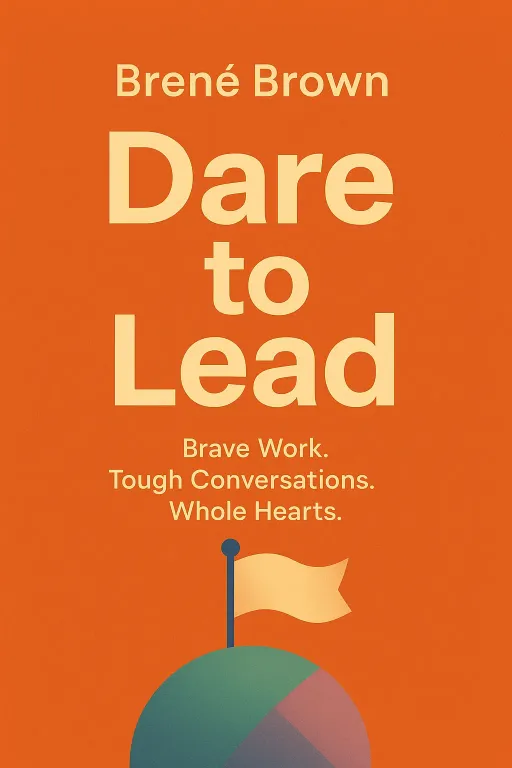
Nova: Exactly! And that's precisely why today we're diving into the powerful world of empathetic leadership, drawing insights from two phenomenal books: "Dare to Lead" by Brené Brown and "Start with Why" by Simon Sinek.
Atlas: Both widely acclaimed, and for good reason. Brown, a research professor from the University of Houston, became a cultural phenomenon after her TED Talk on vulnerability garnered millions of views. Her work is really about debunking myths around courage and leadership. Sinek, on the other hand, is a leadership expert who’s captivated global audiences with his simple yet profound concept of purpose-driven action, his own TED Talk has been viewed over 60 million times. These aren't just business books; they're blueprints for how to actually human and effective at the same time.
Nova: Absolutely. And the core of our podcast today is really an exploration of how empathetic leadership, driven by authenticity and a clear purpose, isn't just a soft skill, but a powerful, strategic imperative for truly inspiring and guiding teams. We'll explore the courage it takes to lead authentically by embracing vulnerability, then we'll discuss how articulating your core 'why' can cultivate an unshakeable culture of trust.
The Courage to Lead Authentically
SECTION
Nova: So let's start with "Dare to Lead" by Brené Brown. Her central argument is that courageous leadership isn't about being fearless; it's about leaning into discomfort, about rumbling with vulnerability. She identifies four skill sets: rumbling with vulnerability, living into our values, braving trust, and learning to rise. It's a complete paradigm shift for many.
Atlas: Whoa, "rumbling with vulnerability"? That sounds almost… aggressive, in a way. I mean, for a lot of people in high-stakes environments, vulnerability is seen as a weakness, an open door for others to exploit. How does Brown flip that script?
Nova: She argues that vulnerability is not weakness; it is our most accurate measure of courage. Think about it: every single act of courage requires vulnerability. When you have a tough conversation, when you ask for help, when you try something new and risk failure—that's all vulnerability. The "rumble" part is about having honest, tough conversations, recognizing emotions, and staying curious, even when it's uncomfortable. It's about being willing to show up fully, even when you can't control the outcome.
Atlas: So you're saying that the leaders who pretend to have all the answers, who maintain that stoic, unshakeable facade, are actually demonstrating a lack of courage? That's a pretty radical idea, especially in leadership circles where "strength" is often equated with emotional suppression.
Nova: Precisely. Brown's research shows that the most effective leaders are those who are willing to be seen, to be open about their struggles and their learning process. They model vulnerability, which then creates psychological safety for their teams. If the leader can admit they don't know everything, or that they're struggling with a challenge, it gives everyone else permission to do the same. This fosters innovation, problem-solving, and genuine connection.
Atlas: That makes me wonder, how does this play out in a practical sense? Say, for someone who leads a team, perhaps in a healthcare setting, where the stakes are incredibly high. How do you 'rumble with vulnerability' without eroding confidence or appearing indecisive?
Nova: It's not about emotional dumping or being perpetually unsure. It's about intentional vulnerability. For example, Brown talks about leaders sharing a personal, professional challenge they're currently navigating—within appropriate boundaries, of course. It could be as simple as saying, "I'm really struggling with how we're going to implement this new policy, and I'm open to ideas and perspectives." Or "I made a mistake on X, and here's what I learned."
Atlas: So it's less about being a wreck, and more about being human and transparent. I can see how that would build connection. It disarms people. When a leader shares a struggle, it makes them relatable, not some untouchable figure. It sounds like it cultivates a deeper sense of trust.
Nova: Exactly. And that leads us to the other skill sets. "Living into our values" means not just talking about values, but demonstrating them through behavior. "Braving trust" is about building trust through small, consistent actions, not grand gestures. And "learning to rise" is about resilience—how we recover from setbacks and failures. It's recognizing that failure is inevitable, but how we respond to it defines our leadership.
Atlas: That's powerful. I imagine a lot of our listeners, especially those driven by a deep desire to uplift others and make an impact, might feel a constant pressure to be perfect. The idea that leading with wholeheartedness, embracing discomfort, and admitting when you don't know something is actually a strength, that's a huge shift. It's almost counter-intuitive to what many are taught about leadership.
Nova: It is. And it aligns perfectly with the idea that true leadership isn't about power people, but about cultivating power people. It’s about creating an environment where everyone feels safe enough to contribute their best, knowing that their leader is also a human being navigating challenges.
Cultivating a Culture of Trust through 'Why'
SECTION
Nova: And this idea of authentic leadership, leading with heart, naturally flows into our second core concept from Simon Sinek's "Start with Why." Sinek posits that great leaders and organizations inspire action by communicating their 'why'—their purpose, cause, or belief—before their 'what' or 'how.'
Atlas: Ah, the Golden Circle! I remember watching his TED Talk. It's so deceptively simple. Most companies, most people, start with "what" they do, then "how" they do it. But Sinek argues that the truly inspiring ones, like Apple or Martin Luther King Jr., started from the inside out: their "why."
Nova: Right. He argues that people don't buy what you do; they buy why you do it. The 'what' is just proof of the 'why.' Think about a leader who is passionate about patient advocacy and healthcare policy. Their 'what' might be managing a team or developing new protocols. But their 'why' is to protect the vulnerable, to shape the future of care.
Atlas: So, if a leader can explicitly articulate that deeper purpose, that 'why,' it taps into something far more profound than just a task list or a job description. It connects on an emotional level.
Nova: Exactly! Sinek's research highlights that we're wired to respond to purpose. When you communicate your 'why,' you're speaking to the limbic brain, the part responsible for feelings, trust, and loyalty. The 'what' and 'how' appeal to the neocortex, the rational part, but that's not what inspires action or builds deep trust.
Atlas: That's fascinating. So, for a leader looking to empower their team and amplify their impact, especially in a field like healthcare policy where the mission is so critical, articulating their 'why' isn't just a nice-to-have; it's a strategic imperative. It's how you move from managing tasks to inspiring a movement.
Nova: Precisely. Take the example of a nurse manager. Their 'what' is overseeing patient care, scheduling, administrative duties. Their 'how' might be through efficient processes and evidence-based practice. But their 'why' could be "to ensure every patient feels seen, heard, and receives the highest quality of compassionate care." When that 'why' is clearly communicated and lived, it transforms the team's motivation. They're not just doing tasks; they're fulfilling a shared purpose.
Atlas: That gives me chills, honestly. It shifts the entire dynamic. It's the difference between clocking in and feeling like you're part of something bigger. And I can imagine that if a leader, who is inherently driven by a quest for impact, can articulate that 'why' for patient advocacy and broader healthcare policy, it would galvanize their team in an incredible way.
Nova: It absolutely would. It cultivates a culture of trust because people feel aligned, not just employed. They trust the leader's intentions, and they trust the shared mission. This kind of leadership creates an environment where people are not only willing to show up with vulnerability, as Brown describes, but are also deeply committed to a collective vision. It's about leading with both strength and compassion, a powerful act of self-care for the leader, too, because it aligns their work with their deepest values.
Synthesis & Takeaways
SECTION
Nova: So, when we bring these two powerful frameworks together, what emerges is a vision of leadership that is profoundly human and incredibly effective. It's about having the courage to lead authentically, embracing vulnerability not as a weakness but as a source of strength, and then grounding all of that in a clear, compelling 'why' that inspires and unites.
Atlas: It's almost like vulnerability is the soil, and the 'why' is the seed. You need that fertile ground of openness and authenticity for true purpose to take root and flourish. It makes people want to follow you, not because they have to, but because they believe in what you believe. It’s not just about managing people; it’s about inspiring them to become the best versions of themselves, both individually and collectively.
Nova: And for anyone out there, especially those who are resilient caregivers, strategic advocates, or compassionate leaders, these ideas are not just theoretical. They are practical tools. Dedicate 15 minutes daily to reflective journaling, not just about your tasks, but about your 'why' and moments of vulnerability. Document your insights, see your patterns. It's how you embrace your influence and shape the future of care. Your voice matters, and by leading with heart and vision, you truly amplify your impact.
Atlas: That's actually really inspiring. It’s a call to action to lead not just with your head, but with your whole self. It’s about building a legacy of impact and care that extends far beyond any single policy or project. It's about sustaining your vital work by nurturing your own well-being through authentic purpose.
Nova: Absolutely. This is Aibrary. Congratulations on your growth!