

Strategic Communication: Cultivating Influence and Engagement Across Your Empire
Golden Hook & Introduction
SECTION
Nova: Atlas, if I told you the secret to building an empire wasn't in the boardroom, but in the breakroom, what would you say?
Atlas: Whoa. My first thought is you’re trying to sell me a very expensive coffee machine. My second is, you’ve got my attention. Breakrooms? Really?
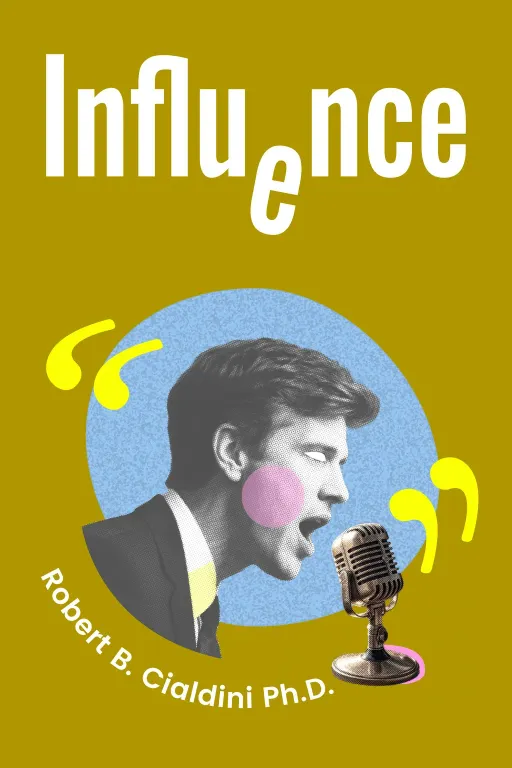
Nova: Absolutely. Because today, we’re talking about strategic communication, and how it’s the bedrock for cultivating influence and engagement across any vast enterprise. And we’re drawing from some truly foundational texts: Robert Cialdini’s "Influence: The Psychology of Persuasion," Simon Sinek’s "Start with Why," and "Crucial Conversations" by Patterson, Grenny, McMillan, and Switzler.
Atlas: That’s a powerhouse lineup! Cialdini's book, "Influence," is fascinating because it wasn't just some academic theory; he actually spent years undercover, immersing himself in sales trainings and marketing organizations to understand persuasion from the inside out. He didn’t just observe; he participated to uncover those universal triggers.
Nova: Exactly! It’s that deep, almost ethnographic approach that gives his work such incredible weight. And it’s a perfect starting point for understanding how an industrialist, someone running multiple complex operations, uses communication not just to convey information, but to truly shape narratives and drive collective action.
The Art of Influence: Speaking with Impact and Intent
SECTION
Atlas: Okay, so let’s dive into Cialdini’s "Influence." For someone who’s constantly juggling complex operations, building empires, what’s the immediate, most vital takeaway from his six principles?
Nova: For our listeners who are building and leading vast ventures, the most vital takeaway is understanding that influence isn't about manipulation; it's about understanding human psychology to foster genuine alignment. Let's take his principle of. It’s incredibly powerful. Cialdini observed how people are more likely to comply with a request if they’ve first received something.
Atlas: So, it’s like if I send someone a gift, they feel obligated to do something for me? That feels a little… transactional for empire-building.
Nova: That’s a great question, and it highlights a common misconception. It’s not about a quid pro quo. Think about it this way: a senior leader, an industrialist, might invest significant time and resources into mentoring a junior team, or generously sharing proprietary knowledge across different divisions without an immediate expectation of return. That act of giving, of genuine support and investment, builds a deep sense of obligation and trust. When that leader later needs cross-functional collaboration on a critical, high-stakes project, those teams are far more likely to go above and beyond.
Atlas: Oh, I see. So it’s not a direct 'I gave you this, now you owe me that.' It's more about cultivating a culture of generosity and support that, over time, creates a reservoir of goodwill. So when you need something, the readiness to reciprocate is already there. That’s a fundamentally different way of looking at it. It's about proactive value creation.
Nova: Exactly. It’s about building social capital. Another critical principle for industrialists is. People tend to do what they see others doing, especially those they perceive as similar or authoritative. Cialdini showed how something as simple as putting a sign in a hotel bathroom saying "75% of guests reuse their towels" was far more effective than an environmental appeal alone.
Atlas: So, for a leader, that means demonstrating the desired behavior themselves, right? Leading by example?
Nova: Absolutely, that's part of it. But it also means consciously showcasing successes and desired behaviors within the organization. If an industrialist wants to foster a culture of innovation, they don't just announce it. They highlight specific teams that successfully prototyped a new idea, celebrated their failures as learning opportunities, and broadcast the positive outcomes. Suddenly, others see that innovation is not just encouraged, but actively practiced and rewarded. It creates a powerful, self-reinforcing loop.
Atlas: That makes perfect sense. It’s about shaping the perception of what's normal and successful within your organization. If everyone sees their peers embracing a new, efficient process, they're more likely to adopt it themselves, even if they were initially resistant. It’s almost like a subtle, yet powerful, form of internal marketing for behavior.
Enhancing Your Leadership Voice
SECTION
Nova: And this leads us beautifully into Simon Sinek’s "Start with Why." While Cialdini gives us the of influence, Sinek really zeroes in on the and behind truly inspirational leadership communication.
Atlas: Oh, I love Sinek. His whole Golden Circle concept – why, how, what – always resonated with me. But for someone leading massive, diverse operations, where the "why" might seem obvious or get lost in the day-to-day, what's a practical application?
Nova: The practical application, especially for an industrialist building an empire, is to constantly articulate the of every venture, not just its products or profits. Sinek uses the example of Apple. They don't just say, "We make great computers." They start with "Everything we do, we believe in challenging the status quo, in thinking differently." That's their why. The computers are just a manifestation of that belief.
Atlas: So, for an industrialist with, say, a sprawling manufacturing plant, an AI startup, and a sustainable energy project, it’s not enough to say, "We build cars," "We develop software," "We generate power." You need an overarching "why" that connects them all.
Nova: Exactly. It’s about unifying diverse initiatives under a single, compelling banner. Why are we building these businesses? What enduring value are we creating for the world? What problem are we fundamentally solving? When leaders communicate from that "why," it doesn't just inspire loyalty among employees; it attracts the right talent, the right partners, and even the right investors who resonate with that purpose. It moves beyond transactional relationships to emotional connections.
Atlas: That’s actually really inspiring. It’s about giving meaning to the work, beyond just the bottom line. I imagine a lot of our listeners, who are driven by growth and enduring value, would find that particularly resonant. But what happens when the stakes are incredibly high? When you’re dealing with a crisis, a major acquisition, or a contentious union negotiation?
Nova: That’s where "Crucial Conversations" comes in. This book is the tactical playbook for those moments when opinions vary, stakes are high, and emotions run strong. For an industrialist, these aren't just one-off events; they're daily occurrences across their diverse portfolio.
Atlas: So, what’s the most powerful tool from "Crucial Conversations" that a leader in those high-stakes moments should immediately reach for?
Nova: It’s the concept of "Start with Heart." Before you even open your mouth, you need to get clear on what you want for yourself, for the other person, and for the relationship. The authors argue that too often, in crucial conversations, we get sidetracked by wanting to win, wanting to punish, or wanting to avoid conflict.
Atlas: That makes so much sense. I’ve definitely been in situations where I realized halfway through a tough conversation that my goal had shifted from solving the problem to just proving I was right.
Nova: And that’s precisely what "Start with Heart" aims to prevent. By consciously asking, "What do I really want?" you steer the conversation back to productivity. Another key tool is "Make it Safe." When people feel unsafe, they either resort to silence or violence. Neither leads to good outcomes.
Atlas: So, making it safe means creating an environment where people feel comfortable sharing even controversial or difficult information without fear of retribution? But how do you actually that in the heat of the moment?
Nova: You do it by demonstrating Mutual Purpose and Mutual Respect. For instance, if a division head is pushing back hard on a new strategic directive, instead of dismissing their concerns, a leader might say, "I understand we both want this company to thrive, and I appreciate you raising these points. Let's explore how we can achieve our shared goal while addressing your concerns." That immediately establishes mutual purpose and respect, lowering the emotional temperature and opening the door for genuine dialogue rather than defensive posturing. It’s about inviting them into the conversation as a partner, not an adversary.
Synthesis & Takeaways
SECTION
Nova: So, when we look at Cialdini, Sinek, and "Crucial Conversations" together, what emerges is a powerful, integrated approach to strategic communication for the industrialist. It's not just about what you say, but how you frame it, why you say it, and the environment you create for it to be received.
Atlas: What really stands out to me is how these books, while seemingly different, all point to the profound impact of intentionality in communication. Whether it's understanding the psychology of persuasion, articulating your core purpose, or navigating high-stakes dialogues, it all comes down to being deliberate and empathetic.
Nova: Absolutely. For someone building an empire, communication is the ultimate leverage. It's the difference between a command that's merely obeyed and a vision that's passionately embraced. It’s the invisible architecture of influence, trust, and collective action. When you master these principles, you're not just speaking; you're cultivating engagement and ensuring your legacy endures.
Atlas: That's a powerful thought. It’s about moving beyond just telling people what to do, to truly inspiring them to to do it, and then giving them the tools to navigate the tough conversations along the way. Your words become the blueprint for shared success.
Nova: This is Aibrary. Congratulations on your growth!