

Crafting Your Authentic Brand Narrative
Golden Hook & Introduction
SECTION
Nova: You know, Atlas, I was reading this wild statistic the other day. Apparently, a staggering number of new businesses fail not because their product isn't good, but because their message is totally lost in the noise. It just doesn't connect.
Atlas: Whoa, really? That feels like such a preventable tragedy. All that passion and innovation just… poof, gone, because no one understood what they were offering. It’s like having a brilliant idea but speaking a different language.
Nova: Exactly! It’s the brand equivalent of shouting into the void. And it makes me think about this incredible triumvirate of books that really crack the code on building a brand that not only speaks, but truly resonates. Today, we're diving into the wisdom of Donald Miller's "Building a StoryBrand," Simon Sinek's "Start with Why," and Seth Godin's "Tribes." These aren't just business books; they're manifestos for authentic connection.
Atlas: That’s a powerful trio. I’ve heard whispers about StoryBrand, and Sinek's "Why" concept is practically legendary. But I'm curious about the thread connecting them, especially for those of us who aren't just selling widgets, but trying to build something meaningful. How do these three titans of thought weave together to create a truly authentic brand narrative?
Nova: Well, the core of our podcast today is really an exploration of how to build an authentic brand that doesn't just sell, but inspires loyalty and creates a real community. Today we'll dive deep into this from three perspectives. First, we'll explore the foundational clarity of StoryBrand, then we'll discuss the profound power of 'Why' with Sinek, and finally, we'll focus on the magic of 'Tribes' with Godin.
The Story-Driven Enterprise: Clarifying Your Message
SECTION
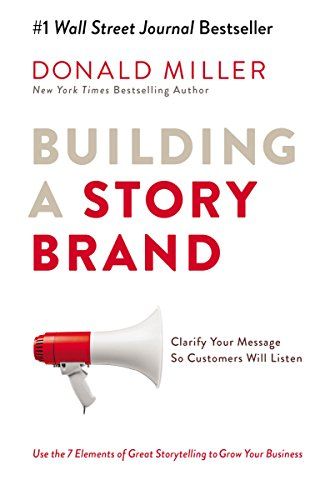
Nova: Let's start with Donald Miller and "Building a StoryBrand." Miller, for those who don’t know, isn’t just a business guru. He’s a New York Times bestselling author known for his memoirs like "Blue Like Jazz," which actually got turned into a film. His background is in storytelling, and that's precisely what he brings to branding. He realized that the most successful brands tell a compelling story where the customer is the hero, not the brand itself.
Atlas: Oh, I like that. So many brands make themselves the hero, constantly talking about "we, we, we." It’s like listening to someone drone on about themselves at a party. You just tune out.
Nova: Precisely. Miller says that most brands make one of two mistakes: either they complicate their message, or they position themselves as the hero. Think about it: our brains are hardwired for stories. We understand conflict, resolution, and transformation. Miller’s framework boils it down to seven universal story points. It's a template, really, for clear communication.
Atlas: Seven story points? So, it’s like a cheat sheet for captivating your audience? Can you give me an example? Like, what’s the big idea here?
Nova: The big idea is this: A character has a problem, meets a guide, who gives them a plan, calls them to action, and helps them avoid failure and achieve success. It’s a narrative arc. For instance, think about a fitness brand. The customer isn't trying to buy protein powder; they're trying to lose weight, feel healthier, overcome self-doubt. The brand isn't the hero who invented the best powder; it's the guide that provides the plan—the right nutrition, the workout schedule—to help the customer achieve their goal and avoid feeling unhealthy or unconfident.
Atlas: That makes so much sense! So, the customer is the Luke Skywalker, and the brand is the Obi-Wan Kenobi. Not the star, but the indispensable mentor. I imagine a lot of our listeners, who are conscious contributors and brand architects themselves, might be thinking about how often they've accidentally made themselves the hero in their own messaging.
Nova: Exactly! And the beauty of this framework is its simplicity. Miller argues that if you can’t clarify your message in a few simple sentences, you're confusing your customers, and confused customers don't buy. It’s about cutting through the noise with crystal clarity. The book itself received widespread acclaim for making complex marketing concepts accessible. Many readers found it revolutionary for helping them rethink their communication.
Atlas: That’s actually really inspiring. It feels less like "marketing" and more like "empathic communication." It shifts the focus from selling to serving, which aligns perfectly with building a truly ethical brand.
Your Brand, Your Why: The Golden Circle
SECTION
Nova: Building on that clarity, we pivot to Simon Sinek and "Start with Why." Sinek introduces the 'Golden Circle' concept: Why, How, and What. Most companies communicate from the outside in – they say WHAT they do, then HOW they do it, and maybe, if there's time, WHY. But inspiring leaders and organizations communicate from the inside out: they start with WHY.
Atlas: So, starting with the Why is the secret sauce? I’ve heard about this, but it still feels a bit… abstract. What does "Why" really mean in this context? Is it just a mission statement?
Nova: No, it’s much deeper than that, Atlas. Your 'Why' isn't your profit. That’s a result. Your 'Why' is your purpose, cause, or belief. It’s the very reason your organization exists. Sinek points to companies like Apple. They don't just say, "We make great computers", or "Our computers are beautifully designed and user-friendly". They start with, "Everything we do, we believe in challenging the status quo, in thinking differently". The computers are just a manifestation of that belief.
Atlas: That’s a powerful way to put it. It's about tapping into something primal, something emotional, rather than just logical features. I imagine for someone who cares deeply about impact and authenticity, starting with 'Why' would be the bedrock for genuine connection. It’s not just what you deliver, but the intention behind it.
Nova: Absolutely. Sinek argues that people don't buy WHAT you do; they buy WHY you do it. This 'Why' inspires loyalty and trust, which are absolutely crucial for ethical brands. It’s a fundamental shift that moves you from transactional relationships to transformational ones. The book became a global phenomenon, with Sinek’s TED Talk being one of the most viewed of all time. It resonated because it spoke to a deeper human need for purpose.
Atlas: That makes me wonder, though. How do you find your ‘Why’? Is it something you just conjure up, or is it discovered? Because for a lot of our listeners, articulating that core purpose, that deep-seated belief, can be incredibly challenging, especially when you're busy with the 'What' and 'How.'
Nova: That’s a fantastic question. Sinek suggests it’s not something you invent, but uncover. It requires deep introspection, often looking back at moments of clarity, passion, or even frustration that shaped your perspective. It's about finding the consistent thread in your professional and personal journey that defines your driving force. It's not about being unique, but being authentic to your deepest convictions.
Building Your Tribe: The Power of Community
SECTION
Nova: Now, moving from the internal 'Why' and the clear 'Story' to the external connection, we have Seth Godin’s "Tribes: We Need You to Lead Us." Godin, a prolific and often provocative marketing visionary, argues that the internet has revolutionized how people connect. It's no longer just about mass marketing; it's about finding and serving your 'tribe.'
Atlas: Tribes. So, it's about niche communities, right? Not just casting a wide net, but aiming for a specific, passionate group?
Nova: Exactly. Godin argues that people want to connect with each other, and they want to connect with passion. A tribe is a group of people connected to one another, connected to a leader, and connected to an idea. Brands that understand and serve these tribes, fostering community and a shared purpose, are the ones that truly thrive. This is key for ethical brand practices because it's inherently about service and shared values.
Atlas: Huh. That’s a bit like what you were saying about authenticity and values. If your 'Why' is strong and your story is clear, it naturally attracts people who share those values. It’s not about convincing; it’s about attracting.
Nova: Precisely. Godin’s work, often praised for its concise yet profound insights, emphasizes that leaders don't create followers; they create more leaders. He argues that in the age of the internet, anyone can lead a tribe, and brands have an unprecedented opportunity to do so by standing for something meaningful. Think about brands that have cult-like followings—they aren't just selling a product; they're selling an identity, a shared belief system. They empower their tribe members.
Atlas: That makes perfect sense! It’s like a conscious contributor looking to build a movement around their values. They’re not just selling a service; they’re inviting people into a shared mission. But what happens if you try to serve too many tribes, or if your message isn't clear enough to define your tribe?
Nova: Then you dilute your impact. Godin would argue that you risk becoming generic and forgettable. The power of a tribe comes from its specificity and shared passion. If you try to appeal to everyone, you end up appealing to no one. It circles back to Miller’s clarity and Sinek’s 'Why.' Your 'Why' informs your message, and that clear message helps you identify and serve your tribe. These books collectively provide a robust framework for building narratives that resonate deeply with your audience's values and aspirations, not just their wallets.
Synthesis & Takeaways
SECTION
Nova: So, bringing it all together, we have Miller giving us the blueprint for clear, customer-centric storytelling, Sinek providing the profound purpose that fuels that story, and Godin showing us how that purpose and story connect us to a passionate community. It's a powerful trifecta for any brand architect or conscious contributor.
Atlas: That’s a truly elegant synthesis. It’s not just about marketing; it’s about creating a resonant, ethical, and impactful presence. It’s about moving beyond transactions and into genuine connection. For anyone looking to build genuine brand loyalty, these principles aren't just good advice; they're foundational.
Nova: Exactly. These books aren't just about selling more; they’re about building something that matters, something that inspires, and something that genuinely serves. They push us to ask: Are we truly serving our audience as the hero of their own story? Are we crystal clear on our 'Why'? And are we actively fostering the tribe that believes what we believe? If we can answer those with a resounding yes, we're not just building a brand; we're building a movement.
Atlas: And that’s a legacy worth creating. This is Aibrary. Congratulations on your growth!