

The Strategic Leader's Playbook: Crafting Vision into Reality
Golden Hook & Introduction
SECTION
Nova: Atlas, quick game for you. In exactly five words, tell me your review of "strategic leadership." Go!
Atlas: Oh, that’s tough. Uh… "Overused buzzword, often poorly executed."
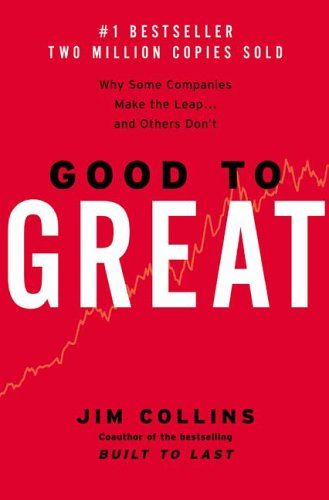
Nova: Wow, that’s a bold start! But I love the honesty. And honestly, it’s a sentiment many leaders probably share, especially when they’re drowning in initiatives that feel… purposeless. Today, we’re diving into a playbook that aims to cut through that noise and elevate leadership beyond mere management. We’re talking about "The Strategic Leader's Playbook: Crafting Vision into Reality," pulling insights from two foundational texts: Jim Collins' seminal work, "Good to Great: Why Some Companies Make the Leap... And Others Don't" and Simon Sinek's incredibly influential "Start with Why: How Great Leaders Inspire Everyone to Take Action."
Atlas: I mean, "Good to Great" is legendary. Collins’ methodology, that five-year deep dive into companies that actually made the leap to sustained greatness, it gave it such academic weight. It wasn't just another business guru’s opinion. And Sinek? His TED Talk on the "Why" just exploded, making purpose-driven leadership a household concept.
Nova: Absolutely. And it’s those deep, research-backed insights, paired with Sinek’s accessible frameworks, that we think offer profound value for leaders, especially those trying to navigate the complexities of building enduring institutions.
Atlas: That makes me wonder, though, how much of this translates directly to, say, an educational leader, rather than just a Fortune 500 CEO? The challenges feel so different.
Nova: That’s a fantastic question, and it’s precisely where the magic happens. Because while the context might shift, the underlying human and organizational principles remain incredibly powerful. The first core idea we need to unpack is what separates merely good institutions from those that achieve sustained, lasting excellence.
The Pillars of Sustained Excellence: Beyond Good to Great
SECTION
Nova: Think about it: every school wants to be "good." They want great test scores, happy students, involved parents. But good is often the enemy of great, as Collins famously put it. Truly great institutions don't just achieve temporary success; they build something enduring.
Atlas: I can see that. So, what’s the secret sauce? Is it some revolutionary new curriculum, or cutting-edge tech? Because every school leader I know is constantly bombarded with the next big thing.
Nova: It’s often far less glamorous, actually. Collins identified concepts like the "Hedgehog Concept." It’s not about being the best at everything, but understanding what your institution can be the, what you are deeply passionate about, and what drives your resource engine—in an educational context, that’s your unique impact and sustainability.
Atlas: So, it’s about focus? But wait, isn't that just telling schools to specialize? What if you're a comprehensive K-12 school? How do you apply a "Hedgehog Concept" without narrowing your mission too much?
Nova: That’s where the nuance comes in. It’s not about abandoning your mission, but refining it to its core strength. Imagine a school, let's call it Evergreen Academy. They spent years chasing every educational trend—Montessori, then STEM, then project-based learning—trying to appeal to everyone. Their resources were spread thin, their identity was muddled. Their teachers were exhausted.
Atlas: Oh, I know that feeling. It's like trying to be a five-star restaurant that also serves fast food and fine dining simultaneously. You end up being mediocre at everything.
Nova: Exactly. Evergreen Academy eventually realized their true passion and unique strength was fostering deep, critical thinking through interdisciplinary humanities, even in their science classes. They became unapologetically excellent at. They stopped trying to be the best STEM school if it meant sacrificing their core identity. That clarity, that disciplined focus on their Hedgehog, allowed them to say "no" to distractions and allocate resources where they could genuinely excel.
Atlas: That’s a powerful example. It sounds like avoiding the shiny object syndrome. But Collins also talks about "Level 5 Leadership" and "First Who, Then What." What does that mean for an education leader who often inherits their team? You can't just overhaul your entire staff like a corporate CEO might.
Nova: That’s a critical distinction, and it’s why the principles are about cultivating a culture, not just a clean slate. Level 5 leaders, for Collins, are characterized by a paradoxical blend of extreme personal humility and intense professional will. They are fiercely driven for the institution’s success, not their own ego.
Atlas: So, it’s not the charismatic, visionary leader who’s always in the spotlight?
Nova: Often, quite the opposite. Think of a principal, Sarah, at a struggling inner-city school. She didn’t come in with a grand, public announcement of a new era. Instead, she quietly assessed her team, identified those with potential, mentored them, and respectfully moved others into roles where they could contribute best, or helped them find opportunities elsewhere if their values didn't align. Her focus was on building a team of disciplined people first, then together, they figured out the "what."
Atlas: That takes incredible patience and resolve. It’s not about being a tyrant, but about having a relentless commitment to the right people and the right mission. But then, once you have the right people, how do you keep them aligned and inspired, especially when the day-to-day can feel like a grind?
Inspiring Action: The Power of Purpose-Driven Leadership
SECTION
Nova: That’s where Simon Sinek’s "Start with Why" becomes absolutely indispensable. Because disciplined action, the kind that leads to sustained greatness, needs to be fueled by a deeper purpose. Sinek’s Golden Circle—the 'Why,' 'How,' and 'What'—is incredibly simple yet profoundly powerful. Most organizations communicate from the outside in: they tell you 'what' they do, then 'how' they do it, and maybe, if there’s time, 'why.'
Atlas: So, what’s wrong with starting with 'what'? Most schools talk about their curriculum, their programs, their facilities. What’s the big deal about 'why'?
Nova: The big deal is that 'what' and 'how' appeal to the rational, analytical part of our brains. But 'why' speaks directly to the limbic brain, the part responsible for feelings, trust, and loyalty. It’s where intrinsic motivation lives. When you start with 'why,' you're not just selling a product or a service; you're selling a belief, a cause.
Atlas: So, people don’t buy you do; they buy you do it. I’ve heard that before, but it still feels a bit… abstract for a school. Can you give me an example that makes it tangible?
Nova: Of course. Imagine two schools. School A advertises: "We offer rigorous academics, advanced STEM programs, and a wide range of extracurriculars." That's a 'what.' School B, on the other hand, says: "We exist to cultivate compassionate, critical thinkers who will courageously shape a more just and sustainable world." That’s a 'why.' Which one inspires deeper commitment from parents, teachers, and students? Which one makes you feel like you’re part of something bigger?
Atlas: Oh, I like that distinction. School B sounds like it has a soul. It’s not just a place of learning; it’s a movement. That’s going to resonate with anyone who wants to feel like their work, or their child’s education, has a deeper meaning.
Nova: Exactly. And for leaders, articulating that 'Why' isn't just about marketing; it’s about internal alignment. If every initiative, from curriculum changes to staff development programs, clearly aligns with and reinforces that school’s fundamental purpose, it creates coherence and reduces friction.
Atlas: Okay, I get the inspiration part. But how does articulating a 'Why' actually help with strategic planning? Does it automatically make curriculum changes better or staff development more effective? I'm thinking about those "engaged leaders" who want to elevate their institutions, not just inspire.
Nova: It acts as a powerful filter, Atlas. If your 'Why' is to "cultivate compassionate, critical thinkers," then when a new tech fad comes along—say, an AI-driven essay writing tool—you can ask: "Does this tool genuinely help us cultivate compassionate, critical thinkers, or does it bypass that core purpose?" If it doesn’t serve the 'Why,' you have a clear, principled reason to say no, even if it's popular.
Atlas: That’s a practical application. It’s not just about what you do, but what you do. It allows you to optimize your strategy by eliminating initiatives that don't serve your core purpose. So, that "Tiny Step" of articulating your school's 'Why' in a single, compelling sentence, and the "Deep Question" about aligning initiatives… that’s where the rubber meets the road, right?
Nova: Precisely. It’s the constant, conscious alignment that transforms vision into reality.
Synthesis & Takeaways
SECTION
Nova: So, bringing these two powerful ideas together, what we see is that sustained excellence, as explored by Jim Collins, isn't just about discipline and the right people. It's fundamentally by a profound, articulated purpose, the 'Why' that Simon Sinek champions. True strategic leadership transcends mere goal-setting; it demands cultivating a culture and a clear purpose that propels an institution to sustained excellence and profound impact.
Atlas: It sounds like understanding your 'Why' isn't just a nice-to-have; it's the engine for being a Level 5 leader and building a truly great institution that leaves a lasting legacy. It's about optimizing for impact, not just output.
Nova: That’s the core of it. It’s about building something that matters deeply, and that endures. For our listeners who are aiming to elevate their organizations, the call to action is clear.
Atlas: So, for our listeners, maybe the first step isn't to overhaul your entire strategic plan, but to simply ask: what's our school's 'Why' in one compelling sentence? And then, challenge every decision, every initiative, every program against it. Does it serve the 'Why'?
Nova: A powerful, actionable start. Because the greatest leaders don't just achieve goals; they inspire movements.
Atlas: Absolutely. This is Aibrary. Congratulations on your growth!