

Beyond the Battlefield: Unearthing the Humanity in Ancient Cultures
Golden Hook & Introduction
SECTION
Nova: What if I told you that the most important lessons from ancient civilizations aren't found in their epic battles or the pronouncements of their emperors, but in the mundane details of a baker's day or a student's graffiti?
Atlas: Whoa, hold on a second. Are you saying we've been looking at history all wrong? Like, all those documentaries about glorious empires and legendary conquests might actually be missing the point?
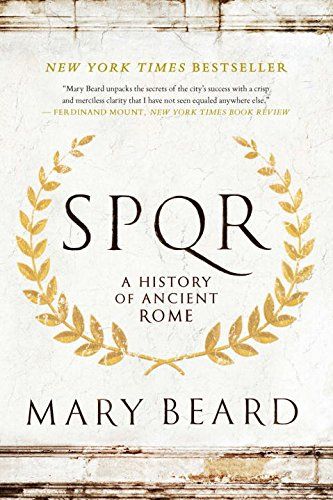
Nova: Precisely, Atlas. We're diving into that fascinating idea today, inspired in part by groundbreaking historians like Mary Beard, particularly her incredible work,.
Atlas: Ah, Mary Beard! I know her work. She's phenomenal at making history feel… not dusty. She's known for really challenging those traditional, often male-centric narratives, isn't she?
Nova: Absolutely. She's a highly respected classicist who masterfully dismantles those conventional views, bringing to light the often-overlooked lives of ordinary people—women, slaves, the everyday Roman. She makes ancient history vibrant, messy, and profoundly human for a modern audience.
Atlas: That's a great way to put it: "profoundly human." But it also makes me think about this "blind spot" you mentioned. Why are we so prone to focusing only on the grand narratives, the emperors and battles, and missing all that rich, human detail?
Nova: That's the perfect question to kick us off, because that "blind spot" is exactly where our first core idea lies.
The Blind Spot: Why We Miss the Human in History
SECTION
Nova: When we look at history, especially ancient civilizations, we tend to see only the monumental. We see the powerful emperors, the earth-shattering battles, the grand, imposing structures. And because of that focus, history can feel very distant, almost like a separate, untouchable realm.
Atlas: I get that. It’s like watching a highlight reel of a movie and thinking you understand the entire plot. You see the big explosions, the dramatic speeches, but you miss all the character development, the quiet moments, the real human stakes.
Nova: Exactly! And that oversight prevents us from truly connecting with the past. We lose the subtle, everyday lives and emotions of the people who actually lived through those times.
Atlas: I imagine a lot of our listeners, especially those who try to understand complex systems or human behavior, might recognize this tendency to simplify. But why are we so drawn to that "highlight reel" version of history? What's the psychological pull towards the grand narrative over the personal story?
Nova: It's a combination of factors, really. Part of it is the nature of historical records themselves – often, what survives are the official decrees, the epic poems praising rulers, the accounts of wars. It's the history written by the victors, or at least the powerful. But beyond that, there's a human tendency to seek order and simplicity in the past. We like heroes and villains, clear causes and effects. It's easier to process a narrative about a single great man than the complex, interwoven lives of millions.
Atlas: So, it’s partly about what gets preserved, and partly about our own cognitive biases for a cleaner story.
Nova: Precisely. To truly illustrate this, let's step away from Caesar for a moment and imagine a different Roman citizen. Picture a laundress in ancient Pompeii, just before the eruption of Vesuvius. Her name is perhaps Lena. Her daily life isn't about senatorial debates or conquering Gaul. It's about scrubbing tunics in the public fullonica, haggling over prices, worrying if her son will get enough to eat, gossiping with her neighbors in the bustling forum.
Atlas: Oh, I like that. You're painting a really vivid picture. I can almost smell the lye from the laundry.
Nova: And then, the ash starts to fall. For Lena, the eruption isn't a geological event; it's the sudden, terrifying end of her entire world. Her fear, her desperate attempts to save her family, her final moments – these are the true human experience of that monumental event. That’s a fundamentally different history than reading about Pliny the Elder’s scientific observations.
Atlas: That's actually really inspiring, because it makes you wonder what else we're missing. It's like we're trying to understand a whole forest by only looking at the tallest trees. But how does this "blind spot" actually impact our understanding of their achievements and failures? If we only see the emperors, how does that skew our perception of Rome's greatness or its eventual decline?
Nova: It fundamentally changes our interpretation. When we only see the emperors, Roman engineering marvels, for example, become abstract 'achievements' of a faceless empire. But when you understand the daily lives of the engineers, the laborers, the quarry workers, the slaves who hauled the stones, the families who depended on those projects, suddenly, those achievements are grounded in immense human effort, ingenuity, and even suffering. They become profound, not less. And failures? The fall of an empire isn't just a political chess game; it's the collapse of a societal structure, leading to widespread famine, displacement, and fear for millions of Lenas.
Atlas: So, it's not just about adding detail, it's about fundamentally changing our interpretation of what "greatness" or "failure" even means in a historical context.
Reclaiming Humanity: Lessons from Mary Beard and Herodotus
SECTION
Nova: Exactly, Atlas. And that fundamental shift is precisely what historians like Mary Beard and, surprisingly, even the "Father of History" himself, Herodotus, have championed in their own unique ways.
Atlas: Okay, so how do they manage to peel back those layers and bring that everyday humanity to the forefront?
Nova: Let's start with Beard and. She doesn't just chronicle the lives of emperors like Augustus or Nero. She dives into the mundane yet incredibly revealing details: what people ate, the jokes they told, the graffiti on the walls of Pompeii, the legal disputes of ordinary citizens, the often-overlooked roles of women and slaves. She shows us Rome not as a monolithic, idealized entity, but as a "vibrant, often messy, reality" of human interaction.
Atlas: That makes me wonder, how does that actually change the of history? Does it make it feel less like a dry textbook and more... alive? Like you're actually walking through the streets of ancient Rome?
Nova: Absolutely. Beard has this incredible skill of making the distant past feel present and relatable by tapping into universal human emotions and experiences. She doesn't just tell you happened; she explores to live it. You read, and you're not just learning about Roman politics; you're feeling the anxieties of a Roman mother, the ambitions of an aspiring politician, the frustrations of a common laborer. It's history with a pulse.
Atlas: That's a powerful approach. It sounds like she's really empathetic in her historical lens.
Nova: She is. And what's fascinating is that this human-centric approach isn't entirely new. Centuries before Beard, we had Herodotus, often called the "Father of History." While we often remember him for his accounts of the Greco-Persian Wars, Herodotus was, at heart, a traveler and a storyteller.
Atlas: Oh, the guy who wrote! I remember him. He was chronicling wars, right? How does he fit into "unearthing humanity"?
Nova: He does chronicle wars, but what makes him unique is his profound curiosity about human customs and beliefs. He traveled widely, interviewing people, meticulously recording not just battles, but the daily lives, social structures, and cultural practices of the diverse peoples he encountered – Babylonians, Egyptians, Scythians. He detailed their funeral rites, their culinary habits, their religious ceremonies.
Atlas: So he wasn't just interested in the war, but these different societies lived and thought?
Nova: Exactly! He showed the world's through cultural exchange and understanding, not just through conflict. For example, his detailed descriptions of Egyptian society, drawing on his direct observations and conversations, were groundbreaking. He approached these "others" with a genuine spirit of inquiry and respect, attempting to understand their worldviews on their own terms.
Atlas: That's a great way to put it, "humanity archeologists." So Herodotus, even way back then, was doing what Beard does today – looking beyond the battlefield. It's like he was trying to build community through understanding, even across different cultures. How did their methods, despite being centuries apart, both help us see these societies not as static entities, but as dynamic communities?
Nova: They both shared a deep, insatiable curiosity about the and their, not just the power structures or the grand events. Beard uses archaeological evidence, social history, and close readings of texts to reconstruct daily life. Herodotus used travel, interviews, and oral traditions. Both reveal that ancient societies were filled with individuals much like us, with their own hopes and fears, their own messy realities. They humanize the past, transforming it from a collection of facts into a living, breathing narrative that resonates deeply.
Synthesis & Takeaways
SECTION
Nova: So, what we've been talking about today, this shift from the monumental to the mundane, from the emperor to the laundress, isn't just an academic exercise.
Atlas: No, it feels much bigger than that. It’s about cultivating a deeper understanding, one that fosters empathy and helps us see the full picture.
Nova: Absolutely. Understanding the daily lives of ancient people doesn't diminish their achievements; it grounds them in human effort, ingenuity, and context. It makes their failures more poignant and instructive. It helps us realize that the past wasn't populated by cardboard cutouts, but by complex individuals navigating their own challenges, much like us.
Atlas: So what's the lasting impact for us, for listeners who are constantly learning and trying to build stronger connections in their own lives? How does this shift in historical perspective help us foster potential today, maybe even in our own communities or in understanding current events?
Nova: It’s a powerful lens for the present. It encourages us to look beyond just the headlines or the grand political narratives of today and seek out the human stories behind them. It cultivates an empathy that understands policies and events aren't just abstract concepts; they impact real people, with real hopes and fears. It's about seeing the world with new eyes, past and present.
Atlas: That's a powerful thought. It's about embracing that natural curiosity and exploring beyond the obvious. It’s not just history; it’s a blueprint for deeper understanding in everything.
Nova: Exactly. It's about asking, "Who are the people living this story right now?"
Atlas: And realizing that their lives are just as rich and complex as any emperor's.
Nova: This is Aibrary. Congratulations on your growth!