

The AI Product Manager's Playbook: Speaking with Conviction and Clarity
Golden Hook & Introduction
SECTION
Orion: You’re standing in a conference room. The projector hums. Your roadmap is on screen—the one you’ve poured weeks into. All eyes are on you: the engineers, the marketing lead, the VP who holds the budget. You open your mouth to speak, and that familiar, cold knot of anxiety tightens in your stomach. Your brilliant ideas suddenly feel fragile, and your voice, uncertain. How do you bridge that gap between the conviction you feel in your head and the confidence you project to the world?
Mitchell: That's the exact moment, Orion. It's the crucible for any product manager. You can have the best data, the most elegant design, the most powerful algorithm in the world, but if you can't communicate the 'why' with conviction, it all just falls flat. It’s a moment of truth.
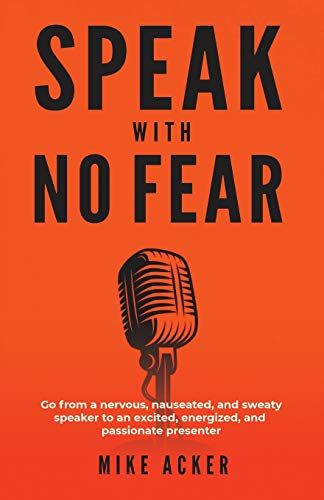
Orion: It really is. And that's the core question we're tackling today, using Mike Acker's 'Speak With No Fear' as our guide. And I’m thrilled to have you here, Mitchell, because as a Product Manager transitioning into the AI space, you live at the intersection of complex ideas and the need for absolute clarity.
Mitchell: Thanks for having me. Yeah, it’s a challenge I think about constantly. The stakes just get higher when the concepts get more abstract.
Orion: Exactly. So for our listeners, we're not just going to rehash a book on public speaking. We're going to build a playbook. Today we'll dive deep into this from two perspectives. First, we'll explore the mechanics of fear, and how to turn that nervous energy into an advantage. Then, we'll discuss the architecture of conviction, focusing on how to build and project unshakeable confidence in your ideas, especially in a high-stakes tech environment.
Deep Dive into Core Topic 1: The Mechanics of Fear: From Anxiety to Advantage
SECTION
Orion: So let's start there, Mitchell, with that knot in your stomach. That feeling of dread. Acker’s first big argument is that we don't have to be victims of that feeling. He offers a practical toolkit, and one of the most powerful tools is a concept he calls 're-labeling'.
Mitchell: Re-labeling. Okay, I'm curious. What does that mean in practice?
Orion: Well, he points out something fascinating from a physiological standpoint. The physical symptoms we associate with fear—the racing heart, the sweaty palms, the rush of adrenaline—are identical to the symptoms of excitement. The only difference is the cognitive label our brain slaps onto that sensation. So the hack is to consciously, even verbally, re-label the feeling. You feel your heart pounding and you tell yourself, "My body is getting excited for this. It's giving me the energy I need to perform well."
Mitchell: That's a powerful mental shift. It's like you're A/B testing your own mindset in real-time. Instead of letting the default 'fear' narrative run, you're consciously choosing to run the 'excitement' narrative. That really resonates with the analytical side of me.
Orion: It's a total re-frame. And he pairs it with another concept: re-framing the audience. We often imagine the audience as a panel of stern judges, waiting for us to fail. Acker says to re-frame them as partners, as allies. They showed up because they to hear what you have to say. They are rooting for you to succeed because your success might mean a solution to their problem.
Mitchell: You know, that connects so directly to product management. We talk constantly about user empathy—getting into the mind of the user to understand their needs. This is almost like… 'audience empathy.' What do they want? They want clarity. They want a solution. They're hoping my presentation gives them that. Suddenly, they're not adversaries; they're on my side of the table. The entire dynamic changes from a performance to a collaboration.
Orion: Precisely. It's a shared goal. Now, Acker rounds this out with a third 'R' that you might expect: Rehearsal. But his take is more nuanced than just memorizing a script. He emphasizes rehearsing to internalize the flow and the core ideas, not just the specific words.
Mitchell: Oh, this is critical, especially for the AI space. You absolutely cannot just rehearse a script, because you are guaranteed to get deep, technical questions that you can't possibly predict. If you’re just reciting lines, the first tough question will shatter your confidence.
Orion: So how would you adapt that idea of rehearsal for that kind of environment?
Mitchell: For me, 'rehearsal' isn't about memorizing my slides. It's about pressure-testing the core idea. I'd grab a senior engineer or a data scientist I trust—someone smarter than me on the topic—and I'd present the concept to them. I’d ask them to be ruthless, to find every single hole in my logic. The rehearsal isn't for the; it's for the resilience. That way, when the VP asks that killer question in the big meeting, I've already faced an even harder version of it.
Orion: So the rehearsal builds a deeper, more flexible confidence, not a fragile, script-based one.
Mitchell: Exactly. The confidence comes from knowing your idea has survived a trial by fire. You're not afraid of questions, you welcome them, because you've already done the work.
Deep Dive into Core Topic 2: The Architecture of Conviction: Building Your 'Why' and Your Structure
SECTION
Orion: I love that. It's a perfect transition. So once we've managed the defensive game against fear, Acker says we need to build our offense. And that brings us to our second core topic today: the architecture of conviction. This isn't just about; it's about being powerfully and authentically persuasive. He says it all starts with one thing: Purpose.
Mitchell: The 'why'.
Orion: The 'why'. He argues that true conviction, the kind that radiates from you and makes people lean in, doesn't come from slick techniques. It comes from being profoundly connected to the purpose of your message. If you believe, deep down, in why your message matters, your body language, your tone, your eye contact—everything—will naturally align to project that belief.
Mitchell: This is the absolute soul of product management. The 'why' is the product vision. It's the answer to the fundamental questions: 'Why are we building this? Who are we helping? What problem are we solving that no one else is?' If I can't answer that in a single, compelling sentence, I have no business being in that room.
Orion: So that 'why' becomes your anchor.
Mitchell: It's everything. It's my anchor in the storm. When a tough question comes from a skeptical executive, my mind doesn't have to scramble for a feature list or a data point. My first instinct is to go back to that core purpose. For example, if someone questions the cost of an AI model, my answer isn't just about server costs; it's, "This investment is what allows us to deliver on our promise of giving doctors a tool that can spot diseases hours earlier. That's the 'why' we're here." It reframes the entire conversation.
Orion: That's incredibly powerful. So how do you take that abstract 'why' and translate it into a concrete presentation, especially for something as complex as an AI product that can feel very abstract to a non-technical audience?
Mitchell: You have to structure it as a story. This is the most important lesson I've learned. Facts and figures numb the brain, but stories activate it. The user is always the hero of the story. They have a problem, a challenge, a dragon to slay. Our product is the 'magic sword' or the 'wise guide' that helps them defeat that villain—which might be inefficiency, bad data, or missed opportunities.
Orion: So you’re not just presenting a tool, you’re narrating a quest.
Mitchell: Exactly. My job as the speaker, as the product manager, isn't to stand up and list the sword's technical specifications—its carbon content or its blade length. My job is to tell the story of the hero's victory they had this sword. That's how you get an engineering team excited to forge the sword and an executive team to fund the quest. You make them part of the story.
Orion: That’s a brilliant insight. So the conviction isn't just something you feel internally; you're actually embedding it into the narrative structure of your presentation. The story itself carries the weight of your conviction.
Mitchell: Yes! The structure does the heavy lifting for you. When you tell a good story, the audience's natural skepticism fades because they're engaged in the narrative. They're not judging you anymore; they're rooting for the hero. And by extension, they're rooting for you.
Synthesis & Takeaways
SECTION
Orion: This has been so clarifying. So, to bring it all together, what we've really learned from Mike Acker's book, viewed through the practical lens of a product leader, is a powerful two-step process. First, you systematically re-engineer your relationship with fear by re-labeling it as excitement and re-framing your audience as your allies.
Mitchell: That’s the defense. It’s about neutralizing the internal enemy.
Orion: Right. And second, you build your offense—the architecture of conviction—by anchoring every single thing you say in a powerful, foundational 'why' and then structuring your message not as a list of facts, but as a compelling story.
Mitchell: It's a potent combination. The first part clears your head, and the second part fills your heart. You need both to be truly effective.
Orion: So, Mitchell, to leave our listeners with something they can use tomorrow, what's the challenge? What's the one thing someone listening right now can do before their next big meeting?
Mitchell: Okay, here's a very practical challenge. Before your next important presentation or meeting, I want you to do two things. First, find a quiet moment just before you go in. When you feel that familiar anxiety, that heart-pounding, I want you to actually say the words out loud, even in a whisper: "I am excited. My body is ready." Just notice the small but significant shift it creates.
Orion: I love that. It’s a physical action.
Mitchell: It is. And the second thing is this: take a post-it note, and on it, write your core message—your 'why'—in one simple, powerful sentence. Something like, "We are doing this to save our users ten hours a week." Stick that post-it note to the top of your laptop or on your notebook. Let it be your physical anchor. If you get lost, if you feel the fear creeping back in, your eyes can flick to that note, and it will bring you right back to your purpose. The goal isn't to be fearless; nobody is. It's about speaking your fear, but leading with your purpose.
Orion: Lead with your purpose. A perfect place to end. Mitchell, thank you so much for sharing your insights.
Mitchell: This was great, Orion. Thanks for having me.