

Decompiling Drive: An AI Developer's Guide to Your Career's Source Code
Golden Hook & Introduction
SECTION
Albert Einstein: Calvin, as someone who builds AI agents, you spend your days writing code that dictates behavior, creating a kind of 'source code' for intelligence. But what if we, as humans, came with our own pre-installed source code? A deep, intrinsic driver for the kind of work that truly makes us feel alive.
Calvin: That's a fascinating premise, Albert. It implies our career choices aren't just about skills or opportunity, but about aligning with a fundamental, underlying architecture.
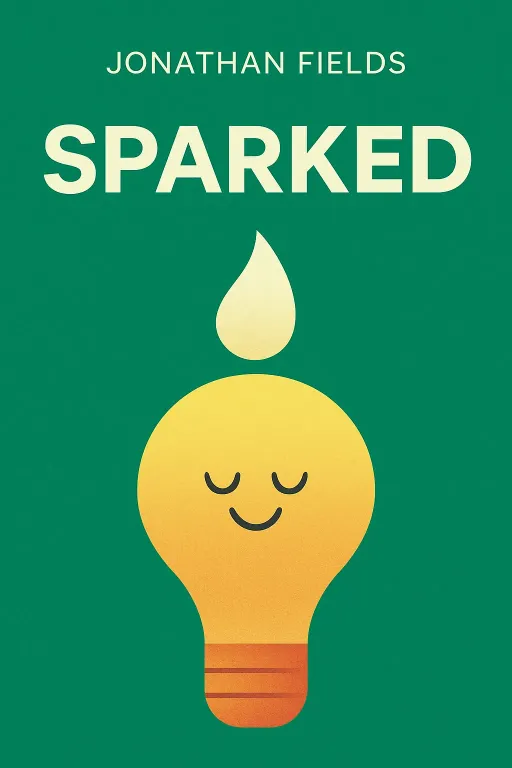
Albert Einstein: Precisely! This is the provocative idea at the heart of Jonathan Fields' book, 'Sparked.' It suggests that for many of us, the feeling of burnout or dissatisfaction at work isn't a personal failing, but a simple mismatch—we're trying to run software on the wrong operating system.
Calvin: A compatibility error, essentially. The application—our job—is crashing because it's not designed for our native OS. I like that.
Albert Einstein: Exactly. And today we'll dive deep into this from two perspectives. First, we'll explore the Sparketype framework as a kind of 'operating system' for your career. Then, we'll zoom in on two specific 'archetypes' that every developer will recognize: the Maker and the Scientist, to figure out what truly fuels our drive. This isn't just another personality test; it's a diagnostic tool for the work itself.
Deep Dive into Core Topic 1: Your Career's Operating System: The Sparketype Profile
SECTION
Albert Einstein: So let's start with the architecture of this human OS. Fields proposes we each have a 'Sparketype Profile' made of three parts. It's not just about what you're good at, but what you. Calvin, does that distinction resonate with you from a system performance perspective?
Calvin: Absolutely. In development, you can have a function that is technically correct and produces the right output, but it's inefficient. It consumes too many resources, creates lag, and makes the whole system feel sluggish. It's a 'correct' but 'expensive' operation. It sounds like that's what Fields is getting at.
Albert Einstein: A perfect analogy! He breaks it down like this. First, you have your. This is your core process, your main function. It's the work that gives you that feeling of flow, of being completely absorbed and energized.
Calvin: So, that's the main thread of the application, the thing it's fundamentally designed to do.
Albert Einstein: Yes! Then there's the. Think of this as a supporting library or a helper function. You might be very skilled at it, you might even enjoy it, but it's almost always called your Primary. It helps the main function run better.
Calvin: Okay, that makes sense. A set of tools you use to support the main goal.
Albert Einstein: And finally, and this is the most curious part, the. This is the resource hog. The process that, when it runs, slows everything else down and leaves you feeling utterly drained. It's your work 'lead weight,' as Fields calls it.
Calvin: It's like technical debt. A piece of the system you have to deal with that isn't a bug, but it makes everything harder, slower, and more frustrating. It drains your energy just thinking about it.
Albert Einstein: Marvelous! You see the system immediately. Fields gives his own example to make it concrete. He identifies as a 'Maker' Primary with a 'Scientist' Shadow. His core drive, his main function, is to things—books, companies, communities. That's what makes him come alive.
Calvin: He's a builder.
Albert Einstein: A builder, exactly. But when he hits a roadblock in the process of building, his Scientist Shadow kicks in. He doesn't wake up in the morning excited to solve puzzles for their own sake, but he will happily and skillfully dive deep into figuring out a complex system or solving a problem it allows him to get back to making something better. The problem-solving serves the creation.
Calvin: That's a critical distinction. The 'why' behind the task. I can relate to that. My primary drive is to build a new AI model—that's the 'Maker' in me. But to do that, I have to spend a lot of time debugging Python libraries or optimizing data pipelines. That's the 'Scientist' work. I don't wake up excited to debug, but I do it because it's essential to the act of creation.
Albert Einstein: And your Anti-Sparketype? Your personal 'technical debt'?
Calvin: Oh, that's easy. Writing documentation. It's necessary, it's important for the team, but it drains my will to live. It feels like the polar opposite of the creative, problem-solving energy that I thrive on. It’s a pure resource drain.
Albert Einstein: It's fascinating how this framework gives you a precise language for that feeling, isn't it? It's not just 'I don't like this task.' It's 'This task is fundamentally misaligned with my core energetic system.' It feels more actionable than just saying you're an 'introvert' or a 'thinker.'
Calvin: It is. It focuses on the work, not just the person. It's about the interaction between the two. That's a much more useful diagnostic.
Deep Dive into Core Topic 2: The Developer's Dilemma: Maker vs. Scientist
SECTION
Albert Einstein: Your distinction between building the model and debugging the pipeline is the perfect segue. 'Sparked' dedicates chapters to these archetypes, and for anyone in a technical or creative field, the 'Maker' and the 'Scientist' are often in a fascinating dance. Let's explore them.
Calvin: The two sides of the developer coin.
Albert Einstein: Indeed. The Maker's slogan is "I make ideas manifest." The drive is to bring something from the ether of the mind into tangible reality. The process of creation itself is the reward. On the other hand, the Scientist's slogan is "I need to figure it out." The drive is the puzzle, the burning question, the knot that needs untangling.
Calvin: So one is driven by output, the other by process.
Albert Einstein: In a way, yes. The book gives a wonderful, non-obvious example of the Scientist impulse. It tells the story of a teenage powerlifter named Alex Hart. Now, you'd think a powerlifter is a Maker, building strength. But for her, lifting wasn't about getting strong; it was a puzzle. Her body was a living laboratory. Each lift was an experiment to test a hypothesis about form, nutrition, and recovery. Once she felt she had 'solved' the puzzle of lifting, she lost interest and moved on. The drive wasn't to be a lifter; it was to be a Scientist.
Calvin: That's a fantastic example. The physical activity was just the medium for the intellectual problem. The output—the weight on the bar—was just data.
Albert Einstein: Precisely! Now, contrast that with the story of an artist named Max Levi Frieder. He started as a fine artist, a classic Maker, creating paintings. But he found his true fulfillment not just in his own painting, but in co-founding an organization called Artolution. His organization large-scale, collaborative art projects with children in refugee camps. His Maker impulse evolved from creating a to creating an and a for others to create. The act of making is still absolutely central to his being.
Calvin: So his 'making' scaled. It became about building a platform for others to make. The core impulse remained, but its expression became more complex.
Albert Einstein: Beautifully put. So, hearing those two stories, Calvin, where do you see the dividing line in your own work? When you're deep in a project, what's the moment of pure 'spark'? Is it when the code finally compiles and the agent for the first time? That moment of creation?
Calvin: That's a great feeling, no doubt. It's the moment of validation.
Albert Einstein: Or... is it the 'aha!' moment? The moment you solve a complex algorithmic problem that's been bugging you for days, the one that felt impossible? The intellectual breakthrough?
Calvin: You know, that's the core dilemma, isn't it? I think for many developers, it's a blend. But if I'm being completely honest, the high from solving a truly wicked problem, that moment of pure intellectual victory... that feels more primary. The making, the building of the final product, is often the application of that solution. This framework would suggest I might be a Scientist primary with a Maker shadow. I've never thought of it that way before.
Albert Einstein: A-ha! The theory predicts an observation in the real world. I love it when that happens.
Synthesis & Takeaways
SECTION
Albert Einstein: So, we have this powerful idea of a personal 'source code' for work. A way to understand our own internal physics. And within that, the ability to distinguish between the fundamental impulse to create and the impulse to solve. It's not about which is better, but about knowing your own default setting, your path of least resistance to feeling alive.
Calvin: It reframes the conversation from 'what job should I have?' to 'what kind of or energize me?' That's a much more powerful question because you can find those actions in many different jobs.
Albert Einstein: Which brings us to a practical takeaway. The book warns against making drastic changes immediately. So what's a small experiment one could run?
Calvin: Instead of thinking 'I hate my job,' this framework gives you a more granular tool. The book suggests an 'Expression Inventory,' but I'd frame it as 'Work Profiling.' It's something every developer understands. For the next week, don't judge your whole job. Just notice the individual tasks. Which ones give you a little jolt of energy? Which ones make you want to go get coffee?
Albert Einstein: You're collecting data points on your own performance.
Calvin: Exactly. That's the data. Is it the brainstorming meeting? The solo coding time? The client presentation? Once you have the data, you can start to optimize the system. Maybe you can delegate more of the 'Anti-Sparketype' tasks or proactively seek out more projects that involve your Primary. It's a developer's approach to career satisfaction.
Albert Einstein: A beautiful, logical, and actionable conclusion. It leaves me with one final thought experiment: what would the world look like, what wonders could we build, if everyone was running on their optimal operating system? A question to ponder. Calvin, thank you for helping us decompile this fascinating idea.
Calvin: It was a pleasure, Albert. It's given me a new system to analyze.









