

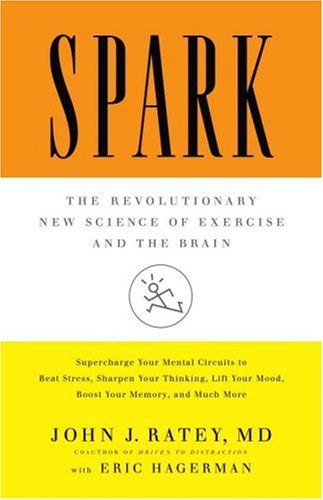
The Biological Blueprint for Peak Cognitive Performance
Golden Hook & Introduction
SECTION
Nova: Here is a statistic that should keep you up at night: the average person loses roughly two hours of productive cognitive capacity every single day simply because their internal biological clock is misaligned with their schedule.
Atlas: That is a staggering number. If we think about that in terms of compound interest, that is essentially bankrupting your potential over the course of a career.
Nova: Exactly. We obsess over financial portfolios, market trends, and investment strategies, yet we treat our brain, the actual asset that generates all of that value, like a cheap rental car we can drive into the ground. Today, we are diving deep into The Biological Blueprint for Peak Cognitive Performance.
Atlas: I love that framing. We talk a lot about building wealth and security, but the foundation of all that is the machine between our ears. I am ready to stop treating my brain like a rental and start treating it like a high-performance engine. Where do we begin?
The Hardware – Circadian Architecture
SECTION
Nova: We have to start with the hardware. Most people look at cognitive performance as a software issue—better apps, better time-blocking, better to-do lists. But if your biological hardware is failing, no amount of software updates will save you. The core of this is your circadian rhythm, which is essentially the master clock for every metabolic process in your body.
Atlas: Right, I’ve heard the term before, but it usually gets relegated to 'sleep advice.' Are you saying this is more than just about getting eight hours of shut-eye?
Nova: It is significantly more. Think of your circadian rhythm as the operating system’s kernel. When your internal clock is misaligned with the external environment—meaning your light exposure, your feeding windows, and your sleep cycles are erratic—your body enters a state of perpetual metabolic jet lag. You are literally fighting your own biology to get work done.
Atlas: That resonates with me. There are days where I feel like I am swimming upstream, and other days where the work just flows. I always assumed that was just random luck or maybe how much coffee I had.
Nova: It is not luck. It is biology. The book outlines that the most successful people—the ones who maintain peak cognitive function over decades—are essentially biological architects. They build an environment that forces their cortisol and melatonin to spike and dip at the optimal times. The most critical lever here is light. Sunlight exposure within the first thirty minutes of waking triggers a cascade of hormones that sets your entire daily clock.
Atlas: So, step one of the morning routine isn't checking the stock market or emails. It is getting outside?
Nova: Precisely. If you are sitting in a dark office, staring at a screen, you are effectively telling your brain that the day hasn't started yet. Your internal clock stays sluggish. You then spend the rest of the day trying to force your brain to wake up with caffeine, which is just a temporary patch for a broken system.
Atlas: That is a harsh reality check. I imagine a lot of our listeners are thinking about their morning commute or their home office setup. If you are stuck in a basement or a windowless office, are you just out of luck?
Nova: Not at all. The biological blueprint offers workarounds. You can use high-intensity light therapy or simply prioritize getting outside for a brisk walk during your first break. The key is consistent signal transmission to the brain. When you provide that signal, your brain understands its place in the day. It optimizes your alertness for the morning and your restoration for the evening.
The Software – Neurochemistry of Focus
SECTION
Atlas: Okay, so we have the hardware running on the right clock. But let’s talk about the software. Even when I am well-rested, I find myself battling the urge to check my phone or jump between tasks. Is that just a lack of willpower, or is there a biological explanation for this distraction?
Nova: That is the perfect question. We tend to blame ourselves for a lack of discipline, but we are often fighting against millions of years of evolutionary programming. Your brain is wired to seek novelty because, in the ancestral environment, novelty often meant new food sources or safety. Today, that translates to a notification ping.
Atlas: It is the ultimate dopamine trap.
Nova: It is. The book introduces the concept of the Dopamine Reward Loop. Every time you switch tasks, every time you check a feed, you get a micro-hit of dopamine. It feels productive, but it is actually the opposite. It is cognitive fragmentation. You are training your brain to thrive on short, low-value bursts of stimulation rather than sustained, high-value cognitive work.
Atlas: I have definitely fallen into that loop. I call it 'productive procrastination.' I am busy, I am moving, I am clearing tasks, but I am not actually building anything of substance. How do we break that cycle?
Nova: The strategy is what the author calls 'Dopamine Fasting' or 'Focus Banking.' You have to intentionally curate your inputs. If you want to perform at a high level, you must treat your attention like capital. You would not hand your money over to a stranger on the street, so why hand your attention over to an algorithm?
Atlas: That is a great analogy. Attention is capital. I like that. So, if I am a strategist or an architect, and I need to do deep, complex work, how do I protect that capital?
Nova: You create friction. The brain is an energy-conserving machine. If you make it easy to be distracted, you will be distracted. If you make it difficult—by leaving your phone in another room, by using website blockers, by creating a dedicated workspace—you force your brain to engage with the task at hand.
Atlas: I have tried the phone-in-another-room trick, and it works, but the urge to go grab it is almost physical. It is like an itch.
Nova: That itch is the withdrawal symptom from the dopamine loop. The key insight here is that you have to sit with that discomfort. That moment of boredom is the gateway to deep work. When you stop feeding the loop, your baseline dopamine levels reset. Suddenly, tasks that seemed boring or difficult become engaging again. You regain your capacity for sustained concentration.
Environmental Engineering – Cognitive Security
SECTION
Atlas: We have covered the hardware and the software. But what about the environment? I think about this in terms of 'cognitive security.' If my space is cluttered, or if there is constant noise, it feels like my brain has to work twice as hard just to process the room, let alone the work.
Nova: That is a brilliant way to put it. Cognitive security. We often prioritize physical security—locking our doors, protecting our assets—but we rarely curate our cognitive environment. The book emphasizes that your environment is an external extension of your brain. If your environment is chaotic, your cognitive processes will be chaotic.
Atlas: I have noticed that when I am working on complex financial analysis, I cannot do it in a coffee shop. I need absolute silence. Is that just me being picky, or is there a biological reason for that?
Nova: That is your brain signaling a need for bandwidth. Your brain has a finite capacity for processing sensory input. Every sound, every movement in your peripheral vision, every temperature change—your brain is subconsciously processing all of that. If you are in a high-stimulation environment, you are essentially running background processes that are eating up your CPU.
Atlas: So, by being in a noisy environment, I am effectively overclocking my brain and draining my battery faster.
Nova: Exactly. And the cost of that is decision fatigue. By the time you get to the important work, your cognitive reserves are depleted. The elite performers mentioned in the book are obsessive about their environmental 'hygiene.' They control the lighting, the noise levels, and even the digital aesthetic of their workspace.
Atlas: It sounds almost monastic. Is there a balance here? Because I also need to be connected to the world to understand trends and opportunities.
Nova: The balance is intentionality. It is not about living in a sensory deprivation chamber. It is about creating 'flow states' by design. You might have a time block for deep, isolated work where you shut out the world. Then, you might have a separate block for high-stimulation, collaborative work. The mistake most people make is trying to do both at the same time. They try to do deep analysis while keeping their email open. That is a recipe for cognitive mediocrity.
Atlas: That hit home. I am guilty of that. I think I am multitasking, but I am actually just 'task-switching' and losing efficiency every time I flip back and forth.
Nova: It is the switching cost. Every time you switch, you leave a little bit of your attention behind. It is known as 'attention residue.' You are never fully present in the task you are doing. By segregating your day into 'deep work' and 'shallow work' blocks, you allow your brain to enter a state of flow, which is where the real value is created.
Synthesis & Takeaways
SECTION
Atlas: This has been eye-opening. We have gone from the biological hardware—the circadian rhythm—to the software of dopamine management, and finally to the environment of cognitive security. If I had to boil this down to a single, actionable takeaway for someone who wants to start building this 'Biological Blueprint' tomorrow, what would it be?
Nova: Start with the morning light. It is the cheapest, most effective investment you can make in your cognitive performance. Get outside within thirty minutes of waking. It resets your biological clock, stabilizes your mood, and sets the stage for everything else.
Atlas: It is so simple that it feels almost too easy. That is usually a sign of a high-leverage habit.
Nova: It is high-leverage because it solves the fundamental problem of misalignment. Once you have that foundation, you can layer on the focus management and the environmental design. But if the foundation is cracked, everything else is just a band-aid.
Atlas: I really appreciate how we framed this through the lens of performance and security. It makes it feel less like 'self-care' and more like 'asset management.' My brain is the primary asset. If I don't maintain it, I cannot expect it to generate long-term returns.
Nova: That is the mindset of a true wealth architect. You are investing in your own capacity to think, to create, and to solve problems. That capacity is the only asset that truly compounds over time.
Atlas: I am definitely going to implement the light exposure tomorrow. And I am going to be much more ruthless about my 'deep work' blocks.
Nova: That is the spirit. Consistency is where the magic happens. You don't need to change everything overnight. You just need to start building the architecture of your performance, one day at a time.
Atlas: Thank you for this, Nova. It feels like I have a new operating manual for the most important part of my life.
Nova: My pleasure. Remember, you are the architect of your own cognitive future. This is Aibrary. Congratulations on your growth!