

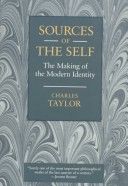
Sources of the self
The Making of the Modern Identity
Introduction
Nova: Who are you? Not your name, not your job title, not where you grew up. Who are you, really? That question feels so natural to us today. Of course I have an inner self, a unique identity, a personal truth I need to discover and express. But here's the thing: that feeling, that entire way of understanding yourself, has a history. It wasn't always this way. And according to the Canadian philosopher Charles Taylor, tracing that history reveals something startling about what it means to be a person in the modern world.
Nova: Exactly. And that's the massive project Taylor undertakes in his 1989 book Sources of the Self: The Making of the Modern Identity. All 624 pages of it. He's asking: how did we Westerners come to understand ourselves the way we do? What are the moral and philosophical foundations underneath our sense of who we are?
Nova: His core argument is deceptively simple: you cannot define the self apart from the good. Your identity isn't just a list of preferences or personality traits. It's fundamentally shaped by what you consider most valuable, most worthy, most meaningful. And those values have a history. They come from somewhere. Taylor wants to excavate those sources.
Nova: Precisely. And Taylor argues that modern people are in a peculiar bind. We've inherited incredibly rich moral sources, but we've also developed ways of thinking that make those sources invisible to us. We think we're just rational calculators or self-expressive individuals, and we've forgotten the deeper wells we're drawing from. Today we're going to dive into those wells.
Moral Frameworks and Strong Evaluations
The Self Cannot Escape the Good
Nova: Let's start with Taylor's foundational claim. He says that being a self is inseparable from existing in what he calls moral space. We orient ourselves by asking questions like: what kind of life is worth living? What makes a person admirable? What do I owe to others?
Nova: That's beautifully put. Taylor calls this strong evaluation. It's not just that I prefer chocolate over vanilla. It's that I judge some desires as higher, nobler, more worthy than others. I might want to binge-watch a show, but I also want to be the kind of person who keeps promises. Those aren't just two preferences on the same level. One carries moral weight.
Nova: Yes. He critiques what he calls procedural ethics. Think of utilitarianism, which says: just calculate the greatest good for the greatest number. Or Kantian ethics, which says: just follow universalizable rules. Taylor says these approaches focus entirely on how we decide what to do, but they never ask the deeper question: why do certain goods matter in the first place? Why is benevolence good? Why is human dignity worth respecting? Those frameworks take the answers for granted without examining the sources.
Nova: Exactly. And Taylor lays out three axes of moral evaluation that every human being navigates. First, our sense of respect for human life and the obligations we have toward others. Second, our sense of what makes a life full and meaningful. And third, our sense of dignity, the kind of standing we have in our own eyes and in the eyes of others.
Nova: Great question. Taylor takes on what he calls projectionist naturalism, the idea that our values are just subjective coloring on a meaningless cosmos. He follows Wittgenstein in arguing that humans occupy a form of life. Just as the color red or the shape of a square picks out real properties in our world, so do virtue terms like courage or generosity. They're not arbitrary. They're part of the furniture of our human reality. You can't give the best account of human existence without including them.
Nova: Right. And here's the kicker: even the person who claims to be a pure naturalist, who says everything reduces to physical laws, still makes qualitative distinctions about what's good and worthy in their own life. They can't escape it. The self is always already oriented toward the good. The question is just whether we're honest about it.
From Plato to the Punctual Self
The Great Inward Turn
Nova: So if the self is always oriented toward the good, the next question is: how has that orientation changed over time? Taylor traces an epic journey across two millennia, and it starts with a radical shift: the turn inward.
Nova: In Homer's world, identity was almost entirely external. A man was defined by his deeds in battle, the glory he won, the stories that would be told about him. The warrior ethic was the constitutive good. Your worth was measured by your place in a public hierarchy of honor.
Nova: Right. Then Plato comes along and introduces something revolutionary: reason as a vision of cosmic order. The good life isn't about battlefield glory anymore. It's about aligning your soul with the rational structure of the universe. Your soul has three parts: spirit, desire, and reason, and reason should rule. But notice, reason here isn't inward calculation. It's a vision of something outside you, the meaningful order of the cosmos.
Nova: Exactly. The real pivot comes with Augustine in the fourth century. Augustine takes Plato's ideas and radically interiorizes them. For Augustine, God is not found by looking at the external world. You find God by turning inward, by attending to the light within your own soul. Taylor calls this the first major step toward modern inwardness. The path to truth now runs through the interior.
Nova: Yes. The really dramatic break comes with Descartes in the seventeenth century. For Descartes, the external world is a mechanism. It has no inherent meaning, no expressive dimension, no spiritual essence. God, value, virtue, none of that is found in the world out there. Instead, you find certainty by turning inward to the mind itself. The mind becomes a disengaged, rational observer of a mechanistic universe.
Nova: And then Locke takes it even further. For Locke, there are no innate ideas. Everything in the mind comes from sense impressions that get combined and recombined. The mind itself becomes a kind of mechanism. And here's the crucial move: Locke introduces what Taylor calls the punctual self. This is the self that can step back and observe its own thoughts, desires, and will as if they were external objects to be manipulated and reformed.
Nova: Exactly. And Taylor sees this as both liberating and deeply problematic. It gives us tremendous power for self-control and rational mastery. But it also flattens the moral landscape. If the self is just this extensionless point that manipulates its own mental contents, where do our deepest commitments come from? What gives them weight?
Nova: That tension runs through the entire modern identity. And it sets up the next major development Taylor traces.
How Ordinary Life Became Sacred
The Dignity of the Everyday
Nova: Here's something we take completely for granted today: that being a good parent, a good spouse, a good worker, that these ordinary things matter. That a life devoted to family and productive work can be a deeply meaningful life. But Taylor argues this is a revolutionary idea with a specific history.
Nova: Not at all. In the ancient world, and for much of Western history, there was a strict hierarchy of life goods. The contemplative life of the philosopher, the active life of the citizen or warrior, these were considered higher than the mere life of production and reproduction. Being a farmer or a carpenter or a mother, that was necessary but not noble. The real meaning was found in scholarship, governance, or military glory.
Nova: Taylor points to a convergence of forces. The Protestant Reformation was crucial. It rejected the hierarchical mediation of the church, the idea that monks and priests lived a higher spiritual calling than ordinary believers. For the Reformers, the layperson's life of work and family could be just as sanctified. Your calling wasn't to leave the world but to serve God within it.
Nova: Beautifully said. And the Scientific Revolution reinforced this. Think about it: the new empirical science valued practical demonstration over logical proof. The craftsman, the lens-grinder, the watchmaker, their hands-on knowledge became epistemically respectable in a way it hadn't been before. Francis Bacon explicitly championed this. Knowledge wasn't just for contemplation. It was for the relief of the human condition.
Nova: And Taylor argues this affirmation of ordinary life is one of the great achievements of Western modernity. It underpins our commitments to universal human rights, to the idea that every life matters, not just the lives of the great and powerful. But there's a tension here too. Once you affirm ordinary life, you also create pressure to improve it, to maximize well-being, to eliminate suffering. That can slide into a kind of shallow utilitarianism where the only thing that matters is comfort and consumption.
Nova: Exactly. And that tension leads directly to the next major source Taylor explores: the voice of nature and the rise of expressive individualism.
Rousseau, Romanticism, and the Birth of Authenticity
Nature's Voice and the Expressive Self
Nova: So far we've traced two major developments: the turn inward, which gave us the disengaged rational self, and the affirmation of ordinary life, which gave dignity to everyday existence. But Taylor identifies a third crucial source of modern identity: the idea that nature, both the nature outside us and the nature within us, is a source of moral goodness.
Nova: Rousseau is the pivotal figure. For Rousseau, human beings are born good, and it's society that corrupts us. The voice of nature within us, our inner sentiments and conscience, is a more reliable moral guide than the artificial conventions of civilization. This is a radical inversion of the older view, where nature was something to be transcended or disciplined by reason.
Nova: Yes. And this opens the door to what Taylor calls expressive individualism. The idea, developed by thinkers like Herder, that each person has their own unique way of being human. Your moral task isn't to conform to some universal rational standard. It's to discover and express your own original nature, your own authentic self.
Nova: It absolutely is. The ideal of authenticity, being true to yourself, is one of the most powerful moral ideals in contemporary Western culture. Taylor wants us to see that this ideal has depth. It's not just about doing whatever you feel like. The Romantics understood authenticity as a demanding moral project. You have to actually discover who you are, articulate it, live it out. It requires creativity, self-knowledge, and often struggle.
Nova: That's exactly Taylor's concern. He argues that modern culture often trivializes authenticity into what he calls soft relativism: you do you, I'll do me, and there's no way to judge between them. But Taylor insists that real authenticity has normative force. It involves discovering something genuinely worthwhile about yourself and living in fidelity to it. It's not just self-indulgence.
Nova: Right. And this connects to his broader argument about what he calls subtler languages. In the final part of the book, Taylor argues that modern Westerners navigate between three major moral sources: theistic sources rooted in the Augustinian tradition, naturalist sources rooted in the Enlightenment and scientific rationality, and Romantic sources rooted in the expressive power of nature and the inner self. Most of us draw on all three, often without realizing it.
Nova: Exactly. And Taylor thinks that's actually a strength. The problem is that modern culture, especially the dominant naturalist framework, tends to obscure these sources. We think we're just rational individuals making choices, and we lose touch with the deeper wells of meaning that actually sustain us.
Conclusion
Nova: Taylor doesn't offer a simple prescription. He's not saying we should go back to being medieval Christians or ancient Greeks. But he does call for what he terms retrieval. Not a return to premodern sources, but a re-articulation of them in terms that make sense for our pluralistic modern world.
Nova: Exactly. Taylor wants us to recognize that our moral lives are deeper and more complex than our dominant theories allow. When you feel moved by the beauty of nature, when you're struck by the dignity of another person, when you sense a calling to be true to yourself, you're drawing on moral sources that have been articulated over centuries by philosophers, poets, saints, and ordinary people. Acknowledging those sources doesn't weaken your rationality. It enriches it.
Nova: Absolutely. Sources of the Self lays the foundation for everything Taylor wrote afterward. His work on secularism, on multiculturalism, on the politics of recognition, it all flows from this basic insight: that the modern self is not a self-sufficient atom. We are constituted by our relationships, our communities, our traditions, and our orienting commitments to the good. We need recognition from others to form our identities. We need moral frameworks to navigate our lives.
Nova: I think there are three big ones. First, your identity is not just a set of preferences. It's shaped by what you truly value, and those values have a history worth understanding. Second, the modern Western self is the product of a long, rich, often conflicted journey through inwardness, the affirmation of ordinary life, and the expressive turn. We're standing on the shoulders of Augustine, Descartes, Rousseau, and countless others, whether we know it or not. And third, we should resist the temptation to flatten our moral lives into simple formulas. The sources of the self are multiple, and that multiplicity is a resource, not a problem.
Nova: That's exactly right. Taylor helps us see that the modern self, for all its anxieties and contradictions, is an extraordinary achievement. It has given us inward depth, universal dignity, and the ideal of authenticity. The task is not to abandon these gifts but to reconnect them to the sources that give them life.
Nova: This is Aibrary. Congratulations on your growth!