

Your Inner Wisdom is Your Compass: Unleashing Intuition in Strategic Leadership.
Golden Hook & Introduction
SECTION
Nova: You know, Atlas, there's this pervasive idea out there that in the world of high-stakes strategic decisions, especially in leadership, we should only ever trust the spreadsheets, the algorithms, the cold, hard data. Anything else is just... fluffy.
Atlas: Oh, absolutely. The dreaded "gut feeling." Sounds like a recipe for disaster in a boardroom, doesn't it? "My gut tells me we should invest a billion dollars here." I mean, come on, that's almost a punchline.
Nova: Well, what if I told you that dismissing that "gut feeling" is actually creating a massive blind spot for leaders, hindering truly innovative and agile decision-making? We're talking about intuition, but not as magic. It's rapid pattern recognition, honed by years of experience, and it's our most powerful, often sidelined, tool.
Atlas: Okay, you've definitely got my attention. Rapid pattern recognition—that sounds a lot more scientific than "a feeling in my tummy." So, what exactly are we getting wrong about this crucial, yet often maligned, aspect of leadership?
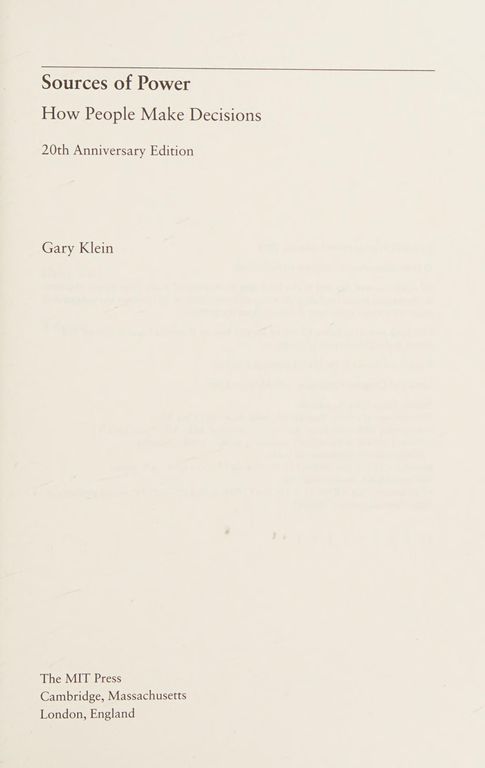
Nova: Exactly! Today, we're diving deep into the power of that inner compass, drawing insights from two titans of cognitive science: Gary Klein’s groundbreaking work in "Sources of Power" and Daniel Kahneman’s Nobel Prize-winning "Thinking, Fast and Slow." Klein, in particular, was a pioneer in naturalistic decision-making, studying how real-world experts make critical choices under immense pressure, far from the sterile lab environment.
Atlas: So, we’re talking about actual firefighters, military commanders—people whose decisions have immediate, tangible consequences, not just quarterly reports. That context changes everything about how I think about 'intuition.'
The Blind Spot – Ignoring Intuition's Value
SECTION
Nova: It fundamentally does. Klein's work illuminates how these experts make high-stakes decisions, not by meticulously comparing every single option, but by recognizing patterns and acting on the first workable solution that comes to mind. That, Atlas, is the power of experienced intuition at play. But in our modern, data-obsessed world, we often ignore it. We're so focused on quantitative metrics that we create a "blind spot," overlooking the invaluable qualitative insights that experience provides.
Atlas: Hold on, I'm trying to picture this. In a world where every strategic move is supposed to be backed by robust analytics, isn't trusting a 'pattern recognition' just a fancy way of saying "winging it"? For a leader trying to build sustainable growth and influence direction, how do they justify that kind of decision to stakeholders?
Nova: That’s a crucial question. The distinction is that it's not 'winging it.' It's a highly sophisticated form of cognition. Think of a seasoned architect looking at a complex building design. They might intuitively sense a structural weakness or an inefficient flow long before a detailed engineering analysis confirms it. That 'sense' isn't random; it's a synthesis of every blueprint they've ever seen, every structural failure they've encountered, every successful design they've been a part of.
Atlas: So, it's like their brain has run a thousand simulations in the background, and the 'gut feeling' is the output? That makes so much more sense than just a random hunch. It’s a compressed form of expertise.
Nova: Precisely. And when leaders in complex, rapidly evolving environments ignore this, they miss critical signals. They become slower, less adaptable. Imagine a tech leader trying to predict the next big market shift. Data might show current trends, but intuition – born from years in the industry, understanding user behavior, watching competitors – can often spot the nascent signals, the subtle shifts in the ecosystem, that the numbers haven't fully captured yet. Ignoring that is like flying blind in a storm, relying only on instruments that only show you what’s.
Atlas: I can definitely relate to that. In strategic leadership, you're always trying to see the whole picture, but sometimes the data only gives you snapshots. It sounds like intuition is the connective tissue, allowing you to build a pathway for people, not just systems, by anticipating what’s coming next. But how do you your intuition is reliable and not just a bias, which Kahneman talks so much about?
Harnessing System 1 – Integrating Intuition with Analytics
SECTION
Nova: That's where Kahneman's work, even though it often highlights our cognitive biases, becomes so illuminating. He introduces us to System 1 thinking—our fast, automatic, intuitive responses—and System 2 thinking—our slower, more deliberate, analytical processes. The key isn't to choose one over the other, but to understand their strengths and weaknesses and integrate them. Kahneman's insights help us calibrate our intuitive compass.
Atlas: Okay, so it’s not about ditching the data, it’s about making sure your internal GPS is also getting a signal. But how do you actually that internal GPS? How does a leader, especially one driven by impact and sustainable growth, actively cultivate and apply this kind of intuition without falling prey to those System 1 biases that Kahneman warns about?
Nova: It starts with conscious reflection, which is a growth recommendation we often give. Carving out dedicated time for reflection sharpens your strategic edge. It’s about reviewing past decisions – both successful and unsuccessful – and asking: "What was my gut telling me then? What information, conscious or subconscious, informed that feeling?" This meta-cognition builds a feedback loop for your intuition.
Atlas: So, it’s like debriefing your own brain. Not just looking at the outcome, but dissecting the of how you arrived at the decision, including the less tangible elements. That's a profound way to ensure your experience genuinely becomes your compass.
Nova: Exactly. Gary Klein’s research on "pre-mortems" is a great example. Before a major project launch, leaders imagine it has failed spectacularly. Then, they brainstorm all the reasons it might have failed. This isn't just problem-solving; it activates their intuitive pattern recognition to anticipate risks and opportunities they might otherwise overlook in their optimism. It helps integrate that fast, intuitive insight with slow, deliberate planning.
Atlas: That's fascinating. It sounds like a structured way to tap into those rapid insights, using the analytical framework to validate and refine them. This isn't just about trusting your inner wisdom; it’s about your inner wisdom and knowing when and how to deploy it. It’s about building a pathway for future success by continually refining your internal navigation system.
Synthesis & Takeaways
SECTION
Nova: Ultimately, what both Klein and Kahneman show us is that intuition isn't some mystical force. It’s a critical, often undervalued, component of effective strategic leadership, especially in complex, rapidly evolving environments. The true master of strategy isn't just the one with the most data, but the one who can skillfully weave that data with deep, experienced-based intuition.
Atlas: And it’s about recognizing that our experience isn't just a collection of facts, but a rich tapestry of patterns our brain has learned to recognize at lightning speed. To trust your inner wisdom isn't to abandon logic, but to integrate a powerful, often subconscious, form of logic into your decision-making. It's about elevating teams and influencing direction with a holistic vision.
Nova: Absolutely. So, for our listeners, we encourage you: reflect on your own recent significant decisions. How much did your 'gut feeling' play a role, and what deeper information do you now realize informed that feeling? Begin to consciously connect those dots.
Atlas: That’s a powerful challenge. It moves us from simply having intuition to actively understanding and refining it. A truly integrated approach to strategic thinking.
Nova: This is Aibrary. Congratulations on your growth!