

Beyond the Obvious: Cultivating Deep Intuition for Better Decisions
Golden Hook & Introduction
SECTION
Nova: Forget everything you think you know about 'gut feelings.' For too long, intuition has been dismissed as unscientific, unreliable, a fluffy concept for the indecisive. What if it's actually the most sophisticated decision-making tool we possess, honed by experience and crucial for leaders?
Atlas: Oh, I like that. I think a lot of our listeners, especially those grappling with complex problems, feel that tension. They're drowning in data, yet some decisions still feel like a leap of faith.
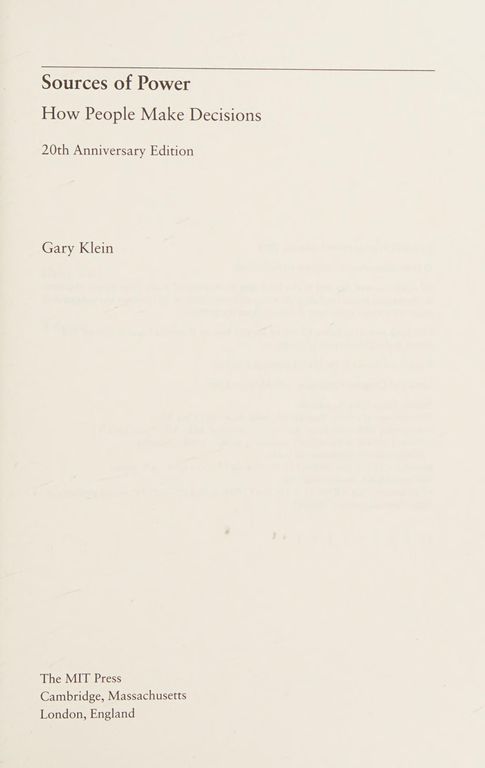
Nova: Absolutely. And today, we’re unpacking that very idea, drawing incredible insights from two seminal works. First, Gary Klein's "Sources of Power," a book born from his extensive research with firefighters, military commanders, and other high-stakes professionals. His work really revealed the practical genius of experts making rapid, life-or-death decisions under immense pressure.
Atlas: Right. And then, we'll also bring in Daniel Kahneman's "Thinking, Fast and Slow," which famously gifted us the framework of System 1 and System 2 thinking. That book profoundly changed how we understand human judgment, and it’s essential for knowing when to trust those rapid insights.
Nova: Exactly. So, for anyone who wants to move beyond mere logic and truly embrace a more holistic, effective approach to complex choices, this is for you. We're going to explore how intuition, far from being mystical, is a cultivated skill essential for strategic decisions.
Intuition Under Pressure: The Power of Recognition-Primed Decisions
SECTION
Nova: Let's start with those high-stakes situations. Imagine a fireground commander, standing amidst a burning building. The air is thick with smoke, alarms are blaring, and the structure groans. There’s no time for a leisurely SWOT analysis or a detailed spreadsheet. This commander needs to make a decision.
Atlas: That sounds like pure chaos. For our listeners who are navigating dynamic markets or leading rapid-growth startups, that level of pressure isn't always physical, but it’s definitely there. How does someone make an effective decision in that moment without all the data points?
Nova: This is where Gary Klein's work in "Sources of Power" is so illuminating. He studied these experts and found they weren't guessing. They were employing what he called "recognition-primed decision-making." Take the fire commander example: Klein recounts a story where a commander leads his team into a house only to suddenly order them out. Moments later, the floor collapses.
Atlas: Whoa. How did he know? Did he see something specific?
Nova: Not explicitly at first. When asked, he couldn't immediately articulate why. He just had a 'feeling.' But upon reflection, he realized it wasn't a mystical premonition. It was a confluence of subtle cues: the fire was quieter than expected, unusually hot, and he remembered a similar fire just a few weeks prior. His vast experience allowed him to instantly recognize a pattern – a 'trap' – that someone less experienced wouldn't even perceive.
Atlas: So it's not a 'sixth sense,' but actually highly logical, just incredibly fast. It’s like their brain is running a super-fast pattern matching algorithm based on years of training and experience.
Nova: Precisely. It's about recognizing familiar patterns in a flash, understanding what to expect, and reacting accordingly. These experts have built up a vast mental library of cues, actions, and outcomes. When they encounter a situation, their intuition rapidly cross-references it with that library.
Atlas: I can see how that applies to a CEO or a product lead. They might walk into a meeting, hear a pitch, and just 'feel' that something is off, even if all the slides look good. Is that the same kind of recognition-primed intuition?
Nova: Absolutely. For a visionary leader, that 'off' feeling isn't a random emotion. It’s their brain, through years of experience in product launches, market shifts, and team dynamics, recognizing subtle patterns of risk or opportunity that aren't immediately evident to others. It could be a slight hesitation in a team member's voice, a familiar market trend playing out, or an unmet user need hiding in plain sight.
Atlas: But isn't there a risk of bias here? If it's all based on past patterns, couldn't that lead to missing new opportunities or repeating old mistakes, especially in truly innovative fields? The 'messy middle' of innovation often means there no clear past patterns.
Nova: That's a brilliant question, Atlas, and it leads us perfectly into our second core topic. While Klein shows the power of rapid intuition, Kahneman helps us understand its limitations and how to cultivate it more effectively.
Balancing Fast & Slow: Cultivating Intuition for Strategic Clarity
SECTION
Nova: That rapid 'gut feeling' Klein describes sounds a lot like what Kahneman calls System 1 thinking: fast, automatic, intuitive, and often emotional. It's what allows us to drive a car, understand simple sentences, or recognize a familiar face without conscious effort.
Atlas: Right, it’s our brain on autopilot, handling most of our daily tasks without us even realizing it. But then there's System 2.
Nova: Exactly. System 2 is our slow, deliberate, analytical brain. It’s what we engage for complex calculations, learning a new language, or carefully weighing the pros and cons of a major strategic decision. Kahneman’s great insight was showing how these two systems interact – and sometimes clash. Our System 1 is often the first to offer a solution, and if it feels right, System 2 might just go along for the ride, leading to cognitive biases.
Atlas: That makes sense. For a leader trying to define core value or navigate complex problems, how do you this kind of reliable intuition, the kind that truly aids strategic clarity? Is it just more experience, or is there a specific practice?
Nova: It's more than just accumulating years. It's about experience and conscious reflection. The "Nova's Take" on this fundamentally validates the role of intuition. It's not about ignoring data, or even ignoring your gut. It's about intelligently integrating them. When you face a decision, your System 1 might offer a rapid assessment. The cultivation comes in engaging your System 2 to ask: "Why do I feel this way? What are the underlying cues? Does this situation truly match a pattern I've seen before, or am I falling prey to a familiar bias?"
Atlas: So, it's about pausing and checking your gut feeling, rather than just blindly following it. It’s like a quality control check on your intuition.
Nova: Precisely. For a strategic builder, this means actively seeking feedback on past decisions where your intuition played a role. It means reflecting on what subtle cues informed that intuition, as our 'Healing Moment' prompt suggests. When did your gut feel strong, and what evidence, conscious or unconscious, was supporting it? When did it lead you astray, and what did you miss?
Atlas: That's a great way to put it. It’s like practicing radical empathy with your own past decisions, understanding the 'why' behind them. What about the 'messy middle' of innovation? When do you trust the gut, and when do you need deep analysis? Because often, there are no clear patterns there.
Nova: That's where the balance is critical. In the messy middle, where true innovation thrives, your System 1 might give you a 'hunch' about a new product direction or a market gap. That hunch is valuable; it's a signal. But then you must engage System 2: rigorous customer psychology research, scenario planning, testing adaptive organizational structures. You let intuition guide your exploration, but analysis validates your path. It’s an iterative dance.
Atlas: So, intuition helps you spot the potential direction, and then your analytical mind helps you build the movement, as our listeners would say, ensuring it's grounded and impactful. Are there any 'red flags' that tell us our intuition might be leading us astray?
Nova: Absolutely. Kahneman points out that System 1 thrives on coherence and often makes quick judgments based on limited information, filling in gaps with what feels right. Red flags appear when the situation is genuinely novel, deeply complex with many interacting variables, or when you have a strong emotional investment that might cloud judgment. If you find yourself rationalizing a decision your gut on, but your data or logic can't quite support, that's your cue to engage System 2 more deeply.
Synthesis & Takeaways
SECTION
Nova: So, what we've really explored here is that intuition isn't some mystical power. It's a highly sophisticated form of pattern recognition, refined through experience, and crucial for rapid decision-making in complex environments. But its power truly unlocks when it's cultivated, integrated, and checked by our deliberate, analytical thinking.
Atlas: It’s about building a movement, not just a product. It's about defining core value and navigating complex problems with precision, not just instinct. This approach fundamentally validates the role of informed instincts, moving beyond mere logic to embrace a more holistic and effective approach to complex choices.
Nova: For our listeners, those strategic builders and visionary leaders, the challenge is to embrace that messy middle. To practice radical empathy with their own decision-making process. Reflect on a recent decision where your gut feeling was strong. What subtle cues might have informed that intuition? And how can you consciously integrate that fast insight with slow, deliberate thought to achieve even greater clarity and purpose in your next big move?
Atlas: Exactly. It’s about being purposeful, grounded, and creating something meaningful and enduring. This kind of cultivated intuition is a superpower for anyone driven by that deeper purpose.
Nova: This is Aibrary. Congratulations on your growth!