

Beyond Logic: The Hidden Power of Intuition in Decision-Making
Golden Hook & Introduction
SECTION
Nova: What if I told you that some of your best decisions, the ones you swear were purely logical, were actually driven by something far more primal, something you barely even noticed? And that ignoring it is actively holding you back from even better strategic thinking?
Atlas: Huh. That’s a bold claim, Nova. Especially for our listeners who pride themselves on being data-driven, strategic thinkers. Are you saying we're all just… winging it, but with a spreadsheet?
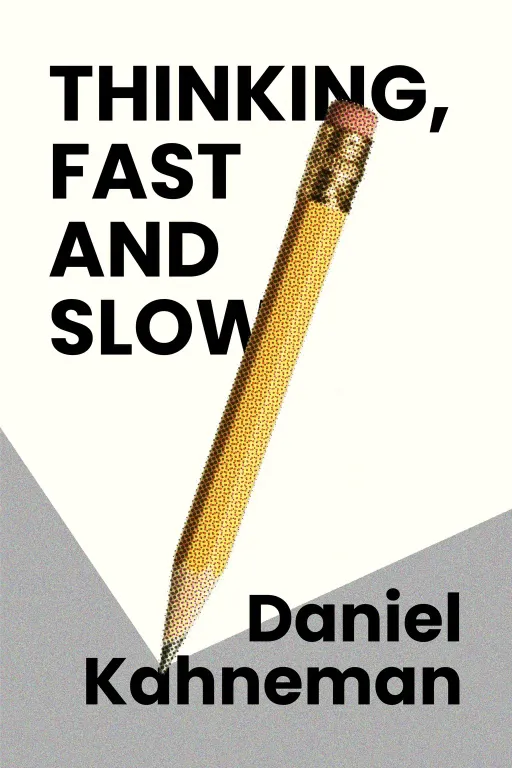
Nova: Not winging it, Atlas, but certainly not as purely rational as we often believe. And that mind-bending idea is at the heart of our discussion today, drawing heavily from the groundbreaking work of Nobel laureate Daniel Kahneman in his seminal book, 'Thinking, Fast and Slow,' and Gary Klein's equally insightful 'Sources of Power: How People Make Decisions.' Kahneman, in particular, won his Nobel Prize for this very kind of work, showing us the hidden architecture of the mind.
Atlas: Okay, so it’s not just a hunch, it’s Nobel-Prize-winning science. So, if our decisions aren't purely rational, what exactly is going on under the hood? How does this "unconscious influence" actually work?
The Blind Spot – Unmasking the Illusion of Pure Rationality
SECTION
Nova: Excellent question, and it’s where Kahneman’s work really shines. He introduces us to two fundamental systems of thought: System 1 and System 2. Think of System 1 as your fast, automatic, intuitive self. It’s the part of your brain that knows a face is angry, or can catch a ball without conscious calculation. It's effortless, associative, and constantly running in the background.
Atlas: So, it's like auto-pilot for the brain. That makes sense for simple tasks, but how does that apply to truly strategic decisions? Like, hiring a key executive or launching a new product? Are you saying my gut feeling about a candidate is System 1?
Nova: Exactly! And not just your gut feeling, but also the quick judgments you make, the biases you might unconsciously hold, the way you interpret data based on prior experiences. System 1 is brilliant at pattern recognition and quick conclusions, but it's also prone to systematic errors, what Kahneman calls cognitive biases. These create a "blind spot" in our decision-making.
Atlas: A blind spot. That’s a powerful image. Can you give us an example of how this System 1 bias might look in a professional setting? For an aspiring leader, this is crucial.
Nova: Absolutely. Imagine you're interviewing two candidates for a leadership role. Candidate A went to a prestigious university you once admired, and they remind you of a highly successful colleague. Candidate B has an equally impressive resume but a less familiar background. System 1 might quickly, unconsciously, favor Candidate A because of those superficial associations, even if Candidate B is objectively a better fit. Your brain takes shortcuts to save energy, and those shortcuts can lead you astray, influencing your judgment long before System 2, your slow, deliberate, analytical self, even has a chance to fully engage.
Atlas: Wow. So, we're not just making decisions; we're also managing these two internal forces that are constantly at play. For a leader trying to make objective choices, that's incredibly challenging. How can an aspiring leader even begin to identify these unconscious influences in their own judgment, or their team's?
Intuition as a Strategic Superpower (and its Kryptonite)
SECTION
Nova: That’s the million-dollar question, and it’s where the story gets even more interesting – and empowering. Because while System 1 has its pitfalls, it also houses our intuition, which, when developed, can be a strategic superpower. This is where Gary Klein's research comes in. He studied experts – firefighters, military commanders, ICU nurses – people who make rapid, high-stakes decisions under immense pressure.
Atlas: Okay, so we're talking about real-world scenarios, not just abstract theory. Give us an example. How did these experts use intuition?
Nova: Klein observed firefighters in action. There's a famous story of a veteran commander entering a burning house. He felt an immediate, overwhelming sense of unease, a 'gut feeling' that something was wrong, even though his conscious mind couldn’t pinpoint anything specific. He ordered his crew out. Moments later, the floor collapsed. He couldn't articulate he knew, but his System 1, honed by years of experience, had recognized subtle cues – a strange quietness, unusual heat – that signaled danger, patterns he’d encountered before but couldn't consciously process in that split second. His intuition saved lives.
Atlas: Oh man. That’s incredible. So, it's not just "trust your gut" advice; it's a highly sophisticated form of pattern recognition built on years of experience and feedback. But wait, Nova, sometimes my gut tells me to eat an entire pizza, not make a sound business decision. What’s the difference between that kind of impulse and this expert intuition?
Nova: That's a crucial distinction, Atlas! Expert intuition isn't magic; it's accumulated knowledge and experience, stored and processed at lightning speed by System 1. Your pizza craving is a basic biological drive. The firefighter's intuition is different. It's a vast database of past experiences, successes, and failures, allowing them to instantly recognize a familiar pattern and react appropriately. For leaders, developing this means deliberate practice, seeking feedback, and reflecting on decisions to build that intuitive database.
Atlas: Okay, I get it now. It's like a highly trained muscle for decision-making. But what’s its Kryptonite? When should a leader trust their intuition, especially when the stakes are high, and the context is novel or rapidly changing?
Nova: That's the other side of the coin. Intuition is fantastic in stable environments where patterns repeat. But it can be dangerously misleading in novel situations, or when emotions are running high, or when there's no clear feedback loop to tell us if our gut feeling was right or wrong. Klein and Kahneman would both agree: your System 2 needs to act as a quality control. If the stakes are high, if the situation is unprecedented, or if you feel strong emotions, that's when you slow down, engage your System 2, and double-check your intuitive reaction with data and deliberate analysis.
Synthesis & Takeaways
SECTION
Nova: So, true strategic thinking isn't about ignoring intuition or pretending we're purely logical. It's about understanding this powerful interplay between System 1 and System 2. It's about knowing when to trust that quick, expert insight, and when to pause, critically reflect, and bring in the slower, more deliberate analysis to mitigate our blind spots. It's leveraging intuition's strengths while being acutely aware of its weaknesses.
Atlas: That makes so much sense. It's not one or the other, it's both. It’s about building that intuitive muscle through experience, but also having the discipline to critically examine those gut feelings. So, for our listeners, particularly those aspiring leaders and strategic thinkers, here's a deep question to reflect on: Think of a recent important decision you made. How much was driven by data, and how much by a 'gut feeling'? And knowing what we know now about System 1 and System 2, would you have approached it differently?
Nova: That's a powerful reflection. Because ultimately, embracing this dual-system perspective empowers us to make more robust, more adaptable, and ultimately, more successful decisions, no matter how complex the challenge. It’s about being a more complete, more effective leader.
Atlas: Absolutely. A fantastic way to reframe how we think about thinking.
Nova: This is Aibrary. Congratulations on your growth!