

Beyond Logic: The Hidden Power of Intuition in Complex Decisions
Golden Hook & Introduction
SECTION
Nova: Most people think of "gut feelings" as flaky, unreliable hunches. But what if your intuition is actually a highly sophisticated supercomputer, processing vast amounts of data in milliseconds, often more accurately than your conscious mind?
Atlas: Whoa, really? That sounds almost too good to be true, especially when we're constantly told to rely on data and logic. My whole career has been built on rigorous analysis.
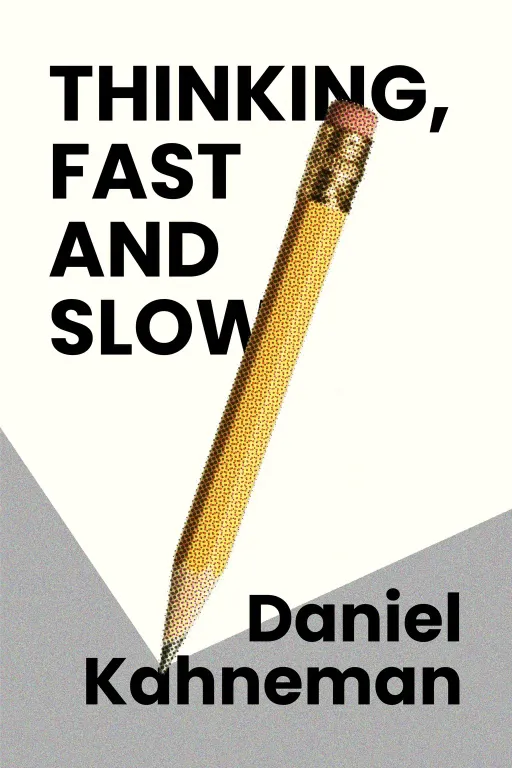
Nova: Exactly! And that's precisely why today, we're diving into the fascinating, often misunderstood world of intuition. We're pulling insights from two titans of cognitive science: Daniel Kahneman, a Nobel laureate in Economics whose groundbreaking work like revolutionized how we understand decision-making, and Gary Klein, a cognitive psychologist renowned for his decades-long research into how experts make decisions under intense pressure, often without conscious deliberation.
Atlas: I can definitely see how that would resonate with our listeners who are navigating complex, fast-moving environments. The tension between instinct and analysis is a daily reality. But what's the real distinction here? Is intuition just a fancy word for guessing, or is there something more substantial going on?
Unmasking Intuition: Beyond Gut Feelings to System 1 and Expert Recognition
SECTION
Nova: That’s a brilliant question, Atlas, and it gets right to the heart of our first core topic: unmasking intuition. Kahneman gives us a fantastic framework with his two systems of thought. Think of System 1 as your fast, automatic, intuitive mind. It's what allows you to effortlessly recognize a friend's face, or hit the brakes when a car swerves. It operates without conscious effort, almost instantly.
Atlas: So, it's like the brain's autopilot? Efficient, but maybe prone to shortcuts?
Nova: Precisely. It’s incredibly efficient, and for routine tasks, it’s brilliant. But it also has its biases, its blind spots. System 2, on the other hand, is your slow, deliberate, analytical mind. It’s what you use to solve a complex math problem, or carefully weigh the pros and cons of a major strategic decision. It requires effort and conscious attention.
Atlas: That makes sense. We all experience that shift, right? Like when you’re driving on a familiar road, you're on autopilot—System 1. But then suddenly there’s a detour, and you have to consciously navigate, engaging System 2.
Nova: Exactly! Now, where Gary Klein comes in, he takes a slightly different, but complementary, angle. He focuses on what he calls "recognition-primed decision-making," or RPD. Klein spent years studying professionals operating in high-stakes environments – firefighters, pilots, ICU nurses. What he found was that these experts often made incredibly effective decisions in seconds, not by systematically weighing options, but by recognizing patterns.
Atlas: Okay, so this 'expert intuition' sounds different from Kahneman’s general System 1. Is it just a highly trained version, or is there a fundamental difference in how it works? Because for someone building complex systems, understanding that distinction is key.
Nova: That's a crucial distinction. Kahneman describes the of fast thinking for everyone, while Klein describes the of highly developed fast thinking by experts. Think of it like this: Kahneman's System 1 is the basic hardware and software for quick processing. Klein's RPD is that same hardware, but loaded with decades of specialized, high-fidelity experience, allowing it to instantly match a current situation to a vast library of past patterns.
Atlas: So, for a fire commander, it’s not a 'gut feeling' in the vague sense, but rather a pattern match: "This smoke, this heat, this type of building construction… in my 20 years, this usually means X is about to happen."
Nova: You've got it. Klein's most famous example is a fireground commander who pulled his team out of a burning house just moments before the floor collapsed. When asked why, he couldn't articulate a logical reason at first. He just it was wrong. Later, he realized his intuition had picked up on subtle cues: the fire wasn't as hot as it should have been for its size, and it was unusually quiet. These were patterns his years of experience told him meant the fire was in the basement, directly under their feet.
Atlas: That’s incredible. It’s like an internal alarm system, constantly scanning and comparing. That gives me chills, honestly. It's not magic, it's highly evolved pattern recognition. But how does someone in, say, a fast-paced tech startup, where every day is a new problem, develop this kind of finely tuned intuition? It sounds like you need decades of experience, but many of our listeners are in early-stage dynamics.
The Logic-Intuition Alliance: Integrating Two Systems for Superior Decision-Making
SECTION
Nova: That’s a perfect segue into our second core topic, Atlas: forging a powerful alliance between intuition and logic. Because the goal isn't to choose one over the other; it's to integrate them. Your question about early-stage dynamics is spot on. While decades of experience certainly hone intuition, even in novel situations, our System 1 is constantly generating hypotheses. The trick is to use your System 2 – your deliberate, analytical mind – to those intuitive hypotheses.
Atlas: Okay, so intuition gives you a starting point, maybe a direction, and then logic comes in to validate or refine it? For our listeners who are strategists and architects, this balance is crucial. How do you know when to trust that initial 'feeling' versus when to dig deeper into the numbers?
Nova: Think of it this way: your intuition can often tell you to investigate. It flags anomalies, suggests connections, or even points to innovative solutions. Let’s say you’re working on a new product. Your gut might tell you, "This feature feels clunky," or "This market segment feels like a better fit." That’s your System 1, your accumulated experience, giving you a strong pointer.
Atlas: I totally know that feeling. Sometimes I'll see a complex system design and just it's going to have scalability issues, even before I run the numbers.
Nova: Exactly! Those are valuable signals. So, instead of dismissing that feeling, you then engage your System 2. You ask, "What specific data points would confirm or deny this feeling? What metrics can I track? What experiments can I run?" Your intuition helps you frame the right questions for your logical analysis, saving you immense time and resources.
Atlas: That’s a great way to put it. It’s about leveraging both, not letting one completely dominate. But what about the dangers? We've all heard stories of brilliant people making disastrous decisions based purely on a 'hunch' that turned out to be wrong. How do we avoid those intuitive traps, especially when the stakes are high, like in financial modeling or strategic planning?
Nova: That’s where the alliance truly shines. System 2’s role is not just to test, but also to or System 1 when necessary. Intuition, while powerful, is susceptible to biases – confirmation bias, availability bias, anchoring effects. For instance, an entrepreneur might have a strong intuitive conviction about a market, but if their logical analysis reveals insurmountable competitive hurdles or a tiny addressable market, their System 2 needs to step in.
Atlas: So, it's about building a feedback loop. Using logic to calibrate our intuition over time, making it smarter?
Nova: Absolutely. Cultivating better intuition involves diverse experiences, active reflection on past decisions – both successes and failures – and constantly seeking feedback. And crucially, knowing when to slow down. If a situation is truly novel, if the stakes are incredibly high, or if you feel a strong emotional pull, those are signals to engage System 2 more deliberately, to bring in diverse perspectives, and to rigorously check your assumptions. It's about developing the wisdom to know which system to trust, and when.
Synthesis & Takeaways
SECTION
Nova: So, to synthesize our discussion, intuition is far from a mystical force. It's a highly evolved, rapid-processing skill, whether it’s Kahneman’s System 1 autopilot or Klein’s expert pattern recognition. And the true mastery in decision-making lies not in abandoning one for the other, but in skillfully orchestrating the dance between your fast, experienced intuition and your slow, deliberate analysis.
Atlas: That gives me chills. It’s about trusting your inner wisdom, as our user profile suggests, but also having the analytical rigor to validate and refine it. For anyone navigating complex systems or trying to optimize early-stage dynamics, this isn't just theory; it's a foundational principle for making better, more robust decisions.
Nova: Precisely. The goal isn't to be purely rational or purely intuitive, but to be. To recognize the immense power of your gut feelings, yet always have the discipline to ask: "What data might support this? What might challenge it?"
Atlas: I think that’s an incredibly empowering takeaway for our listeners. It reframes intuition from something vague to a powerful, trainable asset. I’m curious, then, how has your own 'gut feeling' served you in a complex decision, and what data later supported it? We’d love to hear your stories about the logic-intuition alliance in action.
Nova: This is Aibrary. Congratulations on your growth!