

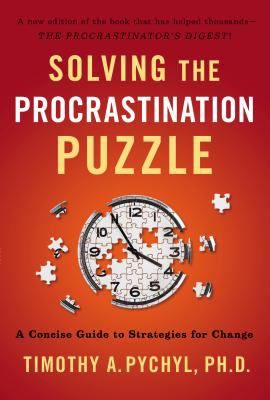
Solving The Procrastination Puzzle A Concise Guide To Strategies For Change
Introduction
Nova: Welcome back, everyone. I'm Nova, and today we're diving into a book that might just change how you think about every task you've ever put off. It's called Solving the Procrastination Puzzle by Timothy A. Pychyl. And honestly, the title alone is a promise, right? A puzzle implies there's a solution, and Pychyl, a psychology professor who has studied procrastination for over two decades, actually delivers one.
Nova: : And I have to confess something right at the start, Nova. When I first picked up this book, I thought, here we go, another productivity guru telling me to make better to-do lists.
Nova: And were you wrong!
Nova: : Completely wrong. The very first thing Pychyl does is blow up that assumption. He says procrastination is not a time management problem at all. It's an emotion regulation problem. That one sentence actually made me put the book down and think for a minute.
Nova: It's a reframe that changes everything, doesn't it? Pychyl has been running the Procrastination Research Group at Carleton University since 1995. This is not pop psychology. The book is short, about two to three hours of reading, but it's dense with decades of research distilled into very practical strategies. And here's the central puzzle: procrastination is a voluntary delay of an intended action, even when you know that delay will harm you. You want to do the thing. There's nothing physically stopping you. And yet, you don't do it. Why do we become our own worst enemy?
Nova: : That is the million-dollar question. I want to know the answer, and I suspect a lot of our listeners do too.
Nova: Then let's solve this puzzle together. Chapter by chapter.
The Emotional Roots of Procrastination
It's Not About Time, It's About Feelings
Nova: So let's start with the core insight of the entire book. When you procrastinate, what are you actually doing? Pychyl says you are not failing to schedule your time. You are avoiding a negative feeling. That feeling could be anxiety, boredom, frustration, self-doubt, even resentment. The task triggers an uncomfortable emotion, and your brain desperately wants to escape it.
Nova: : So procrastination is essentially running away from a feeling.
Nova: Exactly. And Pychyl has a phrase for it that he repeats throughout the book. We give in to feel good. When you think about starting that dreaded tax return or that difficult conversation, an avalanche of negative emotion hits you. In that moment, putting it off until tomorrow provides immediate relief. You feel better right now. And behaviors that get rewarded get repeated. So every time you procrastinate, you are literally reinforcing the habit.
Nova: : That explains why it feels so automatic. I'm not even consciously choosing to procrastinate half the time. My hand just reaches for my phone or I suddenly remember I need to reorganize the spice rack.
Nova: And here's a striking statistic from his research: participants in one of Pychyl's studies reported that forty-seven percent of their time online was spent procrastinating. And he published that over a decade ago, before social media exploded. He calls that a conservative estimate.
Nova: : Forty-seven percent! So almost half of our time online is just emotional escape. That's wild. But here's my question, Nova. What about all those times I delay something because something genuinely more urgent came up?
Nova: Great question. Pychyl makes a crucial distinction. All procrastination is delay, but not all delay is procrastination. If your child gets sick and your plans change, that's not procrastination. If an urgent work crisis appears and you have to reprioritize, that's not procrastination. Procrastination is specifically the needless, voluntary delay of an intended action. You could act, nothing is stopping you, but you choose not to. That's the puzzle.
Nova: : So procrastination requires that I intended to do something, I could do it right now, I know delaying will harm me, and I still don't do it.
Nova: That's the definition. And Pychyl frames it as a self-regulation failure. It sits in the same category as problem gambling, overeating, reckless spending. You fail to regulate your behavior to achieve your own goals. And the key driver, again, is short-term mood repair. You prioritize feeling good now over your long-term wellbeing.
Nova: : Which is kind of heartbreaking when you put it that way. I'm trading my future self's success for a few moments of emotional comfort.
Nova: That's exactly the framing. And that leads us directly into our next insight: the stories we tell ourselves to make that trade feel okay.
Cognitive Dissonance and Affective Forecasting
The Stories We Tell Ourselves
Nova: Here's something fascinating from Pychyl's research. When you intend to act and then you don't, you experience something psychologists call cognitive dissonance. Your beliefs, I should do this, and your actions, I'm not doing this, are in conflict. And that dissonance is uncomfortable. So your brain rushes in to resolve it.
Nova: : And let me guess, the resolution is usually not to actually do the task.
Nova: Bingo. Instead, we deploy an arsenal of psychological tricks to make ourselves feel better about procrastinating. Pychyl lists several of them. Distraction: you simply divert your attention. Forgetting: you actively or passively suppress what you need to do. Trivialization: you tell yourself the task isn't really that important. Denial of responsibility: I need more information before I can start. Downward counterfactuals: well, at least I'm not as bad as that other person.
Nova: : I have used every single one of those, and I didn't even know they had names. The denial of responsibility one is my specialty. I'll research the best way to do the task instead of actually doing the task.
Nova: That is a classic. And Pychyl says recognizing these excuses in real time is half the battle. If you can catch yourself saying I'll feel more like it tomorrow, you can challenge that thought. Because here's the second psychological trap: we are terrible at predicting how we'll feel in the future. It's called affective forecasting.
Nova: : So when I say I'll do it tomorrow, I'm genuinely picturing a motivated, energetic version of myself?
Nova: Exactly. Pychyl draws on research by Dan Gilbert at Harvard and Tim Wilson at the University of Virginia. We suffer from two biases. One is focalism: we underestimate how many other things will be competing for our attention and mood tomorrow. And two is presentism: the present moment always looms larger in our minds than any future moment. So when you imagine tomorrow, you picture a clean, empty day with a motivated you. But tomorrow arrives, and it's just as messy and complicated as today. And you want to procrastinate all over again.
Nova: : Pychyl actually says the tomorrow in which I'll really feel like it is always a day away. It never becomes today. That line hit me hard.
Nova: It's devastatingly accurate. And Pychyl offers a counterintuitive strategy here. He says we need to let go of the misconception that our motivational state must match the task at hand. You do not need to feel like doing something in order to do it. In fact, social psychology research shows that attitudes follow behaviors more than behaviors follow attitudes. Mood follows action.
Nova: : So the advice isn't wait until you feel motivated. It's start, and motivation will show up.
Nova: Precisely. And that is the perfect segue to Pychyl's most powerful practical tool.
The Power of Implementation Intentions
Just Get Started
Nova: If you take away just one strategy from this entire book, Pychyl would want it to be this: just get started. Notice he doesn't say just do it, the famous Nike slogan. He says just get started. The distinction matters.
Nova: : What's the difference?
Nova: Just do it can feel overwhelming because it implies completing the entire task. But just get started lowers the bar dramatically. Take one small step. Open the document. Put on your running shoes. Write one sentence. Pychyl's research shows that once we start a task, it is rarely as bad as we think. Getting started changes our perception of the task and of ourselves.
Nova: : There's physics in there too, right? An object in motion stays in motion.
Nova: Exactly. And the psychological mechanism is powerful. Getting started relieves the negative emotions you were avoiding. You realize the task isn't as terrible as you imagined. You start to feel a sense of progress. Self-efficacy beliefs go up. Confidence grows. You make more progress. It's an upward spiral instead of the downward spiral of procrastination.
Nova: : So the hardest part is literally just crossing that line from not-doing to doing.
Nova: Yes. And to help you cross that line, Pychyl recommends a tool called implementation intentions. This is based on research by Peter Gollwitzer and his colleagues, and Pychyl considers it one of the most effective strategies in the entire book.
Nova: : Okay, break this down for me.
Nova: An implementation intention is a simple if-then plan. You predetermine how you will act in a specific future situation. The format is: IF this situation arises, THEN I will do this action. For example: If it's Sunday after breakfast, then I'll study for two hours. If I feel the urge to check social media while working, then I'll close the browser tab and take three deep breaths. If I come home from work, then I'll put on my gym clothes immediately.
Nova: : So you're essentially programming a trigger and a response in advance, so you don't have to rely on willpower or decision-making in the moment.
Nova: That's it. The research behind this is robust. Gollwitzer's studies have shown that implementation intentions dramatically improve follow-through on everything from taking vitamins to exercising after surgery to purchasing organic foods. The key is that you delegate the control of initiating a behavior to a specific situational cue. You don't have to decide in the moment, because you've already decided.
Nova: : Which bypasses the whole emotional avoidance cycle entirely.
Nova: Exactly. Pychyl even suggests an implementation intention specifically for the emotional side: IF I feel negative emotions when I face the task at hand, THEN I will stay put and not run away. You're making a pre-decision about how to handle the discomfort.
Nova: : That feels almost too simple to work, but the research backs it up.
Nova: It does. And Pychyl pairs this with another crucial piece of advice about our environment, which we'll explore next.
Strategic Tools for Long-Term Change
Willpower, Self-Compassion, and the Digital Battlefield
Nova: Let's talk about willpower. Pychyl confirms what you've probably sensed intuitively: willpower is a limited resource. Studies show that if you exhaust your self-regulatory strength on one task, your performance drops on the next one. It's like a muscle that gets fatigued.
Nova: : This explains why I can resist doughnuts all morning and then binge-watch Netflix all afternoon. My self-control tank is empty.
Nova: Precisely. But here's the good news. Willpower is also like a muscle in that it can be strengthened. Pychyl cites research showing that just two weeks of self-regulatory exercises can improve your self-regulatory stamina. The more you practice saying no to impulses, the stronger that muscle becomes.
Nova: : So there's hope for chronic procrastinators.
Nova: Absolutely. And there are practical ways to work with your willpower rhythm. First, get enough sleep. Sleep restores self-regulatory capacity, so seven to eight hours a night is non-negotiable. Second, be strategic about timing. Willpower tends to decrease as the day goes on, so tackle your hardest tasks in the morning when your tank is full.
Nova: : That makes sense. But what about the digital elephant in the room? My phone is basically a procrastination machine.
Nova: Pychyl is blunt about this. He says that to stay connected to your goals, you need to disconnect from the internet. No Facebook, Twitter, or email running in the background while you work. Shut them off completely. The constant task-switching and checking behavior is absolutely devastating to productivity.
Nova: : I feel personally called out. But okay, what about when I fail? Because I will fail. I'll procrastinate again. Then what?
Nova: This might be the most surprising finding in Pychyl's work. Self-compassion after procrastination predicts better subsequent behavior. Self-criticism, on the other hand, tends to generate more avoidance, not less. If you beat yourself up for procrastinating, you create more negative emotions, which makes you more likely to procrastinate again to escape those feelings. It's a vicious cycle.
Nova: : So the inner drill sergeant is actually making things worse.
Nova: Significantly worse. Pychyl says, and I'm quoting here, be kind but firm with yourself, and be willing to forgive yourself when you do not live up to your own expectations. Forgiveness breaks the cycle. It allows you to move forward instead of spiraling into shame and further delay.
Nova: : That's a radical idea. Kindness as a productivity tool.
Nova: It really is. And it connects to one final concept Pychyl discusses: future self-continuity. The more connected you feel to your future self, the less likely you are to procrastinate. If your future self feels like a stranger, you're happy to dump problems on them. But if you vividly imagine that future you is still you, you treat tomorrow's challenges with more respect.
Nova: : So procrastination is partly a failure of imagination. I can't really feel the pain my future self will experience.
Nova: Exactly. And Pychyl suggests a simple mental exercise: when you're about to put something off, place yourself in the shoes of your future self. Imagine tomorrow as if it were today. The future is not a distant paradise where everything is easy. It's just as messy and complicated as now.
Conclusion
Nova: So let's bring all of this together. What does Timothy Pychyl's Solving the Procrastination Puzzle actually teach us?
Nova: : First, procrastination is not about time management. It's about emotion regulation. We give in to feel good. We avoid tasks because they trigger uncomfortable feelings, and the immediate relief of putting them off is powerfully rewarding.
Nova: Second, we tell ourselves clever stories to justify the delay. We're terrible at predicting how we'll feel tomorrow, and we imagine a future self who is magically more motivated. That future self never shows up. The tomorrow in which you'll really feel like it is always a day away.
Nova: : Third, motivation is not a prerequisite for action. Mood follows action, not the other way around. The single most powerful strategy is to just get started. Lower the bar. Take one small step. Once you're in motion, the task is almost never as bad as you thought.
Nova: Fourth, use implementation intentions. Make specific if-then plans in advance. IF this situation occurs, THEN I will take this action. This delegates the initiation of behavior to a situational cue and bypasses the need for willpower in the moment.
Nova: : Fifth, treat willpower like a muscle. It gets depleted but can be strengthened. Do your hardest tasks early. Get enough sleep. And for goodness' sake, disconnect from digital distractions when you're trying to focus.
Nova: And finally, be kind to yourself. When you procrastinate, and you will, respond with self-compassion rather than self-criticism. Forgive yourself and try again. Shame fuels the procrastination cycle. Forgiveness breaks it.
Nova: : What I love about this book is how concise it is. Pychyl doesn't pad it out. It's a couple hours of reading at most, and every page has something you can actually use. It's almost like he designed it so that procrastinators would actually finish it.
Nova: That's exactly the point. He's been researching procrastination since 1995, and he distilled his favorite, most actionable insights into this small book. The conciseness is a feature, not a bug. And the core message is ultimately hopeful. Procrastination is not a character flaw or a permanent condition. It's a set of habits and emotional patterns, and habits can be changed.
Nova: : So the puzzle has a solution after all.
Nova: It does. And it starts with one small, imperfect, reluctant step forward, whether you feel like it or not.
Nova: : This is Aibrary. Congratulations on your growth!