

Unveiling the Hidden Forces: The Social Physics of Human Behavior
Golden Hook & Introduction
SECTION
Nova: Imagine for a moment that your most independent thoughts, your deepest desires, even your health choices, aren't entirely yours. That they're subtly, yet powerfully, influenced by an invisible web of connections you're not even aware of.
Atlas: Whoa. Okay, that's a bold statement right out of the gate, Nova. My 'independent thoughts' aren't mine? You're going to have to unpack that, because I like to think I'm making my own decisions, thank you very much.
Nova: And that's precisely the "blind spot" we're diving into today. We often default to thinking of human behavior as purely an individual affair, driven by personal choices. But what if there are these powerful, invisible forces—what some call 'social physics'—that shape our collective actions, predict large-scale trends, and influence us in ways we rarely perceive?
Atlas: Okay, so we're talking about something bigger than just individual psychology. I'm intrigued. What are these forces, and how do we even begin to see them? Because 'invisible' sounds a lot like 'unmeasurable.'
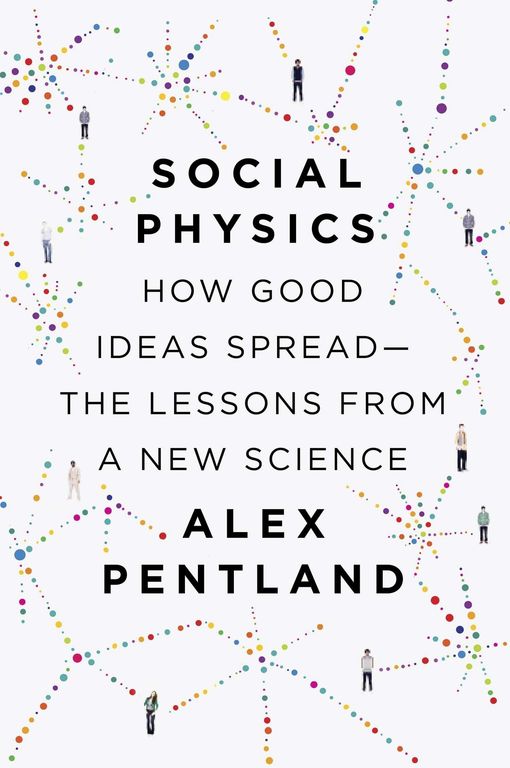
Nova: Well, that's where two groundbreaking books come into play. We're looking at "Social Physics" by Alex Pentland, and "Connected" by Nicholas A. Christakis and James H. Fowler. Alex Pentland, a true pioneer in computational social science from MIT, didn't just theorize about these networks. He actually used mobile data and wearable sensors years ago to these social forces in real-time, effectively turning sociology into a hard science.
Atlas: That's fascinating. So he's not just talking theory, he's got the data to back it up? That’s going to resonate with anyone who wants to understand underlying structures across fields.
Nova: Exactly. And Christakis, a physician and sociologist, along with Fowler, a political scientist, famously demonstrated these network effects through rigorous studies across diverse populations. They showed how things like happiness or even obesity can literally 'spread' from person to person, often three degrees of separation away.
Atlas: Three degrees of separation? That sounds like something out of a conspiracy theory, but if it's backed by rigorous studies, then the idea of our choices being less 'individual' and more 'collective' really starts to hit home. So, where do we start with these invisible forces?
The Flow of Ideas: Social Physics and Network Dynamics
SECTION
Nova: We start with Pentland's core idea: the flow of ideas and information within social networks. He argues that by understanding these 'idea flows,' we can design better organizations and societies, from urban planning to public health. Think of it like this: it's not just ideas you have, but those ideas circulate and gain traction within your social group.
Atlas: So you're saying it's not about the genius idea itself, but the social plumbing it travels through? How does an idea actually 'flow'? Is it just who I follow on Twitter?
Nova: It's far more fundamental than just social media. Pentland's research dives into the actual of human interaction. He's found that the way people communicate—their face-to-face interactions, the tone of their voice, even their body language—can predict team performance better than individual IQ or skill.
Atlas: Really? That’s counterintuitive. I would have assumed the smartest people on the team would make the best team. But you're saying it's the that matters more? Can you give me an example that makes this tangible?
Nova: Absolutely. Consider a classic study Pentland did with call center employees. He found that by simply encouraging employees to take their coffee breaks together, their team's efficiency and communication improved dramatically. The informal conversations during those breaks created better 'idea flow,' leading to more effective problem-solving and stronger team bonds. It wasn't about new training or smarter employees; it was about optimizing their social interactions.
Atlas: That’s incredible. So, it's not about they talked about, but the of talking, the informal exchange? For our listeners who are managing high-pressure teams, this concept might feel impossible to implement. How do you measure something like 'informal breaks'? And isn't there a fine line between optimizing communication and, well, manipulating people?
Nova: It's a crucial distinction. It's not about manipulation, but about understanding the natural dynamics of human connection. Pentland isn't advocating for controlling conversations, but for designing environments that healthy idea flow. Think about urban planning: designing cities with more public spaces, walkable areas, and communal hubs can naturally foster more diverse interactions, leading to greater innovation and better public health outcomes. It's about setting the stage for positive social physics to occur.
Atlas: I see. So it's less about directing the individual actors and more about shaping the environment, the 'network architecture,' to encourage beneficial interactions. That makes me wonder about the unintended consequences, though. Could a poorly designed network hinder progress, or even spread negative ideas more efficiently?
Connected Lives: The Cascading Impact of Social Networks
SECTION
Nova: That's a perfect segue, because it's not just about flowing. When we talk about social physics, we're talking about flowing—from emotions to habits, from health to happiness. This is where Christakis and Fowler's work in "Connected" really shines. They reveal the profound impact of social networks on everything from happiness to health, demonstrating how our connections influence our lives in ways we rarely perceive, creating cascades of behavior.
Atlas: Cascades of behavior. Give me a mind-blowing example of that, something that makes me rethink my morning coffee choice.
Nova: How about this: they've famously observed what they call the "three degrees of influence" rule. Your happiness, your likelihood of quitting smoking, even your risk of obesity, can be influenced not just by your friends, but by your friends' friends, and even your friends' friends' friends.
Atlas: Wait, so my friend's friend's friend's weight could influence mine? How is that even possible? Are we talking about some kind of telepathy, or is it just that birds of a feather flock together?
Nova: That's the common misconception, that it's just about homophily, or choosing to associate with people like us. But Christakis and Fowler's rigorous studies controlled for that. The mechanism is fascinating: it's a mix of shared norms, observing behavior, and direct influence. If your friend's friend's friend starts exercising more, that might inspire friend, who then inspires friend, who then inspires. It's a ripple effect, a social contagion. The network literally amplifies and transmits behaviors and emotions.
Atlas: Wow, that's kind of heartbreaking. It means my personal choices are never personal, in a vacuum. It sounds like our free will is, at the very least, operating within a much larger, invisible social current. For someone who values understanding underlying structures, this is a massive shift. What does this mean for our own decisions, then? Do we just succumb to the social tide?
Nova: Not at all. The insight here is empowering. Once you understand that these forces exist, you can become a more conscious participant. You can actively choose to cultivate networks that support the behaviors, ideas, and well-being you desire. You can also recognize when a collective decision in your community might be influenced by a social cascade rather than purely rational, individual choices. It's about seeing the matrix, if you will, and then deciding how you want to interact with it.
Synthesis & Takeaways
SECTION
Nova: So, what both Pentland and Christakis & Fowler are showing us is that the world isn't just a collection of individuals making isolated choices. Instead, we're all nodes in an intricate, dynamic web. Our individual actions are both a product of, and a contributor to, these larger social forces. Understanding this shift from purely individual psychology to the dynamics of collective human systems is crucial.
Atlas: That’s a great way to put it. It sounds like the deeper insight here is that true understanding requires us to look beyond the surface, to the patterns and connections that invisibly shape our reality. So, for our listeners, what invisible social forces might be influencing a decision or your community is making right now?
Nova: Precisely. Whether it's a decision about a new project at work, a community initiative, or even a personal health goal, take a moment to consider the social currents around it. Are there ideas flowing that are pushing you in a certain direction? Are there behaviors cascading through your network that are subtly influencing your choices? Recognizing these forces allows us to consciously design better environments and make more informed decisions, aligning with that desire to bridge theory with practical application.
Atlas: That's a powerful challenge. I encourage everyone listening to observe their own networks this week. See if you can spot those invisible threads. It's about becoming a more aware participant in the social systems that define so much of our lives.
Nova: Absolutely. And that's a perfect note to end on. This is Aibrary. Congratulations on your growth!