The 'Renaissance' Trap: How to Master Your Diverse Skills Without Spreading Yourself Thin
Golden Hook & Introduction
SECTION
Nova: You know, Atlas, we often hear about the romantic ideal of the "Renaissance person" – someone brilliant across a dozen different fields, a true polymath. It sounds incredible, right? Like having a superpower.
Atlas: Oh, absolutely! Who wouldn't want to be that person? The ultimate jack-of-all-trades, master of… well, everything! That's the dream for so many of our listeners, I imagine. Myself included.
Nova: Yeah, that’s where the trap lies. What if I told you that chasing that ideal, without a very specific strategy, can actually be one of the biggest burdens you carry? What if that diverse skill set, if not directed, can actually prevent you from achieving the deep mastery that truly sets you apart?
Atlas: That sounds a bit out there. It feels counterintuitive, like you’re saying having options is a problem. For our listeners who are constantly building across different disciplines – bridging creative design with technical rigor – it almost feels like you’re telling them to pick a lane when their superpower is having the lanes.
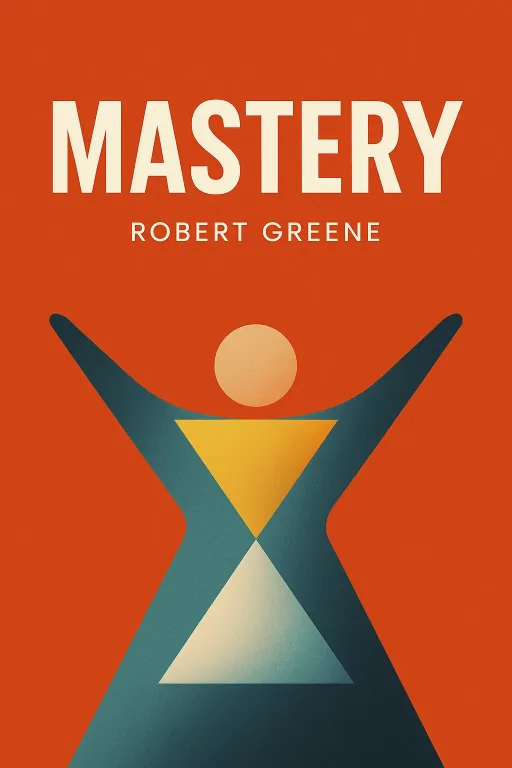
Nova: Exactly! It’s not about abandoning your interests. It's about how you them. Today, we’re unpacking what we call 'The Renaissance Trap,' and how to master your diverse skills without spreading yourself thin. We're drawing insights from some incredible thinkers, including the master strategist himself, Robert Greene, from his book "Mastery."
Atlas: Robert Greene, the author of "Mastery." He’s known for meticulously researching historical figures, dissecting their rise to power and influence, often through a lens of human nature and strategy. His work is always incredibly rich with historical narratives, making complex ideas surprisingly accessible.
Nova: Precisely. And that depth of understanding is exactly what we need when we talk about achieving true mastery in a world that constantly pulls us in a thousand different directions.
The Renaissance Trap: The Cost of Superficial Versatility
SECTION
Nova: So, let's dive into this idea of the 'Renaissance Trap.' Imagine your diverse skills, your many interests, like a vast, beautiful lake. It’s wide, it sparkles, it offers many points of access. But how deep is it? For many of us, that lake is actually quite shallow. We dabble in a bit of everything, learn enough to be proficient, but never truly plumb the depths.
Atlas: That makes me wonder about the cost of that. I imagine a lot of our listeners, especially those who are hands-on and driven by impact, might feel that constant pull. They want to create tangible results, but the sheer breadth of their interests can make it hard to know where to pour their deepest energy.
Nova: And that’s exactly what Greene addresses in "Mastery." He argues that true mastery isn't about knowing a little about a lot. It's about dedicated, long-term practice in a single field, building an intuitive understanding that transcends mere knowledge. He shows how figures like Charles Darwin, who started with broad interests in geology, botany, and even taxidermy, eventually funneled that curiosity into a profound, singular focus on evolutionary biology. His diverse interests didn't remain scattered; they converged to fuel a deep, world-changing insight.
Atlas: That’s a great example. But hold on, for someone who thrives on bridging creative design with technical rigor, or someone who executes across diverse fields, how do you reconcile that? Are you saying we should just pick one thing and abandon all the others? Because frankly, that sounds like a recipe for creative burnout for many people.
Nova: Not at all! The trap isn't having diverse interests; it's the for those interests. Greene isn't advocating for intellectual monasticism. He’s illustrating that even the most multifaceted historical figures, like Leonardo da Vinci, didn't just scatter their genius. Da Vinci’s art and science were deeply interconnected; his anatomical studies informed his painting, and his engineering designs were often artistic expressions. His diverse talents each other, culminating in a singular, powerful force. The trap is when your interests become distractions, preventing the profound impact you're capable of.
Atlas: Oh, I like that. So it’s not about having fewer interests, but about making them work together, rather than pulling you apart. It’s about transforming potential distractions into complementary strengths.
Nova: Precisely. It's about moving from accidental versatility to intentional integration.
Strategic Mastery: Cultivating Deep Skills for Integrated Impact
SECTION
Nova: And that naturally leads us to the solution: Strategic Mastery. Once we recognize the trap of superficial engagement, we can actively build what Cal Newport calls 'career capital.' Newport, a computer science professor, wrote "So Good They Can't Ignore You," where he challenges the conventional wisdom of 'follow your passion.'
Atlas: That’s a great analogy. I’m curious, what does 'career capital' actually mean for someone who’s looking to unify diverse creative ventures or harmonize many roles without burnout?
Nova: Newport argues that career capital is built by acquiring rare and valuable skills. These aren't necessarily your "passion" initially, but by becoming exceptionally good at something, you gain leverage. This leverage then allows you to shape your work life around your true passions and priorities. Think of it like this: mastering a highly sought-after technical skill, like advanced data visualization, gives you the capital to then pursue creative projects in art that utilize that skill in a completely unique way. You're not just dabbling in art; you're innovating at the intersection of tech and creativity.
Atlas: That makes sense. So it’s not just about accumulating skills, but strategically developing skills that are and, and then using that value to create the work you truly want. But how do you choose which skills to go deep on, especially when you have so many interests? For someone who thrives on building tangible results across creative and technical domains, this choice can feel paralyzing.
Nova: That's where 'Nova's Take' comes in. By intentionally choosing areas for deep skill acquisition, you transform potential distractions into complementary strengths. Imagine a listener who loves both crafting compelling narratives and building intricate software. Instead of keeping those separate, they might intentionally choose to deeply master interactive storytelling platforms or develop AI tools for creative writing. They're not just a coder a writer; they become a pioneer at the of those two fields. Their diverse interests don’t just coexist, they reinforce each other, creating a unique, powerful, and highly impactful profile.
Atlas: Like how a skilled artisan might embrace a new digital fabrication technique. They’re not abandoning their craft, but using a deeply mastered technical skill to elevate it, creating something truly innovative. That gives me chills. That’s such a hopeful way to look at it. So it’s about finding that synergy, that integrated branding for your brain, where the whole is far greater than the sum of its parts.
Nova: Exactly! It's about moving from a scattered 'Renaissance person' who feels overwhelmed, to a strategically focused master who leverages their breadth for profound depth at a unique intersection. It’s about being an innovator at the intersection of your passions, building integrated branding for your unique skillset.
Synthesis & Takeaways
SECTION
Nova: So, to bring it all together, the 'Renaissance Trap' isn't about having diverse skills – it's about the lack of intentionality in how we cultivate and direct them. True mastery, as Greene shows, comes from focused, dedicated practice, and as Newport reminds us, building career capital through rare and valuable skills gives us the leverage to create the impact we truly desire.
Atlas: So, it's about finding the 'sweet spot' where your diverse skills don't just coexist, but actively elevate each other, creating something truly unique and impactful. It’s about honoring that powerful intellect and hands-on drive for growth, but channeling it for deeper resonance.
Nova: Precisely. And for our listeners, especially those who thrive on bridging creative and technical, who are driven by growth and impact, the path out of the trap isn't to narrow your mind, but to sharpen your focus. To take that broad lake of interests and start digging a deep, intentional well in one or two key areas that truly excite and challenge you.
Atlas: That’s actually really inspiring. So, what’s one concrete step someone can take, starting today, to begin that journey toward strategic mastery and avoid spreading themselves too thin?
Nova: Here’s your Tiny Step for the week: Identify one skill, either creative or technical, that you commit to practicing for at least 30 minutes every day this week. And here's the crucial part: do it. Protect that time fiercely. That small, consistent act of deep engagement will begin to build the career capital and focused intent that transforms your multifaceted nature into your ultimate superpower.
Atlas: That’s a powerful challenge. Thirty minutes, uninterrupted, to cultivate deep skills. That’s how you start building true mastery and making that impact you crave. Honestly, that sounds like my Monday mornings. I still struggle with that myself, but it’s a vital step.
Nova: It absolutely is. That focus is the foundation for meaningful growth.
Atlas: This is Aibrary. Congratulations on your growth!