

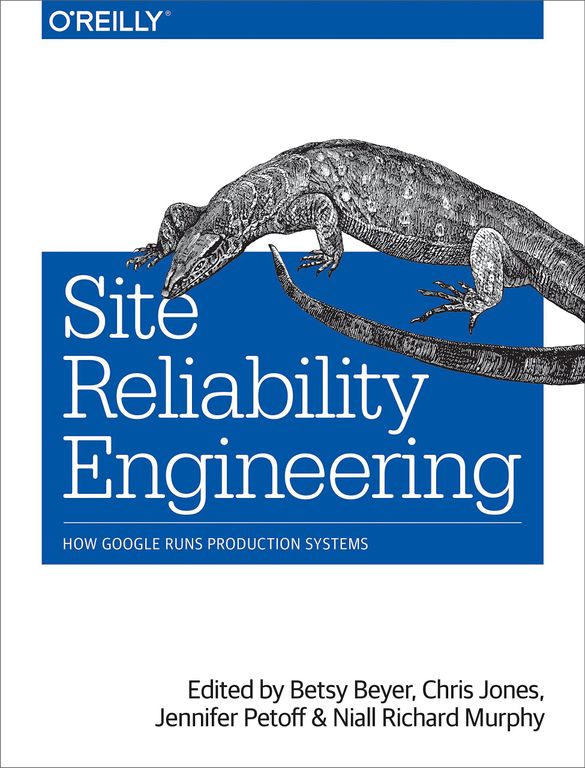
Site Reliability Engineering
How Google Runs Production Systems
Introduction
Nova: Imagine you are running a service used by billions of people. Every second of downtime costs millions of dollars and frustrates users across the globe. Naturally, you would want your system to be one hundred percent reliable, right? Well, according to the engineers at Google, that is actually a terrible idea.
Nova: It sounds counterintuitive, but that is exactly where we are starting today. We are diving into the book Site Reliability Engineering, edited by Betsy Beyer and a team of Google experts. This book basically rewrote the rulebook for how modern software is managed. It introduces the world to SRE, a discipline that treats operations as a software problem.
Nova: Exactly. And the core philosophy is that one hundred percent reliability is the wrong target because it kills innovation. If you never let anything break, you can never change anything. Today, we are going to explore how Google balances that risk, how they automate the boring stuff, and why they actually celebrate when things go wrong.
Key Insight 1
The Birth of SRE
Nova: To understand why this book is so influential, we have to go back to 2003. Ben Treynor Sloss, who joined Google to run a production team, famously defined SRE as what happens when you ask a software engineer to design an operations function.
Nova: They stopped treating them as opposing forces. In the old model, developers would write code and then toss it over the wall to the sysadmins. If it broke, the sysadmins had to fix it. This created a huge amount of friction. SREs, or Site Reliability Engineers, are software engineers who spend their time on things like latency, performance, efficiency, and change management. They use the same tools as developers but apply them to the infrastructure.
Nova: Precisely. They spend at least fifty percent of their time doing actual engineering work, like writing code to automate tasks. The other fifty percent is spent on operational work, like being on-call or manual intervention. If the manual work starts taking up more than half their time, they push back. They literally stop the feature launches until the system is automated enough to handle the load again.
Nova: It is about scalability. You cannot just keep hiring more people as your user base grows. You have to make the system smarter. The book argues that if you do not automate, you are just creating toil, which is the enemy of reliability. We will get into toil in a bit, but the big takeaway here is that SRE is a mindset shift. It is about using software to manage software.
Key Insight 2
The Math of Reliability
Nova: Now, let's talk about how they actually measure success. In the book, Betsy Beyer and the authors break this down into three acronyms that every tech professional now lives by: SLIs, SLOs, and SLAs.
Nova: Think of it like a car. An SLI, or Service Level Indicator, is like your speedometer. It tells you exactly what is happening right now. For a website, that might be how many milliseconds it takes for a page to load or what percentage of requests are failing.
Nova: The SLO, or Service Level Objective, is the goal. It is the speed limit you set for yourself. You might say, our SLO is that ninety-nine point nine percent of requests should succeed over a thirty-day period. This is the most important metric in SRE because it defines what happy looks like for the user.
Nova: Exactly. The Service Level Agreement is the contract with the customer. If you miss your SLA, you usually have to pay money back or give credits. But here is the secret: your internal SLO should always be stricter than your external SLA. You want to know you are in trouble long before your customers start asking for their money back.
Nova: That brings us to the most brilliant concept in the book: the Error Budget. If your SLO is ninety-nine point nine percent, that means you have a zero point one percent margin for error. That zero point one percent is your budget. You are allowed to be down for that amount of time every month.
Nova: It is exactly that. If you have plenty of error budget left at the end of the month, you can take more risks. You can launch that experimental feature or try a new database. But if you have used up your budget because of outages, all new launches are frozen until you get the system back under control. It turns the tension between developers and ops into a mathematical equation. Everyone agrees on the budget, so there is no arguing about whether a launch is too risky.
Key Insight 3
The War on Toil
Nova: One of the most famous chapters in the book is about eliminating toil. Google defines toil very specifically. It is not just work you do not like. It is work that is manual, repetitive, automatable, and tactical.
Nova: Imagine every time a new employee joins, you have to manually create their email account, set up their permissions, and add them to ten different groups. If you do that once, it is just a task. If you do it every Monday for five years, that is toil. It does not make the system better; it just keeps it running.
Nova: Exactly. The book argues that toil is like debt. It accumulates. If you do not spend time paying it down by automating, eventually your whole team will be doing nothing but manual tasks, and you will have no time left for actual engineering. This is why Google has that fifty percent rule we mentioned. They want their engineers to be bored by the routine stuff so they can be creative with the hard stuff.
Nova: It is an investment. The book points out that manual processes are prone to human error. A script does the same thing every single time. When you are operating at Google's scale, a human typo can take down the entire internet. Automation is not just about saving time; it is about safety. By removing the human from the loop for routine tasks, you make the system more predictable.
Nova: In a way, yes. But the reality is that as soon as you automate one thing, the system grows and creates new, more complex challenges. You are not working yourself out of a job; you are upgrading your job from being a mechanic to being an architect.
Key Insight 4
Embracing Failure
Nova: Eventually, despite all the automation and error budgets, something will break. The book spends a lot of time on what happens then. This is where the concept of the Blameless Postmortem comes in.
Nova: They realize that if you punish people for making mistakes, they will start hiding their mistakes. And hidden mistakes are the most dangerous kind. A blameless postmortem focuses on the system, not the person. Instead of asking who messed up, they ask why the system allowed that person to make a mistake in the first place.
Nova: Exactly. The goal of a postmortem is to learn. The book explains that every failure is an opportunity to make the system more resilient. They actually publish these postmortems internally for everyone to read. It builds a culture of psychological safety where engineers feel comfortable taking risks because they know that if something goes wrong, the team will focus on fixing the process, not pointing fingers.
Nova: Not at all. They use a very structured approach based on emergency response systems, like what firefighters use. They have clear roles: an Incident Commander who is in charge, a Communications Lead who talks to the outside world, and Operations Leads who do the technical work. This prevents the too many cooks in the kitchen problem where everyone is trying to fix the same thing at once.
Nova: They have. And that is the beauty of the book. It takes these messy, stressful situations and provides a framework to handle them with calm and logic. They even suggest doing wheel of misfortune exercises where they intentionally break things in a controlled environment to practice their response. It is all about being prepared for the inevitable.
Conclusion
Nova: We have covered a lot of ground today, from the origin of SRE at Google to the mathematical precision of error budgets and the culture of blamelessness. The book Site Reliability Engineering is more than just a technical manual; it is a manifesto for a new way of working.
Nova: Precisely. The big takeaway for anyone, whether you are an engineer or a manager, is that reliability is a feature, not an afterthought. You have to design for it, measure it, and be willing to trade speed for it when necessary. But most importantly, you have to treat your operations team as an engineering team.
Nova: It changes the conversation from a fight to a collaboration. If you want to dive deeper, I highly recommend picking up the book. It is packed with case studies and specific examples of how Google handles everything from monitoring to on-call rotations. It is the foundation of how the modern internet stays upright.
Nova: Thank you for joining us on this deep dive into the world of SRE. We hope you found these insights as transformative as we did. This is Aibrary. Congratulations on your growth!