

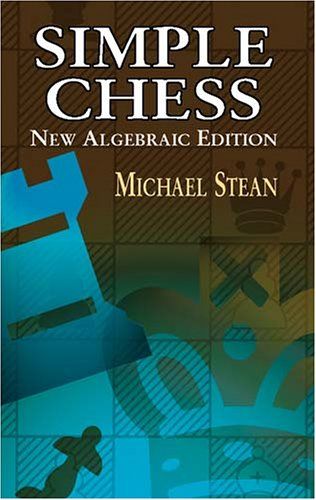
Simple Chess
Introduction
Nova: Welcome back to Aibrary, where we dig into the books that shape how people think, play, and grow. Today we are cracking open a tiny book that chess players have been quietly obsessing over for nearly fifty years. It's called Simple Chess by Michael Stean, and here's a wild fact to kick us off: the author was a genuine chess grandmaster, a top-50 player in the world, and he retired from competitive chess at age 29 to become... a tax accountant.
Nova: : Wait, what? A grandmaster who walked away at his prime to crunch tax returns? That is not the career pivot I was expecting.
Nova: I know! And yet that same man, Michael Stean, wrote what many consider one of the clearest, most elegant introductions to chess strategy ever published. The book first came out in 1978, got reissued in 2003, and it has never gone out of print. It is barely 160 pages. It uses about 30 carefully selected grandmaster games. And yet reviewers routinely call it life-changing.
Nova: : Okay, I need to understand this. I've played chess casually, I know how the pieces move, I can avoid getting checkmated in four moves, but the moment someone starts talking about strategic planning on the board, my brain glazes over. What makes this particular book so special?
Nova: That is exactly the reader Stean was writing for. In his own introduction, he describes two imaginary beginners who figure out basic tactics, learn to develop their pieces, and stop blundering away material. And then they hit a wall. What do you actually do when neither side is making obvious mistakes? Stean's answer: you learn to accumulate tiny, permanent advantages that eventually tip the balance. And he promises to make that feel as simple as long division.
Nova: : Long division? That's a bold comparison. Let's see if he delivers. Walk me through what this book actually teaches.
Who Was Michael Stean?
The Genius Behind the Book
Nova: Before we get into the chess, let's talk about the man behind it, because his story is genuinely fascinating. Michael Francis Stean was born in London in 1953. He learned chess before the age of five. By his early twenties, he was one of England's brightest stars, finishing third at the World Junior Championship in 1973 behind Alexander Beliavsky and a guy named Tony Miles, who would become Britain's first grandmaster.
Nova: : So Stean was right there in that generation that put English chess on the map.
Nova: Exactly. He became an International Master in 1975 and a full Grandmaster in 1977. He played in five Chess Olympiads, won an individual gold medal at Haifa in 1976, and actually won a prize for the best game of the entire 1974 Olympiad with a brilliant Sicilian Najdorf against Walter Browne. But here is the part that is almost stranger than fiction: in 1977, Stean became the first grandmaster in history to lose a blitz game to a computer program. It was called CHESS 4.6. After one particularly clever move by the machine, Stean reportedly exclaimed, "This computer is a genius!"
Nova: : That's amazing. He was literally at the dawn of computer chess dominance and didn't even know it. But the thing that really jumps out at me is his connection to the world championship. He was a second to Viktor Korchnoi, right?
Nova: Yes, and this is crucial context. Stean was on Korchnoi's team for both world championship matches against Anatoly Karpov, in 1978 and 1981. His role was mostly opening preparation. So when Stean sat down to write Simple Chess in 1978, he was working at the absolute highest level of the game, analyzing positions with one of the greatest players ever. And yet he chose to write a book for club players who barely understood strategy.
Nova: : And then at 29, he just walked away from professional chess entirely.
Nova: Completely. He became a tax accountant, joined a firm called Casson Beckman, and later managed Nigel Short's career for a while. He also wrote a chess column for The Observer newspaper until 1993. But he never attempted a comeback as a player. It is one of the most unusual exits in chess history. And it means that Simple Chess is essentially his legacy. One slim book that captured everything he understood about positional play.
Nova: : That actually makes me trust him more. He wasn't trying to build a brand or a chess empire. He just had something to say, said it clearly, and moved on.
The Core Philosophy
Pawns, Mobility, and the Soul of Chess
Nova: So let's get into the philosophy. Stean opens the book with a statement that sounds almost too simple: "The most important single feature of a chess position is the activity of the pieces." And then he adds the kicker: "The primary constraint on a piece's activity is the pawn structure."
Nova: : Right. So pawns are not just the humble foot soldiers we ignore while we maneuver our knights and bishops. They are actually the architecture of the entire position.
Nova: Exactly. And Stean's genius is that he takes this abstract idea and makes it concrete throughout every chapter. The book has seven chapters: Introduction, Outposts, Weak Pawns, Open Files, Half-Open Files and the Minority Attack, Black Squares and White Squares, and finally Space. But here is the thread that ties them all together, and Stean states it explicitly near the end of the book. Let me read it: "The essence of simple chess is mobility. Pieces need to be kept active and used economically. All the objectives of simple chess can be traced back to this underlying notion. Outposts are springboards from which pieces can generate activity, weak pawns hamper mobility because they require protection, bad bishops are bad because their movements are restricted."
Nova: : That is genuinely beautiful. One organizing principle that explains every strategic concept in the game. Mobility as the unifying theory of chess.
Nova: And what makes the book work so well is that Stean doesn't just state these principles. He picks games, often mismatches between a great player and a merely good player, where the strategic idea stands out with crystal clarity. He uses Botvinnik to show outposts. He uses Fischer to demonstrate how to play against weak pawns. He uses Karpov to illustrate space. The lesson never gets lost in messy complications.
Nova: : So the book selection is deliberate. He is not showing you two equal grandmasters fighting to a draw. He is showing you what happens when one player has a strategic clue and the other doesn't.
Nova: That is exactly right. One reviewer called these games "mismatches" and that is actually the point. When you see Botvinnik systematically take control of the light squares against Szilagyi in Amsterdam 1966, the strategic idea is so vivid that you can't miss it. The weaker opponent's resistance is too feeble to obscure the lesson. It is like watching a masterclass where the instructor has carefully chosen a cooperative student.
Breaking Down the First Three Chapters
Outposts, Weak Pawns, and Open Files
Nova: Let's walk through the chapters in order. Chapter one, after the introduction, is about outposts. An outpost is a square where you can park a piece, typically a knight, and the opponent cannot chase it away with a pawn. Stean shows this with an incredible game: Fischer versus Gadia from Buenos Aires 1960.
Nova: : What happens in that game?
Nova: Fischer identifies a potential outpost, lands a knight there, and then systematically exchanges off every single black piece that could challenge that knight. By the end, the knight is so dominant that the position just collapses. Stean also uses a fascinating Unzicker versus Fischer game from the 1962 Olympiad, where Fischer allows his opponent to establish a central outpost but then demonstrates that an outpost is only as good as the use you make of it. Unzicker had the square but no plan, and Fischer simply rendered it irrelevant.
Nova: : So it's not enough to just have an outpost. You need to do something with it.
Nova: Precisely. Then comes the chapter on weak pawns. A weak pawn is one that cannot be protected by another pawn, so it has to be defended by pieces. That ties up those pieces, which reduces their mobility. There is a reason this chapter comes after outposts. The concepts build on each other. Stean's showcase game here is Fischer versus Petrosian from the 1971 Candidates Final, game seven. Fischer demonstrates how to play against an isolated pawn — actually two of them — with the famous move 22. Nxd7.
Nova: : That's one of those legendary Fischer moves, isn't it?
Nova: It is legendary, but Stean doesn't dwell on the brilliance of the tactic. He uses it to show what happens when weak pawns force the defender to tie down his pieces. The tactic only works because the strategic pressure has been building. And then he contrasts it with Spassky versus Fischer, game five of the 1972 World Championship, where Fischer had doubled pawns in a Nimzo-Indian that conventional wisdom said were weak, but Fischer showed that active piece play can compensate for structural weaknesses.
Nova: : So he's teaching you that rules have exceptions, even at this introductory level.
Nova: Yes! And that is sophisticated pedagogy. The next chapter covers open files — files with no pawns on them. Everyone knows you should put your rooks on open files. But Stean shows why, and more importantly, when it matters. He uses an Andersson versus Knaak game from 1974 where Andersson races to control the d-file before his opponent can, and Black's position collapses in 25 moves. And then the classic Karpov versus Uhlmann game from Madrid 1973, where it is not the open file itself that matters, but the entry point it provides to the seventh rank.
Nova: : I love that distinction. The open file is a means, not an end. The end is infiltration.
Subtle Weapons for the Strategic Player
The Minority Attack and Color Complexes
Nova: Chapter five is where things get genuinely sophisticated. It covers half-open files and specifically the minority attack. This is a classic strategic plan, most famously seen in the Carlsbad pawn structure, where one side pushes a minority of pawns on a flank to create weaknesses in the opponent's majority.
Nova: : I have heard the term minority attack and honestly never understood it. It sounds counterintuitive. Why would you attack with fewer pawns?
Nova: It is counterintuitive, and that is why Stean's explanation is so valuable. The idea is this: imagine White has two queenside pawns against Black's three. White can advance those two pawns to provoke exchanges. After the dust settles, Black is left with a pawn that is isolated or backward, and it becomes a permanent target. You attack with fewer pawns not to win material immediately, but to create a long-term weakness that you can pressure for the rest of the game.
Nova: : So you are trading short-term pawn equality for long-term structural damage.
Nova: Exactly. Stean demonstrates this with the classic van den Berg versus Kramer game from 1950, where White's minority attack leaves Black with a loose pawn that simply drops off. And then he broadens the concept with Vogt versus Andersson from Havana 1975, showing a Sicilian minority attack, proving that the idea transcends any single opening.
Nova: : And then comes one of my favorite chapter titles ever: "Black Squares and White Squares."
Nova: This chapter is about color complexes. When your pawns are fixed on one color, say light squares, your bishop on that same color becomes restricted — what Stean calls a bad bishop. Meanwhile, the dark squares in your position become permanently vulnerable because your pawns can't defend them. Stean shows this brilliantly with a game from 1912, Tarrasch versus Teichmann, where the threat of the white king marching in on the dark squares is so overwhelming that Black resigns before it even happens.
Nova: : Wait, the threat alone was enough?
Nova: Yes. The position was so hopeless that no execution was necessary. And then he shows the reverse: Petrosian versus Mecking from 1969, where Mecking launches a ferocious attack that fizzles out, but his light-square weaknesses remain and Petrosian calmly exploits them. The chapter includes a wonderful game between Stean himself and Planinc from 1975, where Stean realizes his opponent has no light-squared bishop, so he deliberately pushes Black's pawns onto dark squares, creating a color complex that dominates the rest of the game.
Nova: : So he used his own games too, not just the famous ones.
Nova: He included one of his own games, yes. And it is a great teaching moment because you can see the author applying his own principles in real time. He is not just a theorist. He practiced what he preached.
Why the Final Chapter Changes Everything
Space and the Ruy Lopez Revelation
Nova: The final chapter on space is widely considered the highlight of the entire book. And it contains what might be Stean's most memorable passage. He discusses the old main line of the Ruy Lopez, also called the Spanish Opening, one of the most ancient and respected openings in chess.
Nova: : The Ruy Lopez. I know it starts with e4 e5, Nf3 Nc6, Bb5. But honestly, I have never really understood what White is trying to achieve beyond the first few moves.
Nova: You are in excellent company. Stean writes, and I love this: "Never in the history of chess have so many moves been repeated so often so quickly by so many people who didn't really understand them." He points out that in the main line, White spends twelve moves to develop just four pieces. Twelve moves! And four of those moves are devoted to preserving a bishop that will probably become bad later anyway.
Nova: : That sounds insane when you say it out loud.
Nova: But here is his explanation, and it is brilliant: Black's position has sufficient capacity for three minor pieces, but not enough room for all four. White's spatial strategy is to avoid exchanges at all costs precisely because he wants Black to be stuck with four pieces crammed into a space that can only comfortably hold three. The cramped pieces get in each other's way, their mobility is reduced, and White's space advantage becomes a decisive weapon.
Nova: : So White is not trying to develop quickly. He is trying to develop in a way that leaves Black overpopulated.
Nova: Exactly. And Stean says, "It is probably no coincidence that nearly all the great players of recent times have been deadly exponents of the Ruy Lopez. In the hands of Fischer or Karpov, 3. Bb5 sometimes appears to win by force." The chapter then showcases Karpov versus Westerinen from the 1974 Nice Olympiad, which one reviewer described as his favorite game ever. Karpov's pieces are the sheepdog and Westerinen's pieces are the sheep. The spatial constriction is so total that Black never gets to play.
Nova: : That's the game where Karpov makes it look effortless, right?
Nova: Yes. And then Stean caps the chapter with Fischer versus Gheorghiu from Buenos Aires 1970, where Fischer converts a cramped but solid position into cramped and lost by doing as little as possible. He simply waits. The lack of space does the work for him. And Smyslov versus Gudmundsson, where Black's pieces look fine at first, but Smyslov gradually drives them backwards until his opponent is suffocating.
Nova: : So the space chapter ties everything together. Outposts, weak pawns, open files, color complexes — they are all ultimately about mobility, and space is the most fundamental expression of mobility.
Nova: That is exactly the synthesis Stean intends. Every chapter builds toward this realization. The book is not a collection of disconnected tips. It is a unified theory of positional chess, compressed into 160 pages.
The Legacy of Simple Chess
Why This Book Endures
Nova: So the question is: why has this book survived nearly fifty years when so many other chess books have been rendered obsolete by computer engines?
Nova: : Yes, that is what I keep wondering. In the age of Stockfish and AlphaZero, can a book from 1978 still hold up?
Nova: Remarkably, yes. And the reason is that Stean never tries to compete with engine analysis. He does not drown you in variations. His annotations are conversational, witty, and focused entirely on human understanding. When you read his commentary on a game, you feel like you are sitting across from a grandmaster who genuinely wants you to get it. He writes things like "Black's position has sufficient capacity for three pieces, but not clearly enough for all four of them." That is not engine language. That is insight language.
Nova: : So the book ages well because it teaches principles, not specific moves.
Nova: Exactly. And the chess community has recognized this. The Perpetual Chess Podcast did a full Books Recaptured episode on Simple Chess. The Chess Dojo ranked it among classic chess books. There is an entire blog series called The Abysmal Depths of Chess that created a study companion for every single game in the book. Players with ratings from 1300 to 1900 consistently say this book changed how they see the board.
Nova: : I saw one reviewer say it is not just intellectually digestible but "addictive like candy." That is high praise for a strategy book.
Nova: And it comes at a price that is almost absurd. The Dover edition is around ten dollars. For the cost of a sandwich, you get a lifetime of strategic understanding from a grandmaster who seconded a world championship contender. Now, there is one critique worth mentioning: Stean uses many game fragments rather than full game scores, so if you are the type who wants to see every single move from start to finish, you will need to look up the complete games separately.
Nova: : That seems like a minor quibble given what the book delivers.
Nova: It is. And here is the thing: Stean also leaves out some strategic concepts entirely. No chapter on hanging pawns, no deep dive into isolated queen pawn positions as a standalone topic. The book is not an encyclopedia. It is a primer. It whets the appetite. It gives you the mental framework and then lets you explore further on your own.
Nova: : Which, honestly, is what the best teachers do. They don't tell you everything. They teach you how to think.
Conclusion
Nova: So let's bring this home. Simple Chess by Michael Stean is not really about memorizing strategic rules. It is about developing a way of seeing. Once you understand that mobility is everything, and that pawn structure is the primary constraint on mobility, the entire game reorganizes itself in your mind. Outposts become obvious. Weak pawns announce themselves. Open files call out for your rooks. Space stops being an abstraction and becomes something you can feel.
Nova: : It sounds like the book doesn't just teach you chess strategy. It teaches you to diagnose a position. To look at any board and know what matters.
Nova: That is exactly right. And here is what I find most moving: Michael Stean walked away from chess at 29. He wrote this one slim book, and then he became a tax accountant. And yet that book has outlasted almost everything else from his era. It has been read and re-read for nearly half a century. It has been passed from coach to student, from parent to child, from one club player to another. It is proof that saying something true and saying it clearly matters more than saying everything.
Nova: : There is something beautiful about that. A grandmaster at the peak of his powers decides to distill everything he knows into the simplest possible form, and then he just... steps away. No sequels, no brand extensions. Just one perfect little book.
Nova: And in that final chapter, after walking you through outposts and weak pawns and minority attacks and color complexes and space, he gives you the key to the whole thing: mobility. Pieces need to be kept active and used economically. That is the essence of simple chess. Not that chess is simple — it is not, and Stean is the first to say so — but that the principles you need to navigate it are. If you can see mobility, you can see everything.
Nova: : So for someone who knows how the pieces move, who can avoid the four-move checkmate, but who feels lost in the middle game — this is the book.
Nova: This is the book. Ten dollars, 160 pages, and a lifetime of seeing the board differently. Michael Stean gave us a gift, and nearly fifty years later, we are still unwrapping it.
Nova: : This is Aibrary. Congratulations on your growth!