The Interconnected Web: How Marine Ecosystems Reveal Universal Systems Thinking.
Golden Hook & Introduction
SECTION
Nova: What if I told you that sometimes, the deeper you dive into a subject, the more blind spots you actually create? That expertise, while incredibly valuable, can sometimes hinder true, holistic understanding?
Atlas: Oh man, that's a bit of a curveball, Nova. As someone who's always trying to optimize and dissect systems, I’m constantly pushing for deeper expertise. Are you saying I might be missing something crucial by digging too far into one thing?
Nova: Exactly, Atlas. It's a fascinating paradox. We strive for mastery, for granular understanding, but in doing so, we can sometimes narrow our vision to the point where we miss the vast, intricate web of connections that truly defines a system's health and stability. We're talking about the profound concept of "The Interconnected Web."
Atlas: The Interconnected Web. That sounds like something out of a sci-fi movie, but I get the sense you're talking about something far more real and impactful. Are there any particular books or thinkers that really nail this concept for you?
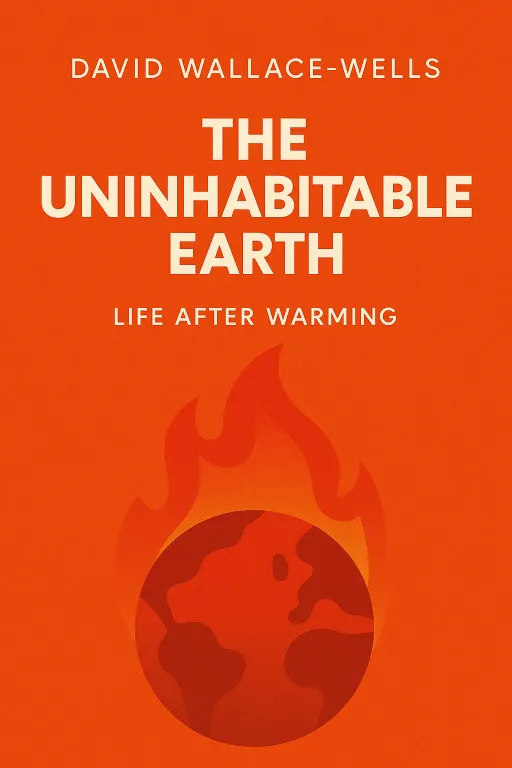
Nova: Absolutely. There are two absolute titans who illuminated this truth in unforgettable ways. First up, the legendary Rachel Carson with her groundbreaking work, "Silent Spring." This book didn't just warn us; it fundamentally reshaped our understanding of nature. When it was published, it faced fierce opposition, especially from the chemical industry, because it dared to connect dots that many found inconvenient. Then we have David Wallace-Wells' "The Uninhabitable Earth," a more contemporary, stark, and incredibly comprehensive view of how everything on our planet is interconnected, especially when it comes to climate change.
Atlas: Wow, those are powerful recommendations. So, where do we even begin to unpack this vast idea of interconnectedness?
Nova: Well, let's start with what you just touched on – the blind spot.
The Danger of the Blind Spot: Why Focusing Too Closely Can Obscure the Truth
SECTION
Nova: Imagine a marine biologist, incredibly dedicated to coral husbandry. They're a master of reef chemistry, understanding every parameter, every nutrient, every microscopic detail of their tank or their specific research site. They can keep a coral thriving under controlled conditions like no one else.
Atlas: I can picture it. Someone who knows their subject inside and out, a true expert. That’s what we all strive for, right? To get that deep.
Nova: Absolutely. But here’s the twist. That very focus, that deep dive into specific components, can sometimes create what we call "the blind spot." They might be so focused on the immediate variables—temperature, salinity, calcium levels—that they miss the subtle, unseen, or distant factors that are subtly influencing the health of the entire reef system they're studying.
Atlas: So, when you say "blind spot," are we talking about experts missing obvious things, or something more subtle, like the peripheral vision of their focus is just completely gone?
Nova: It's often the subtle things. Consider a vibrant coral reef. Our expert might be perfectly managing all the local variables. But upstream, a new agricultural development might be introducing trace amounts of pesticides or fertilizers into the watershed, slowly, imperceptibly changing the ecosystem's baseline chemistry. Or, climate change might be causing ocean acidification that subtly weakens coral skeletons over decades, even if local water parameters appear stable.
Atlas: That makes sense. It’s like, you’re optimizing your car’s engine, but you’re not looking at the quality of the fuel you're putting in, or the roads you're driving on. The immediate variables are perfect, but the external environment is slowly eroding its performance.
Nova: Exactly! It’s all interconnected. A seemingly beneficial nutrient, like nitrogen, when introduced in excess from human runoff, doesn't just make things grow "better." It can trigger massive algal blooms that suffocate corals by blocking sunlight and consuming oxygen. Or, a change in one fish population, perhaps due to overfishing, might decimate another species that relies on it for food or as a predator. The entire food web shifts, sometimes irrevocably.
Atlas: But hold on, isn't specialization necessary for progress? How do we balance this deep expertise with a holistic view without becoming superficial? We can't all be experts in everything, can we?
Nova: You've hit on the core tension, Atlas. It's not about abandoning specialization. It's about understanding its limitations and actively seeking out those connections. It's about asking that deep question: "Beyond the immediate variables you manage, what unseen or distant factors might be subtly influencing the health and stability of the marine systems you study?" Or, in any field, what are the hidden variables influencing system?
Atlas: That makes me wonder about my own work. For anyone striving for comprehensive understanding, for the strategic synthesizer out there, it's about constantly expanding the boundaries of what you consider "your system." It's a reminder that even when you're optimizing something, you need to lift your head up and look at the adjacent variables.
The Power of the Ripple Effect: Lessons from Earth's Interconnected Systems
SECTION
Nova: This idea of unseen influences and ripple effects isn't just theoretical; history is full of stark warnings. And few books illustrate this better than Rachel Carson's "Silent Spring."
Atlas: I remember hearing about that book in school, but I don't think I ever fully grasped its revolutionary impact.
Nova: It was truly revolutionary. Published in 1962, "Silent Spring" meticulously documented how the widespread use of pesticides, particularly DDT, wasn't just killing insects; it was systematically poisoning entire ecosystems. Carson, a marine biologist herself, wasn't just a scientist; she was a brilliant storyteller. She traced the journey of these chemicals from farmlands into rivers, then into the ocean, up the food chain, accumulating in the fatty tissues of animals like bald eagles.
Atlas: So, it wasn't just about the immediate target of the pesticide; she showed how it rippled out and affected everything else. The "unintended consequences" must have been devastating.
Nova: Precisely. She painted a vivid picture of songbirds dying off, eggs thinning and failing to hatch because of DDT accumulation. She connected the dots between pesticide use and human health concerns. "Silent Spring" wasn't just an environmental book; it was a profound lesson in systems thinking, showing how a single chemical could ripple through an entire ecosystem, leading to unforeseen and devastating consequences, essentially creating the modern environmental movement.
Atlas: That's incredible, how one book could so dramatically shift public consciousness and policy. It sounds like she was connecting dots no one else saw, creating bridges between seemingly disparate fields.
Nova: She absolutely did. And fast forward to today, David Wallace-Wells' "The Uninhabitable Earth" gives us a contemporary, equally powerful, albeit terrifying, lesson in interconnectedness. He doesn't just focus on rising temperatures; he paints a comprehensive, almost overwhelming, picture of how climate change impacts.
Atlas: He goes beyond the carbon emissions, right? It’s about the knock-on effects across every system.
Nova: Exactly. He shows how seemingly disconnected systems—from economic stability and political upheaval to mass migrations, food scarcity, and even psychological distress—are all deeply intertwined with the changing climate. It's a stark demonstration of how a planetary-scale shift creates a "web of impacts" that touches every facet of human society and the natural world. It's a book that truly forces you to see the bigger picture, even if it's a difficult one.
Atlas: These books are pretty stark. How do we, as "holistic innovators" and optimizers, translate these massive, overwhelming insights into actionable understanding, rather than just despair? How do we apply this profound systems thinking without getting paralyzed by the sheer scale of the problem?
Nova: That's the critical question. The value is in recognizing that understanding these interconnected systems a crisis hits allows for proactive, preventative, and truly innovative solutions. It’s about shifting from a reactive, component-focused approach to a holistic, systemic one. These narratives are not just about doom; they're about the profound power that comes from truly understanding the intricate dance of cause and effect in the world around us.
Synthesis & Takeaways
SECTION
Nova: So, whether we're talking about the delicate balance of a coral reef or the global climate, the message is clear: everything is linked. True mastery isn't just about knowing the individual parts; it's about understanding the dynamic relationships between them. It’s about recognizing that "the blind spot" of narrow focus can have "ripple effects" that we simply cannot afford to ignore.
Atlas: That’s actually really inspiring, Nova. For anyone striving for comprehensive understanding, for the 'strategic synthesizer' out there, it's about constantly expanding the boundaries of what you consider 'your system' and trusting those intuitive leaps that connect disparate fields. It’s about asking ourselves, in our own lives and work, what unseen or distant factors might be subtly influencing the health and stability of our own systems?
Nova: Absolutely. It’s about cultivating that deep curiosity, that desire to dissect systems, and to see the elegant, often surprising, connections that make the world truly comprehensible. It’s about moving beyond just managing variables, to understanding the entire, beautiful, and sometimes terrifying, dance of life.
Atlas: I love that. And for our listeners, we want to hear from you. Have you had a moment where you connected seemingly disparate fields, or discovered an unseen influence that changed your perspective? Share your "bridge insights" with us!
Nova: We'd love to hear how you're applying systems thinking in your own world.
Atlas: This has been an incredibly insightful dive into the interconnected web. Thank you, Nova.
Nova: Always a pleasure, Atlas.
Atlas: This is Aibrary. Congratulations on your growth!