

The Invisible Threads: How Our Ancestors Still Shape Our Daily Lives
Golden Hook & Introduction
SECTION
Nova: Here's a thought that might just unravel your sense of self: the idea that you are not, in fact, entirely your own creation.
Atlas: Whoa, that's a bold claim, Nova. Are you saying I'm not the master of my own destiny, or even my own quirks? Because I'm pretty sure my inability to resist a good pun is all me.
Nova: Oh, Atlas, while your pun game is undeniably unique, what if even that delightful tendency, or perhaps a deeper anxiety, or even your physical build, carries silent echoes from generations long past? We're diving into a fascinating concept today, one that challenges our very definition of 'self.'
Atlas: Okay, so we're talking about more than just a family resemblance at Thanksgiving dinner. This sounds like we're going way, way back.
Nova: Precisely. We're exploring the profound ideas within a compelling work that we've titled, "The Invisible Threads: How Our Ancestors Still Shape Our Daily Lives." This isn't a single book, but a synthesis of profound insights from giants like Richard Dawkins and Carl Zimmer, whose works collectively dismantle the illusion of our standalone individuality. Dawkins, a towering figure in evolutionary biology, helped us understand our deep biological connections, while Zimmer, a brilliant science journalist, expanded that understanding to include environmental and experiential inheritance.
Atlas: So it’s not just about DNA, but something even broader, affecting our daily experience? That makes me wonder, how far back are we talking here? Are we talking about our grandparents, or something much, much older?
The Biological Echo: Genetic & Evolutionary Heritage
SECTION
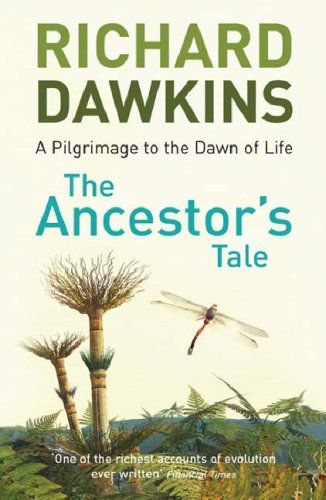
Nova: We are talking about time, Atlas. Think of it this way: Richard Dawkins, in "The Ancestor's Tale," doesn't just trace a family tree back a few generations. He takes us on an epic evolutionary journey, showing how every living thing on Earth is connected through shared ancestry. We're all branches of the same incredibly ancient, sprawling tree.
Atlas: That’s a powerful image. But what does that mean for, right now, scrolling through my phone? How does a common ancestor with, say, a banana, manifest in my Monday morning?
Nova: Well, it’s not about suddenly craving potassium in a primal way, though a banana a good choice! It’s about the fundamental biological blueprint. The very way your cells function, the basic structure of your nervous system, your capacity for fight or flight — these aren't bespoke inventions of your parents. These are ancient, highly optimized systems that have been passed down, refined, and tested over hundreds of millions of years.
Atlas: So you're saying my instinct to jump when startled isn't just me being jumpy, it's an echo of some primordial creature reacting to a predator?
Nova: Exactly! That quick adrenaline surge, that rapid heartbeat, the heightened senses – that’s a legacy. It's a testament to the fact that your lineage, all the way back to single-celled organisms, survived because it had these finely tuned responses. Your body is a living museum of evolutionary triumphs. We tend to think of ourselves as separate, perfectly unique individuals, but biologically, we are continuous with all life that has ever existed. You are, in essence, a walking, talking, thinking history book.
Atlas: That’s actually really inspiring. So, my sweet tooth isn't a personal failing, it's just my ancient ancestors' brilliant strategy for finding high-energy foods in a scarce environment? I like that story. But hold on, if everything is an echo, doesn't that remove some of our agency? Are we just puppets of our past?
Nova: That’s a critical question, and it's where the nuance comes in. It’s not about determinism. It's about predispositions. Our ancestors gave us the raw materials, the basic hardware. They gave us the capacity for certain emotions, certain physical responses. But how we that hardware, how we interpret those predispositions in our modern environment, that's where our individual agency truly shines. Knowing the source of an impulse can actually give us more control over it.
Beyond Genes: Environmental & Experiential Inheritance
SECTION
Nova: And that naturally leads us to the second key idea, which often acts as a fascinating counterpoint to what we just discussed, moving beyond just the genetic. Because the threads don't stop at DNA. Carl Zimmer, in his insightful book "She Has Her Mother's Laugh," pushes our understanding of heredity far beyond simple genetic transmission.
Atlas: Oh, I love that title! So, we're talking about more than just inheriting your mom's smile or your dad's hairline. How else can you 'inherit' something if not through genes?
Nova: Well, it turns out our ancestors pass on much more than just their genes. Think of it like this: your genes are the unchanging blueprint for a house. But the environment your ancestors lived in, the experiences they had—those can decide how that house is built, what materials are prioritized, even what kind of extensions get added later. Zimmer explores concepts like epigenetics, which are changes in gene without changing the underlying DNA sequence.
Atlas: Wait, so experiences can literally change how our genes act changing the genes themselves? That sounds a bit out there. Can you give me an example that makes it concrete?
Nova: Absolutely. Imagine a scenario: during a famine, a past generation experienced severe nutritional deprivation. Their bodies adapted, perhaps becoming extremely efficient at storing fat, a survival mechanism. This experience, while not altering their fundamental DNA, might have epigenetically 'marked' certain genes, influencing how their descendants' bodies metabolize food. So, a predisposition to easily gain weight, or to develop certain metabolic conditions, might not be a direct genetic 'fault,' but an epigenetic echo of ancestral hardship.
Atlas: That’s wild. So, my grandmother's frugal habits, or my parents' particular anxieties about money, could be more than just learned behaviors. They could be... in my cells? Or at least influencing how my cells behave?
Nova: Precisely. It’s not about a specific memory being passed down, but a. If a previous generation lived through economic instability, they might have developed a deep-seated caution, a particular way of perceiving risk. This isn't just taught; it's absorbed through the very environment they created, the stories they told, the anxieties they embodied. You might find yourself having an irrational fear of financial insecurity, even if you’ve never experienced it personally, because that 'software update' from a past generation is still running.
Atlas: That’s a great analogy, the software update! So, it's like our genetic hardware gets programmed by ancestral experiences, and we're just running that inherited software? It makes me wonder about all those unexplained fears or habits I have.
Nova: Many of those seemingly inexplicable traits might just be incredibly well-adapted responses to an ancestral environment. And understanding that can be incredibly liberating. It's not about blaming the past, it's about recognizing the profound, often unconscious, influences that shape us. It allows us to ask: Is this 'software' still serving me today, or is it a relic that needs an update?
Synthesis & Takeaways
SECTION
Nova: So, when we put these two ideas together – our deep biological inheritance and the more subtle, yet powerful, environmental and experiential threads – we get a much richer, more profound understanding of who we are. We are not isolated islands, but intricate tapestries woven from millions of years of evolution and countless generations of lived experience.
Atlas: That’s powerful. It really does make you rethink what 'self' means. It’s not just the person in the mirror, it’s an entire library of ancestral stories, fears, triumphs, and adaptations.
Nova: Exactly. And the beauty of this isn't to feel overwhelmed by the past, but empowered by understanding it. When you recognize that a certain anxiety or a particular resilience might be an echo, it gives you a different lens through which to view yourself and your challenges. It’s about building a deeper empathy, not just for others, but for your own complex, inherited self.
Atlas: That’s a beautiful way to put it. It makes you realize how much more there is to discover within yourself. So, Nova, after all this, here’s a deep question for our listeners, one that I've been wrestling with myself: What personal trait or habit do you have that might be an echo of a past generation, whether biological or cultural?
Nova: A fantastic question, Atlas. Because often, the invisible threads are the ones that shape us the most profoundly.
Atlas: This is Aibrary. Congratulations on your growth!