

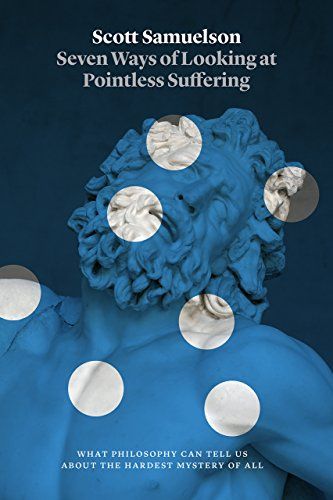
Seven Ways of Looking at Pointless Suffering
The Unsolvable Mystery: Why We Need New Lenses for Pain
The Unsolvable Mystery: Why We Need New Lenses for Pain
Nova: Welcome to The Deep Dive. Today, we are tackling the question that philosophy has wrestled with since antiquity: pointless suffering. Not the suffering we earn, but the suffering that strikes like a hurricane or takes a friend down in an instant. Our focus is Scott Samuelson’s profound and accessible book, "Seven Ways of Looking at Pointless Suffering."
Nova: : That is a heavy topic right out of the gate, Nova. Most books on suffering try to offer a neat answer, a theological justification, or a self-help fix. What makes Samuelson’s approach different from the start? Is he promising a solution?
Nova: Absolutely not. That’s the genius of it. Samuelson, a philosopher who has taught in prisons, isn't trying to the mystery of why bad things happen to good people. He’s offering seven different —seven ways to look at the raw, ugly fact of undeserved pain so that we can live with it without breaking. He wants us to be alive to existence, not just wallow in misery.
Nova: : Alive to existence. I like that framing. It sounds less like therapy and more like an existential workout. So, when he talks about pointless suffering, what kind of examples is he grounding this in? Is it abstract theory, or is he hitting us with the real stuff?
Nova: He hits us with the real stuff immediately. He starts with a memory from his childhood—witnessing a friend being struck and killed. But the book is deeply informed by his time teaching philosophy to inmates. Think about the suffering inside a prison: injustice, tyranny, boredom, humiliation. He lists things like madness, terrorism, and unrequited love as all falling under this umbrella of pain that serves no apparent purpose.
Nova: : Wow. Teaching Plato to plumbers, as one of his essays suggests, must give you a very grounded perspective on human resilience and despair. It sounds like his classroom became his primary laboratory for this philosophical inquiry.
Nova: It did. He realized that for many people, especially those facing systemic hardship, the traditional philosophical attempts to in suffering often feel like an insult. They don't need meaning; they need a way to the meaninglessness. That’s the pivot point of the entire book.
Nova: : So, the book isn't about justifying the suffering, but about changing the way we the lack of justification. It’s a shift in perspective, not a shift in reality. That’s a crucial distinction for our listeners to grasp before we dive into the seven ways.
Nova: Exactly. It’s about acknowledging that sometimes, a hurricane is just a hurricane, and the pain it causes is just pain. The goal is to resist the temptation to immediately transmute that meaningless pain into something meaningful, which he argues is a different category of experience entirely.
Nova: : That resistance—resisting the urge to force meaning—that feels like the hardest part for most people. It’s our default setting to say, "This must have happened for a reason."
Nova: It is. And Samuelson suggests that by trying to force meaning, we sometimes end up disrespecting the sheer, brute fact of the pointlessness. He’s giving us permission to just look at it, head-on, through different philosophical windows. Let's look at the first major framework he sets up: the 'Fix-It' versus the 'Face-It' approach.
Key Insight 1: Distinguishing Between Solving and Acknowledging
The Great Divide: 'Fix-It' vs. 'Face-It' Responses
Nova: Samuelson organizes the approaches to suffering into two broad camps. On one side, you have the 'Fix-It' responses. These are the attempts to eliminate the suffering or assign it a purpose so that it becomes useful or necessary for some greater good. Think of the classic theodicy arguments or even some forms of positive psychology.
Nova: : The Fix-It camp sounds intuitive. If something is broken, you fix it. If suffering is bad, you must find the reason it’s good, or at least necessary, to justify its existence. But you mentioned this can be insulting, especially to those in deep, unearned pain.
Nova: Precisely. When you tell a grieving parent that their child’s death was 'part of God's plan' or that it 'made them stronger,' you are engaging in a Fix-It strategy. You are trying to retrofit meaning onto an event that, in its raw form, is meaningless. Samuelson suggests this often fails because it denies the reality of the pain itself.
Nova: : So, what is the alternative? The 'Face-It' camp. What does that look like in practice, philosophically speaking?
Nova: The Face-It camp accepts the pointlessness as a fundamental condition of life. It doesn't try to erase the pain or justify it. Instead, it asks: Given that this suffering pointless, how do we respond to it? How do we live it? This is where the seven ways really come into play. They are all methods of facing, not fixing.
Nova: : That sounds like it aligns closely with certain ancient schools of thought, perhaps Stoicism or Cynicism, which emphasized acceptance of what is outside our control. I recall one review mentioning that ancient Cynicism resonates with Samuelson’s own philosophy.
Nova: That’s a great connection. The Cynics, in particular, were masters of stripping away societal illusions. Samuelson seems to draw from that tradition—the idea that true freedom comes from recognizing what is truly contingent and what is truly unavoidable. The unavoidable part is the suffering itself.
Nova: : Let’s talk about the prison context again. When you’re teaching a prisoner who has lost years of their life to a senseless sentence, telling them to 'find the silver lining' feels almost cruel. How did the students react to these 'Face-It' frameworks?
Nova: They often responded better to frameworks that acknowledged the absurdity. If you can show them a way to hold the absurdity without collapsing under it, that’s more valuable than a cheap platitude. For instance, when discussing the Book of Job—the ultimate text on undeserved suffering—the students could immediately relate to Job’s raw anger and confusion, far more than they could relate to later theological attempts to smooth over Job’s complaints.
Nova: : Job is the perfect case study. He doesn't get a neat answer; he gets a whirlwind of divine power, and he’s left humbled by the mystery, not necessarily enlightened by a reason. It’s about endurance through confrontation.
Nova: Exactly. The Fix-It approach tries to turn Job into a lesson plan. The Face-It approach lets Job remain a testament to unbearable, unexplainable loss. Samuelson is essentially saying that philosophy’s highest calling here isn't to provide comfort, but to provide clarity on how to the discomfort.
Nova: : So, the seven ways are essentially seven different philosophical tools for inhabiting the discomfort without letting it define our entire existence. That sets the stage perfectly for diving into the specific lenses. I’m ready to see how he uses art and tragedy to frame this confrontation.
Key Insight 2: Using Art and Narrative to Frame Suffering
The Aesthetic and Tragic Lenses: Finding Form in Chaos
Nova: Let's move into the specific ways. One of the most surprising lenses Samuelson employs is the Aesthetic Lens. How can looking at suffering aesthetically—through art or music—help us face its pointlessness?
Nova: : That seems counterintuitive. Art is often about finding beauty or meaning. Isn't that just a sophisticated form of the 'Fix-It' approach—turning pain into something beautiful?
Nova: It’s a fine line, but Samuelson argues it’s different because the art doesn't the pain; it it. He uses the life and music of jazz master Sidney Bechet as a chief example. Bechet suffered immense hardship, yet his music is vibrant, complex, and deeply expressive. The art doesn't say, 'My suffering was worth it because I made this music.' It says, 'Here is the shape of my suffering, expressed through sound.'
Nova: : Ah, so the art provides a for the formless pain. It gives the chaos a boundary, a structure we can observe, rather than being completely submerged by it. It’s about witnessing the expression, not demanding a moral outcome from the expression.
Nova: Precisely. It’s about recognizing that the human spirit can create something profound of pointlessness. The beauty isn't the reward for the pain; it's the defiant act of creation the pain. It’s a way of saying, 'You cannot take everything.'
Nova: : That’s powerful. Now, what about the Tragic Lens? Given that he references the Book of Job, I imagine this lens deals with the grand, cosmic scale of suffering, where human understanding is simply inadequate.
Nova: The Tragic Lens embraces the limits of human reason. It’s the lens that looks at the hurricane—the natural disaster that has no moral agenda. It forces us to confront the fact that the universe is indifferent to our well-being. In the tragic view, the suffering remains pointless, but our to that pointlessness can be noble.
Nova: : So, nobility isn't found in overcoming the suffering, but in maintaining our integrity while facing the indifferent vastness? It’s a very classical, almost Greek, way of looking at fate.
Nova: It is. And this lens is vital because it stops us from projecting human motives onto natural or random events. A disease doesn't hate you; a tsunami isn't punishment. They just. The Tragic Lens allows us to mourn the loss without needing to invent a cosmic villain or a secret lesson.
Nova: : I wonder if this is where Samuelson faces criticism. Some reviewers noted that using the suffering of prison students as a paradigm might be too narrow, suggesting that the suffering of a child with a rare disease might require a different framework than the suffering caused by systemic injustice.
Nova: That’s a fair critique, and Samuelson seems aware of it. He’s using the prison experience as a concentrated source of suffering, which is the core of the book’s focus. But the seven ways are intended to be versatile. The Aesthetic Lens, for example, applies whether you're looking at a Bechet solo or a Rothko painting—it’s about the structure of expression.
Nova: : And the Tragic Lens applies whether the pointlessness comes from nature or from human cruelty that defies rational explanation. It seems the common thread across these lenses is a commitment to honesty over comfort. We are looking for truth, even if that truth is harsh.
Nova: That’s the ultimate takeaway from these two lenses. They teach us that meaning isn't something we hidden in the suffering; it’s something we in our response to the suffering—through art, through noble endurance, or through connection. It’s an active process, not a passive discovery.
Key Insight 3: The Value of Acknowledging Pointlessness
The Philosophical Payoff: Living Fully in the Shadow of the Void
Nova: We’ve established the difference between fixing and facing, and we’ve explored two powerful ways to face it—aesthetically and tragically. What is the ultimate payoff for embracing this difficult perspective? Why is acknowledging pointlessness better than trying to invent meaning?
Nova: : If we accept that suffering is pointless, doesn't that lead to nihilism or apathy? If nothing matters, why bother getting out of bed, let alone creating art or striving for justice?
Nova: That’s the logical leap everyone fears. Samuelson argues the opposite happens. When you stop wasting energy trying to force a cosmic justification onto every tragedy, you free up energy to engage with the world. He suggests that the relentless pursuit of meaning in suffering actually distracts us from living well.
Nova: : So, it’s about intellectual honesty leading to practical engagement. If I stop trying to make sense of why my neighbor lost their job in a way that serves some grand narrative, I can focus my energy on helping them find a new one, or just supporting them through the immediate difficulty.
Nova: Exactly. It’s a form of radical presence. By accepting the void where meaning be, we become more attuned to the small, tangible meanings that present—connection, kindness, the beauty of a moment, the act of teaching, as he experienced.
Nova: : I’m curious about the concept of 'soul-making' that seems connected to his work, perhaps from his earlier writings. Does accepting pointlessness aid in soul-making, or is that a 'Fix-It' concept?
Nova: It’s a nuanced integration. Soul-making, in this context, isn't about suffering a soul-making purpose. It’s about the character that is forged the process of facing the unfixable. The soul is shaped not by the event itself, but by the we choose to look at it using these seven lenses. It’s the integrity of the response that builds character.
Nova: : That makes sense. It’s the difference between being a victim of circumstance and being a conscious reactor to circumstance. The Stoics would nod along to that—focus on your internal response, not the external event.
Nova: And Samuelson brings this down to earth. He’s not just writing for academics. He’s writing for the person who feels overwhelmed by the sheer randomness of existence. His book is a guide to developing philosophical resilience, which is different from emotional resilience. Emotional resilience might mean bouncing back quickly; philosophical resilience means maintaining your intellectual and moral footing even when the ground beneath you seems absurd.
Nova: : It sounds like the ultimate takeaway is that philosophy, at its best, doesn't offer comfort, but clarity. And clarity, even harsh clarity, is a form of empowerment.
Nova: It is empowerment through realism. He’s giving us a toolkit to look at the hardest parts of life—the parts that defy easy answers—and say, 'I see you. I acknowledge your pointlessness. And I will still choose to engage with the world around me.' It’s a deeply humanistic and ultimately hopeful project, precisely because it refuses to lie about the darkness.
Conclusion: The Gift of Clear Sight
Conclusion: The Gift of Clear Sight
Nova: We’ve journeyed through Scott Samuelson’s seven ways of looking at the unavoidable reality of pointless suffering. We started by understanding the crucial difference between the 'Fix-It' impulse and the more honest 'Face-It' approach.
Nova: : And what resonated most powerfully was how he uses concrete examples—from the devastating reality of his prison students to the expressive power of Sidney Bechet’s jazz—to show that philosophy isn't an ivory tower exercise. It's a necessary survival skill for navigating a world that is often chaotic and indifferent.
Nova: Absolutely. The Aesthetic Lens showed us how art can contain chaos, and the Tragic Lens taught us to accept the limits of our understanding when facing natural or random disaster. The core message is that by refusing to force a neat, comforting meaning onto the meaningless, we gain a clearer, more honest sight of life itself.
Nova: : It’s a call to intellectual integrity. Don't embellish the tragedy to make yourself feel better. Instead, develop the philosophical muscle to stand firm in the face of that unembellished truth. That’s where true character, or what Samuelson might call soul-making, actually occurs.
Nova: If you take one thing away from this discussion, let it be this: The next time you encounter suffering that seems utterly without reason, resist the urge to immediately assign it a purpose. Instead, try to find a lens—perhaps the tragic one, perhaps the aesthetic one—to simply observe its shape. That act of observation, free from the burden of justification, is where freedom begins.
Nova: : A powerful challenge for all of us who seek easy answers. Thank you, Nova, for guiding us through this essential, if difficult, text.
Nova: Thank you for exploring it with me. This is Aibrary. Congratulations on your growth!