

Beyond the Plate: The 'Why' Behind Restaurant Systems Design
Golden Hook & Introduction
SECTION
Nova: What if I told you that the secret ingredient to a truly successful restaurant isn't the food, the ambiance, or even the service, but something far more fundamental that most operators completely overlook?
Atlas: Whoa, that's a bold claim, Nova. I mean, usually when we talk restaurants, it's all about the quality of the plate, the buzz of the room, or that perfectly timed service. What could possibly be more fundamental than those pillars?
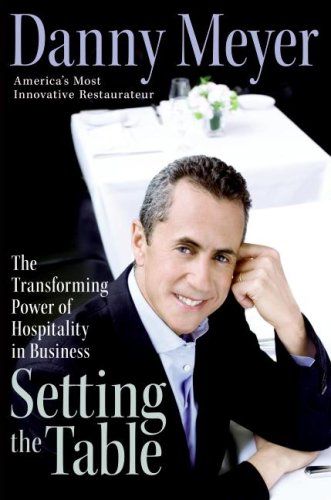
Nova: It’s the ‘why’, Atlas. The deeply embedded purpose that drives every single operational choice. Today, we're diving into this exact concept, drawing inspiration from a powerful text, "Beyond the Plate: The 'Why' Behind Restaurant Systems Design." This book argues that without understanding this profound 'why', optimizing a restaurant becomes a series of disconnected tasks, a blind spot that limits true excellence. It's a concept deeply rooted in the groundbreaking work of visionaries like Danny Meyer, whose book "Setting the Table" became widely acclaimed for pioneering "enlightened hospitality" – a philosophy that redefined restaurant success beyond just culinary excellence, influencing a generation of restaurateurs. And, of course, Simon Sinek, whose 'Start with Why' became a global phenomenon, sparking a movement around purpose-driven leadership across all industries.
Atlas: So you're saying that while everyone else is meticulously planning the 'what' and the 'how' – the menu, the decor, the steps of service – they're missing this critical foundational piece, the very reason they exist? I mean, isn't the 'why' for any restaurant just to make money? That seems pretty obvious.
The 'Why' Behind Restaurant Systems: Purpose as the Ultimate Operational Driver
SECTION
Nova: That's the common misconception, isn't it? And it's precisely the blind spot we're talking about. Imagine trying to build a magnificent house. You have all the blueprints for the walls, the plumbing, the electrical wiring – the 'what' and the 'how'. But if you don't know you're building it – is it a cozy family home, a bustling office, a serene retreat, or a fortress? – then your 'what' and 'how' are just disconnected tasks. They lack soul, they lack direction, and they'll never truly satisfy the people who inhabit it.
Atlas: Okay, I see that. Building for building's sake doesn't make a home. But when it comes to the complex, high-stakes environment of a restaurant, how does this abstract 'why' translate into something tangible? Is 'enlightened hospitality' just a fancy way of saying 'be nice to people'? Because that seems like a given, not a system.
Nova: That's the beauty of Meyer's genius, and why "Setting the Table" was so revolutionary. He showed that 'enlightened hospitality' isn't just a philosophy; it’s a meticulously designed. Take, for example, his Union Square Cafe. Every single operational choice, from the moment a guest calls for a reservation to how the tables are cleared, is intentionally aligned with making both guests and staff feel valued and cared for. It’s about creating a profound sense of belonging. The staff training isn't just about serving food; it's about understanding and anticipating human needs. Say a server notices a guest hesitating over the wine list. An 'enlightened hospitality' system dictates that this isn't just an opportunity to upsell, but an opportunity to connect, to understand their preference, and to guide them to an experience that genuinely enhances their meal. The 'why' here is deeply rooted in creating joy and genuine connection, and every 'how' flows from that.
Atlas: So it's not just a smile and a friendly greeting. It's an entire operational framework built around that core purpose of making people feel truly cared for. I can see how that would create a different kind of experience. But what about the staff themselves? How does this ‘why’ impact their daily grind, especially in such a demanding industry? For someone who navigates daily chaos, understanding how to foster that kind of internal motivation is critical.
Nova: Exactly. And that's where Simon Sinek's work on "Start with Why" perfectly complements Meyer's. Sinek argues that truly great organizations inspire by communicating their purpose first. He talks about the Golden Circle: Why, How, What. Most businesses focus on the 'what' and the 'how'. But the inspiring organizations, like Meyer's, start with the 'why' – do we do what we do?
Atlas: So, if a restaurant’s ‘why’ is "to celebrate community through food," then that purpose would dictate everything? The sourcing of local ingredients, the communal tables, the type of music, even how they handle late arrivals?
Nova: Precisely. The 'why' becomes the North Star for every operational decision. Imagine two identical restaurants. Restaurant A’s 'why' is "to make a profit." Their staff might be efficient, but their motivation is purely transactional. Restaurant B’s 'why' is "to create a vibrant space where stories are shared over exceptional meals." Their staff, inspired by this purpose, will naturally go the extra mile. They’ll remember returning customers, they’ll suggest dishes that fit the conversation, they’ll feel a sense of ownership in fostering that community. The 'hows' and 'whats' become tools to achieve that deeper purpose. The result? Staff feel more engaged, customers feel more connected, and crucially, profitability often follows as a byproduct of that inspired loyalty, not as the primary driver.
Atlas: Ah, so making money is the of a well-executed 'why', not the 'why' itself. That's a powerful reframing. It’s like the profit becomes a measure of how well you’re fulfilling your purpose, rather than the purpose itself. That makes a lot of sense for anyone trying to build something sustainable and satisfying, not just for customers but for those working within the system too.
Nova: And that's exactly what "Beyond the Plate" emphasizes. When every system, every process, every choice is aligned with a clear, inspiring purpose, operations become seamless, intuitive, and deeply satisfying for everyone involved. It moves beyond just managing chaos to truly mastering an environment, creating an experience that resonates on a far deeper level than just a good meal. It’s about connecting the dots to a greater purpose, which is what Nova’s Take really drives home.
Synthesis & Takeaways
SECTION
Atlas: This is fascinating, Nova. It truly challenges that surface-level thinking about restaurant operations. It makes me think about that deep question from the book: "What is the core purpose that drives every operational choice in your ideal restaurant system?" It’s not a simple question to answer, but it feels like the most important one.
Nova: It absolutely is, Atlas. Because once you articulate that 'why,' you unlock a profound clarity that guides every 'how' and 'what.' It transforms the very nature of the work. You move from a transactional experience to a truly transformative one, not just for the customer, but for every single person who contributes to that system. It's about finding that deep connection that transcends merely serving food, making it an act of genuine human connection and meaning. For anyone looking to truly master their response to chaos, it starts with finding that calm, clear purpose.
Atlas: That's actually really inspiring. It means that even the most complex operational challenges can be viewed through the lens of that core purpose, simplifying decisions and motivating teams. It’s about building a story, not just a structure.
Nova: Precisely. And that story, that 'why,' is what ultimately creates lasting loyalty, genuine satisfaction, and an experience that goes far beyond the plate. This is Aibrary. Congratulations on your growth!