

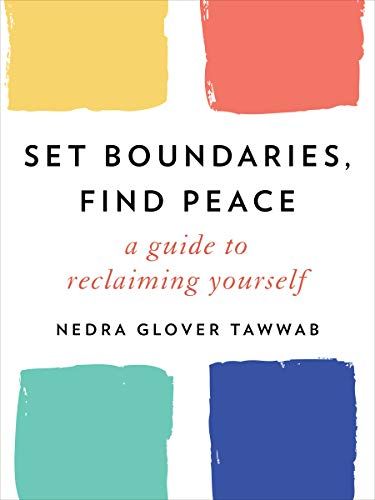
Set Boundaries, Find Peace
A Guide to Reclaiming Yourself
Introduction
Nova: Have you ever felt like you are running on a treadmill that just keeps getting faster, but you are the one who keeps hitting the incline button? You are exhausted, you are resentful, and you are wondering why everyone keeps asking so much of you, yet you cannot seem to say no.
Nova: You are definitely not alone in that feeling. That sense of being overwhelmed and underappreciated is exactly what therapist Nedra Glover Tawwab addresses in her powerhouse book, Set Boundaries, Find Peace. She argues that the root of most of our stress, burnout, and relationship drama isn't actually the people around us, it is our lack of boundaries.
Nova: Not at all. In fact, Nedra defines boundaries as the expectations and requirements that help you feel safe and comfortable in your relationships. It is not about building a wall to keep people out; it is about building a bridge so people know how to interact with you without causing harm. Today, we are going to dive deep into her framework to see how setting these invisible lines can actually lead to the peace we are all searching for.
Key Insight 1
The Invisible Lines of Safety
Nova: One of the biggest hurdles people face when they think about boundaries is the fear that they are being mean or selfish. But Nedra flips that on its head. She says that boundaries are actually an act of kindness because they tell people exactly how to love and respect you.
Nova: Think about it this way. If you let them vent for three hours and you are secretly resentful, checking your watch, and wishing they would stop, are you actually being a good friend? You are present physically, but emotionally, you are checked out and building a wall of resentment.
Nova: Exactly. Nedra points out that resentment is the number one sign that a boundary is needed. If you find yourself complaining about someone or feeling a sense of dread when their name pops up on your phone, that is your internal alarm system telling you that a boundary has been crossed.
Nova: Perfect analogy. She identifies three main types of boundaries: porous, rigid, and healthy. Porous boundaries are when you let too much in. You say yes when you want to say no, you overshare, and you are overly involved in other people's problems.
Nova: Those are the opposite. It is when you keep everyone at a distance to protect yourself. You don't share your feelings, you don't ask for help, and you might seem cold or detached. It is a defense mechanism, but it prevents real connection.
Nova: Right. Healthy boundaries mean you are clear about your values and your needs. You can be vulnerable with the right people, but you also know when to step back. It is about being assertive without being aggressive.
Key Insight 2
The Six Pillars of Personal Space
Nova: Nedra breaks boundaries down into six specific categories. This is where it gets really practical because it shows us that boundaries aren't just about saying no to favors. They cover every aspect of our lives.
Nova: They are physical, sexual, intellectual, emotional, material, and time. Let's start with physical boundaries. This is about your personal space and physical touch. For example, Nedra mentions that some people are huggers and some are handshakers. If you don't want to be hugged, setting a physical boundary is saying, I am more of a handshaker.
Nova: And then there are intellectual boundaries. This is about your thoughts and ideas. It is the right to have a different opinion without being belittled. If someone constantly shuts down your ideas or mocks your beliefs, they are violating an intellectual boundary.
Nova: Absolutely. Then we have emotional boundaries. This is a big one. It is about how much emotional energy you share and how much you take on from others. It is the difference between being supportive and being an emotional dumping ground.
Nova: That is a classic emotional boundary issue. Next is material boundaries. This involves your belongings and your money. Can people borrow your car? Do they return the clothes they borrowed? Do they ask before using your stuff?
Nova: It definitely was. Then there are time boundaries. This is how you spend your time and how others respect it. It is about not answering work emails at 10 PM or telling a friend that you only have twenty minutes to talk.
Nova: That is a huge distinction. Availability is a choice, not a default setting. And finally, there are sexual boundaries, which involve consent, preferences, and comfort levels within intimate relationships. All six of these pillars work together to create your personal sense of safety.
Key Insight 3
The Art of Clear Communication
Nova: Now, knowing you need a boundary is one thing, but actually saying it is where most people freeze up. Nedra is very clear on this: clear is kind. Vague is unkind.
Nova: But if you say, Oh, I am kind of busy, maybe later? you are being vague. The other person thinks, Okay, I will try again in five minutes. Then you get annoyed because they didn't get the hint. Nedra says we have to stop expecting people to read our minds.
Nova: She suggests a simple two-step process: identify the need and communicate it directly. No apologizing, no over-explaining. For example, instead of saying, I am so sorry, I have had such a long day and my cat is sick so I can't come to your party, you just say, I won't be able to make it to the party tonight, but thanks for the invite.
Nova: When we apologize for our boundaries, we send the message that we are doing something wrong. But you aren't doing anything wrong by taking care of yourself. Over-explaining also gives people room to negotiate. If you say you can't come because your cat is sick, they might say, Oh, just leave the cat for an hour, it will be fine! Now you are arguing about the cat instead of the boundary.
Nova: Exactly. Another tip she gives is using I statements. Instead of saying, You always interrupt me, which sounds like an attack, you say, I would like to finish my thought before we move on. It focuses on your need rather than their failing.
Nova: And remember, a boundary isn't a boundary unless there is a consequence. If you say, I won't stay on the phone if you are yelling at me, and then they yell and you stay on the phone, you haven't set a boundary. You have made a suggestion. The boundary is: If you continue to yell, I am going to hang up. Then, if they yell, you actually hang up.
Key Insight 4
Managing the Guilt and the Pushback
Nova: Let's talk about the elephant in the room: the guilt. Nedra says that guilt is a natural part of the process, especially if you have been a people-pleaser your whole life. You are breaking a pattern, and your brain is going to try to pull you back into the old, comfortable way of doing things.
Nova: You have to realize that their reaction is not your responsibility. If you set a healthy, respectful boundary and they get angry or try to guilt-trip you, that is actually a sign that the boundary was desperately needed. People who benefit from you having no boundaries are the ones who will fight the hardest when you finally set them.
Nova: Exactly. Nedra calls this pushback. It can look like anger, the silent treatment, or even testing the boundary to see if you are serious. She says we have to be prepared for the relationship to change. Some people will adapt and the relationship will get stronger. Others might drift away because they were only there for what you could do for them, not for who you are.
Nova: It is scary, but Nedra asks: is it really a friendship if it requires you to be exhausted and miserable? She also talks about self-boundaries. Sometimes the person violating our boundaries is us. We stay up too late scrolling, we take on too much work, we don't honor our own needs.
Nova: We have to treat ourselves with the same respect we are asking from others. Setting a boundary with yourself is just as important as setting one with your boss or your partner. It is about integrity—doing what you said you would do for your own well-being.
Nova: Precisely. It is a practice, not a one-time event. You are going to mess up, you are going to feel guilty, and you are going to let a boundary slide occasionally. The goal isn't perfection; it is a gradual shift toward a life where you actually have the space to breathe.
Conclusion
Nova: We have covered a lot of ground today, from the six types of boundaries to the specific language we can use to protect our peace. The core takeaway from Nedra Glover Tawwab's work is that boundaries are not about being difficult; they are about being authentic. When you stop saying yes to everything, you finally have the energy to say a meaningful yes to the things that actually matter.
Nova: It absolutely is. Remember, you cannot pour from an empty cup, and boundaries are how you keep that cup full. If you want to dive deeper, I highly recommend picking up Set Boundaries, Find Peace. It is full of scripts and exercises that make this whole process feel much less daunting.
Nova: That is a perfect start. Small wins lead to big changes. Thank you for joining us on this journey into reclaiming your time and your energy.
Nova: This is Aibrary. Congratulations on your growth!