

Unlocking Your Potential: The Science of Self-Compassion and Resilience
Golden Hook & Introduction
SECTION
Nova: What if I told you that the secret weapon to achieving your most ambitious goals isn't that relentless inner critic pushing you harder, but actually... kindness?
Atlas: Whoa, kindness? Nova, you're going straight for the jugular of every high-achiever out there. I mean, for our listeners who are constantly pushing boundaries, building companies, designing entire ecosystems—that inner voice, the one that says "not good enough, work harder," feels like a fundamental part of the engine. Are you really saying we should fire our internal drill sergeant?
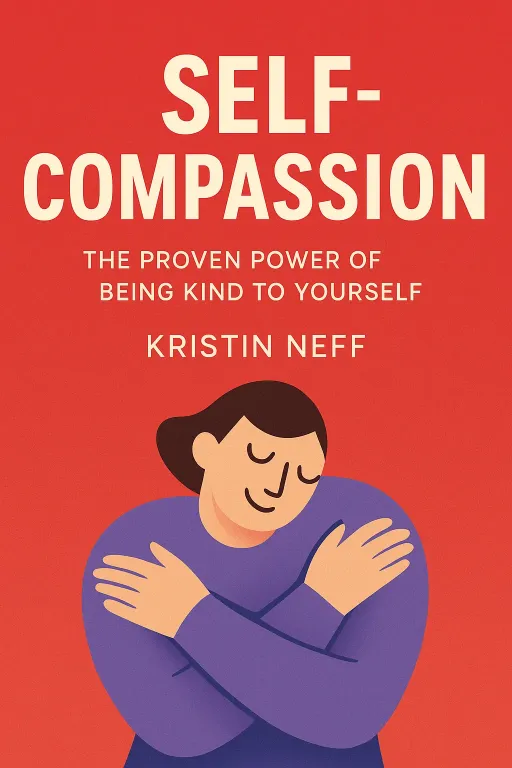
Nova: I am absolutely saying we should consider a radical restructuring of our internal guidance system, Atlas. Today, we’re unraveling a truly transformative idea, drawing insights from two titans in psychology: Kristin Neff, whose groundbreaking research established self-compassion as a validated psychological construct, and Carol Dweck, a Stanford professor whose decades of work on mindsets have reshaped how we understand learning and achievement. Their combined wisdom offers a profound re-evaluation of how we cultivate resilience and achieve sustained success.
Atlas: So, you're talking about more than just "being nice to yourself." This sounds like it goes deeper than that. For strategic builders, for culture architects, the stakes are incredibly high. We're not just talking about personal feelings; we're talking about impact, innovation, and leading teams.
Nova: Exactly. And that's precisely why this isn't some soft, feel-good philosophy. It's a foundational strength. We're going to explore how transforming our inner critic into a powerful, supportive inner ally is the ultimate fuel for long-term growth and creativity. It's about building an inner environment where true progress can flourish.
The Counterintuitive Power of Self-Compassion: Why Kindness Fuels Strength
SECTION
Nova: So let's dive into that first core idea: the counterintuitive power of self-compassion. For so long, we've been conditioned to believe that self-criticism is the engine of improvement. We think if we're not constantly pointing out our flaws, we'll become complacent.
Atlas: I know that feeling. It’s like if I don't give myself a stern talking-to after a mistake, I’ll just make it again. The idea is, the pain of self-reproach will deter future errors. It's a common belief, especially in demanding environments where performance is paramount.
Nova: But here's where Kristin Neff's work is so illuminating, Atlas. She shows us that self-criticism actually growth. It triggers our threat response, our fight-or-flight system. When we're in that state, our brains become less open to learning, less creative, and less resilient. We shut down.
Atlas: That makes sense. When I’m beating myself up, my focus shifts from "how do I fix this?" to "I'm a failure." The problem becomes, not the situation.
Nova: Precisely. Neff breaks self-compassion down into three core components: self-kindness, common humanity, and mindfulness. Self-kindness is simply treating yourself with the same warmth and understanding you'd offer a good friend. Common humanity is recognizing that suffering and imperfection are part of the shared human experience—you're not alone in your struggles. And mindfulness is observing your painful thoughts and feelings with curiosity, without judgment or getting carried away by them.
Atlas: Okay, so it’s not ignoring the problem, or pretending everything’s fine. It sounds more like acknowledging the pain, but from a supportive stance. Can you give us an example? Let's say a strategic builder, someone who's just poured months into a new initiative, and it completely falls flat. They missed a key market trend, the launch was a disaster. The inner critic would be screaming.
Nova: Absolutely. Imagine Sarah, a brilliant product leader. She’s just launched a new feature that she was convinced would revolutionize user engagement, only for it to be met with widespread user confusion and low adoption. Her inner critic immediately pounces: "You're an incompetent fool. How could you miss this? This proves you're not cut out for this leadership role." This barrage of negativity doesn't help Sarah analyze what went wrong. Instead, it paralyzes her. She might withdraw, lash out at her team, or just spiral into self-doubt, making it harder to pivot.
Atlas: That sounds rough, but what would the self-compassionate approach look like in that exact scenario? How would Sarah engage with that moment differently?
Nova: Instead of the internal attack, a self-compassionate Sarah would first acknowledge her pain. "Wow, this really hurts. I'm feeling incredibly disappointed and embarrassed right now." That's the mindfulness piece—observing the feeling without judgment. Then, self-kindness: "It's okay to feel this. I put a lot of effort into this, and it's natural to be upset when something doesn't work out." And common humanity: "Everyone experiences setbacks. This is part of the growth process, part of innovating."
Atlas: So, she's not saying "it's fine that it failed," but "it's human to feel bad when something fails, and I deserve kindness even in this moment." That's a subtle but powerful shift. It keeps her engaged with the problem, not drowning in self-blame.
Nova: Exactly! This isn't self-pity. It’s a grounded, active process. By not being overwhelmed by self-criticism, Sarah's prefrontal cortex, the part of her brain responsible for problem-solving and rational thought, stays online. She can then objectively analyze the data, gather feedback from her team, and identify what went wrong without her ego constantly getting in the way. It allows for genuine learning and a faster, more effective pivot. It’s like giving yourself the psychological equivalent of a sturdy safety net.
From Self-Criticism to Sustainable Growth: Integrating Self-Compassion and Growth Mindset
SECTION
Nova: And that sturdy safety net, Atlas, is precisely what allows Carol Dweck's concept of the growth mindset to truly flourish. If self-compassion is the warm, supportive environment within, then a growth mindset is the belief that our abilities and intelligence can be developed through dedication and hard work.
Atlas: I can definitely see how those two connect. For our listeners, who are often culture architects and strategic builders, fostering a growth mindset in their teams is crucial. But how can you really encourage a team to view challenges as opportunities if the leader themselves is secretly terrified of failure because of their own harsh inner critic?
Nova: You've hit the nail on the head. A leader who is deeply self-critical often inadvertently creates a culture of fear. Their fear of failure, their inability to be kind to themselves when things go wrong, trickles down. Teams become risk-averse, less innovative, and less likely to speak up with new ideas because the cost of failure feels too high.
Atlas: That’s a powerful point. Imagine a team trying to develop a viral loop mechanic for a new product, which is all about rapid experimentation and learning from what doesn't work. If every failed experiment means the leader internally flogs themselves, that team is going to grind to a halt.
Nova: Let’s take that example. A team is tasked with building next-gen recruiting strategies to attract top talent with limited resources. They try an innovative outreach campaign, and it flops. Response rates are abysmal. A leader operating from a place of intense self-criticism might jump to conclusions: "This was a terrible idea, we've wasted resources, I'm a bad leader." The focus shifts to blame and shame. The team feels the tension and might just revert to safe, ineffective strategies.
Atlas: And that kills innovation. But with self-compassion?
Nova: With self-compassion, the leader acknowledges the disappointment, but also the effort and good intentions. "Okay, this experiment didn't work. It's frustrating, and I feel the weight of this setback. But we took a calculated risk, and that’s part of the process of finding breakthrough solutions." This allows them to approach the failure with curiosity: "What can we learn from this? What data did we collect? How can we iterate and improve?" They view it as a learning opportunity, which is the very essence of Dweck's growth mindset.
Atlas: So, self-compassion isn't just about cushioning the blow of failure; it’s about creating the psychological safety net that allows Dweck's 'growth mindset' to actually thrive. It’s the fertile soil for the seeds of growth to even sprout, let alone take root and flourish.
Nova: Precisely. It transforms "I failed" into "This experiment yielded unexpected results, and now I know more." This mindset shift isn't just about individual resilience; it's about building an adaptable, innovative team culture. It allows for the kind of risk-taking and continuous learning that strategic builders need to create sustainable success, whether that's in recruiting, culture-first leadership, or designing viral loops. It’s the ultimate enabler for viewing challenges as opportunities, not judgments.
Synthesis & Takeaways
SECTION
Nova: So, what we're really talking about here, Atlas, is that self-compassion isn't a soft skill to be indulged in only when things are easy. It's a foundational strength, an essential ingredient for anyone driven by impact, anyone building ecosystems, anyone seeking sustainable growth. It's the inner alchemy that transforms self-criticism from a paralyzing force into a supportive, guiding voice.
Atlas: That’s actually really inspiring. For our listeners who are strategic builders, who are constantly pushing for impact and growth, this is about trusting that inner wisdom, not beating it into submission. It’s about acknowledging progress and effort, not just focusing on the distance left to go. It completely reframes how we approach setbacks and challenges.
Nova: Absolutely. And the beauty of it is, it's a practice. It's not something you achieve once and then you're done. It's a muscle you strengthen. So, for your healing moment this week, I want you to try this: Think of a recent setback, something that made your inner critic flare up. Instead of judging yourself, I want you to offer yourself the same kindness, the same understanding, the same gentle encouragement you would offer a good friend facing that exact same challenge.
Atlas: That’s a powerful exercise. It forces you to step outside your own head for a moment and see yourself through a lens of empathy. It’s about being your own best advocate, not your harshest judge. And that, in turn, allows you to be a better leader, a better innovator, and a better human.
Nova: A hundred percent, Atlas. It's the ultimate pathway to unlocking your true potential, not just despite your imperfections, but often you embrace them with kindness.
Atlas: What an incredible perspective shift. Thank you, Nova, for shedding light on such a crucial, yet often overlooked, aspect of growth and resilience.
Nova: My pleasure, Atlas. This is Aibrary. Congratulations on your growth!









