

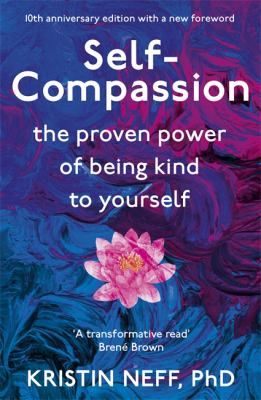
Self-Compassion
Introduction
Nova: Think about the last time a close friend came to you because they had really messed up. Maybe they blew a big presentation at work or forgot an important anniversary. What did you say to them? You probably told them it was okay, that everyone makes mistakes, and that they are still a good person. Now, think about the last time you messed up. What did that voice inside your head say then?
Atlas: Oh, I know exactly what it said. It probably called me an idiot, told me I was lazy, and reminded me of every other mistake I have made since the third grade. It is brutal in there sometimes.
Nova: Exactly. Most of us have an inner critic that is far harsher than any boss or enemy we will ever face. We think that being hard on ourselves is the only way to stay motivated or to be a good person. But today, we are diving into a book that completely flips that script. It is called Self-Compassion: The Proven Power of Being Kind to Yourself by Dr. Kristin Neff.
Atlas: I have to be honest, Nova. When I hear the words self-compassion, a part of me cringes just a little bit. It sounds a bit soft, maybe even a little bit like an excuse to just let myself off the hook for everything. Is this just another way of saying we should all just participate for the trophy?
Nova: That is actually the most common reaction people have, and it is exactly what Dr. Neff addresses right out of the gate. She is a pioneer in this field, the first person to actually define and measure self-compassion scientifically. She argues that self-compassion is not about being soft or lazy. It is actually a much more effective way to build resilience and achieve your goals than self-criticism ever could be. Over the next few minutes, we are going to break down why your inner critic is actually holding you back and how treating yourself like a friend can change your brain chemistry and your life.
Key Insight 1
The Three Pillars of Self-Compassion
Nova: To understand what we are talking about, we have to look at the three core components Dr. Neff identifies. The first one is Self-Kindness versus Self-Judgment. This is the most obvious one. It is about being warm and understanding toward ourselves when we suffer, fail, or feel inadequate, rather than ignoring our pain or flagellating ourselves with self-criticism.
Atlas: Okay, so instead of saying I am a failure, I say I am having a hard time. That makes sense, but it feels a bit like talking to a toddler. Is there more to it than just being nice?
Nova: It is about the quality of that kindness. It is active. It is asking, what do I need right now to help myself? But the second pillar is where it gets really interesting, and that is Common Humanity versus Isolation. When we fail, our immediate reaction is often to feel like we are the only ones going through this. We feel isolated in our shame.
Atlas: That is so true. You look at social media and everyone else seems to have their life together. You feel like you are the only person who cannot figure out how to be a functional adult.
Nova: Right! But Dr. Neff points out that the definition of being human is to be imperfect. To suffer and to fail is part of the shared human experience. When you realize that your struggle is not a sign that you are defective, but a sign that you are human, the shame starts to evaporate. You are not alone in your messiness.
Atlas: I like that. It shifts the focus from me being the problem to the situation being a human problem. What is the third pillar?
Nova: The third is Mindfulness versus Over-identification. This means being aware of your painful thoughts and feelings without getting swept away by them. You do not want to suppress the pain, but you also do not want to exaggerate it or let it become your entire identity.
Atlas: So, it is the difference between saying I feel sad and I am a sad person?
Nova: Exactly. It is about holding your experience in balanced awareness. You acknowledge the pain, you recognize it is a human experience, and you treat yourself with kindness while you go through it. Those three things together create a powerful psychological buffer.
Key Insight 2
The Self-Esteem Trap
Atlas: Wait, Nova, how is this different from self-esteem? I have spent my whole life being told I need high self-esteem. Is this just a new name for the same thing?
Nova: This is one of the most important distinctions in the book. Self-esteem is a global evaluation of self-worth. It is a judgment. It is the answer to the question, am I a good person or a bad person? And for decades, we were told that high self-esteem was the key to everything. But there is a massive problem with it.
Atlas: What is the problem? I thought feeling good about yourself was the goal.
Nova: The problem is that self-esteem is often contingent. It is based on being better than others. To have high self-esteem, you usually have to feel like you are above average. But we cannot all be above average at the same time. This leads to a constant need to compare ourselves to others, which creates a lot of anxiety and social distance.
Atlas: So self-esteem is like a fair-weather friend? It is there when I am winning, but it disappears the moment I lose?
Nova: Precisely. When you fail, your self-esteem deserts you right when you need it most. Self-compassion, on the other hand, is not based on evaluation. It is a way of relating to yourself. You do not have to feel better than anyone else to have self-compassion. You just have to be suffering.
Atlas: That is a huge shift. So self-esteem is about being special, but self-compassion is about being human.
Nova: Exactly. Dr. Neff's research shows that self-compassion provides the same mental health benefits as self-esteem, like less depression and more happiness, but without the downsides. It is much more stable because it does not depend on your latest success or failure. It is always available, even when you are at your absolute worst.
Key Insight 3
Busting the Myths of Laziness and Self-Pity
Atlas: I am still struggling with the motivation part, though. If I am always kind to myself when I fail, why would I ever try to do better? If I tell myself it is okay that I slept through my alarm and missed a meeting, won't I just keep doing it?
Nova: This is the myth of the inner critic. We believe that if we are not hard on ourselves, we will lose our edge. But the research actually shows the opposite. Self-criticism triggers our threat response. It floods the body with cortisol and shuts down the learning centers of the brain. You are literally scaring yourself into paralysis.
Atlas: So my inner critic is actually making me less productive?
Nova: Yes! Think about a coach. Would you perform better for a coach who screams at you and tells you that you are worthless every time you miss a shot, or a coach who acknowledges the mistake and then encourages you to try a different technique? Self-compassion is like that supportive coach. It provides the safety needed to admit mistakes and actually learn from them.
Atlas: That makes sense. If I am not terrified of my own reaction to failure, I might be more willing to take risks.
Nova: Exactly. And let's talk about the self-pity myth. People think self-compassion is just wallowing. But self-pity is actually the opposite of common humanity. Self-pity says, poor me, I am the only one suffering. Self-compassion says, this is hard, just like it is hard for everyone else at some point. It actually makes you more connected to others, not more self-absorbed.
Atlas: So it is not about saying my problems are the most important things in the world. It is about acknowledging they are real without letting them take over the whole room.
Nova: Right. It is about taking responsibility because you care about yourself, not because you are trying to avoid the whip of your own judgment. It is the difference between eating healthy because you hate your body and eating healthy because you want your body to feel good.
Key Insight 4
The Physiology of the Mammalian Care System
Nova: One of the coolest parts of Dr. Neff's work is the biology behind all of this. When we criticize ourselves, we are tapping into our oldest survival mechanism: the fight-or-flight response. The amygdala sends out a danger signal, and we attack ourselves because we perceive our own failure as a threat to our status or safety.
Atlas: So we are basically the predator and the prey at the same time?
Nova: That is a perfect way to put it. It is an internal war. But self-compassion taps into a completely different system: the mammalian caregiving system. When we experience kindness or physical touch, our bodies release oxytocin and endorphins. These are the chemicals of safety, connection, and calm.
Atlas: Wait, can I actually trigger that myself? Or do I need someone else to be kind to me?
Nova: You can absolutely trigger it yourself! Dr. Neff suggests things like placing a hand over your heart or giving yourself a gentle hug. Your brain does not fully distinguish between someone else being kind to you and you being kind to yourself. The physical sensation of warmth and touch can actually lower your cortisol levels and calm your nervous system.
Atlas: That sounds a little bit woo-woo, Nova. Putting my hand on my heart is going to change my hormones?
Nova: It sounds simple, but the physiological data is there. It is about switching from the threat system to the care system. When you are in the care system, your prefrontal cortex, the part of your brain responsible for logic and problem-solving, stays online. You can actually think clearly and make better decisions.
Atlas: So, by being kind to myself, I am literally making myself smarter in that moment because I am not in a state of panic.
Nova: Precisely. You are creating a physiological state of safety that allows you to be your best self. It is not just a nice idea; it is a biological hack for better performance and mental health.
Key Insight 5
The Self-Compassion Break
Atlas: Okay, I am starting to buy in. But how do I actually do this when I am in the middle of a meltdown? It is easy to talk about this now, but when I am spiraling, I am not thinking about mammalian care systems.
Nova: Dr. Neff has a very practical tool for this called the Self-Compassion Break. It is a three-step process you can do in about thirty seconds. The first step is to acknowledge the moment. You say to yourself, this is a moment of suffering. That is the mindfulness part. You are just naming what is happening.
Atlas: Okay, so I am not ignoring it. I am saying, wow, this really hurts right now.
Nova: Exactly. The second step is to connect to common humanity. You say, suffering is a part of life, or I am not alone in this. This breaks that feeling of isolation we talked about earlier.
Atlas: It is like reminding myself that I am not the first person to ever mess up a meeting.
Nova: Right. And the third step is the self-kindness part. You ask yourself, what do I need to hear right now? You might say, may I be kind to myself in this moment, or may I accept myself as I am. You are offering yourself the same comfort you would give a friend.
Atlas: It feels a bit formal, but I can see how it would break the cycle of that inner critic just shouting on a loop.
Nova: It is about creating a pause. In that pause, you shift from being the victim of your thoughts to being the observer of your experience. Dr. Neff also suggests finding a phrase that works for you. Some people like, may I give myself the compassion I need. Others prefer something more direct, like, it is okay, buddy, you are doing your best.
Atlas: I think I would go with, this is a mess, but you are still okay. It feels more like me.
Nova: That is perfect. The goal is not to use her specific words, but to capture the essence of those three pillars: mindfulness, common humanity, and kindness. The more you practice it, the more it becomes your default response to stress.
Conclusion
Nova: We have covered a lot today. From the three pillars of self-compassion to the biological reasons why being kind to yourself actually makes you more resilient. The biggest takeaway from Kristin Neff's book is that we do not have to earn the right to be kind to ourselves. We deserve compassion simply because we are human and because we are alive.
Atlas: It is a powerful shift. I am starting to realize that my inner critic was not actually a motivator; it was just a bully I was carrying around. Learning that I can actually change my brain chemistry by just being a bit more understanding toward my own mistakes is pretty life-changing.
Nova: It really is. And remember, self-compassion is a practice, not a destination. You are going to forget. You are going to have days where that inner critic takes over again. And when that happens, what do you do?
Atlas: I guess I have to have self-compassion for my lack of self-compassion.
Nova: You nailed it! That is the ultimate level. If you can be kind to yourself for being hard on yourself, you have truly mastered the concept. Start small. The next time you feel that sting of failure, just try to take one deep breath and acknowledge that you are not alone. You are just a human being doing your best in a complicated world.
Atlas: I can do that. It is definitely better than the alternative.
Nova: Thank you for joining us on this deep dive into the science of kindness. If you want to explore more, Dr. Neff's book is filled with even more exercises and research that can help you build this muscle.
Atlas: I am definitely going to check it out. It is time to retire the bully in my head.
Nova: This is Aibrary. Congratulations on your growth!