

The Art of Self-Compassion: Fueling Your Inner Resilience
Golden Hook & Introduction
SECTION
Nova: Atlas, quick, five-word review of 'self-compassion.' Go!
Atlas: That's a tough one... uh... not weakness, but strength's secret.
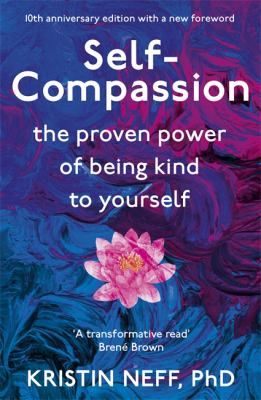
Nova: Ooh, I like that! And that's exactly what we're dissecting today as we dive into 'The Art of Self-Compassion: Fueling Your Inner Resilience,' heavily influenced by the groundbreaking work of Kristin Neff. She's not just a therapist; she's a pioneering researcher who essentially put self-compassion on the scientific map.
Atlas: That's a great way to put it. Because for so many of us, especially those who are constantly building, fixing, connecting, that word 'self-compassion' can sometimes sound a little... soft, right? It almost feels counterintuitive to the drive we have.
Nova: Absolutely. And that's why Neff's work is so crucial. She didn't just invent the concept; she meticulously defined it and then backed it up with compelling research. She gave us a framework, showing it’s not about letting yourself off the hook, but about building an inner foundation that allows you to face setbacks with grace.
Befriending Your Inner Critic: The Pillars of Self-Compassion
SECTION
Atlas: So, let's get into Neff's framework. You mentioned it's not 'soft.' What are these core components that make it so robust?
Nova: Well, Neff breaks self-compassion down into three powerful pillars. The first is. This is about treating yourself with the same understanding and care you'd offer a good friend. When you're struggling, instead of harsh self-criticism, you offer warmth and non-judgment.
Atlas: So, it’s like if my friend just completely botched a presentation, I wouldn't say, 'You idiot, you should have prepared more!' I'd say, 'Hey, tough break, but you'll get 'em next time.'
Nova: Exactly! But we rarely extend that same courtesy to ourselves. The second pillar is. This is the recognition that suffering and personal inadequacy are part of the shared human experience. You’re not alone in your struggles; everyone messes up, everyone feels pain. It connects us.
Atlas: Oh, I get that. I imagine a lot of our listeners, the ones who are always pushing boundaries and innovating, often feel immense pressure to be perfect. The thought that 'everyone struggles' can actually be a relief, not an excuse.
Nova: Precisely. It de-isolates your suffering. And the third pillar is. This isn't about getting rid of negative thoughts or feelings; it's about observing them without judgment. It's acknowledging 'This is difficult right now,' without getting swept away by the emotion or self-condemnation.
Atlas: So, self-kindness is the active response, common humanity is the context, and mindfulness is the awareness. That makes a lot of sense. But wait, for someone who's a doer, a builder, someone who thrives on feedback, even harsh self-feedback, isn't there a risk that too much self-kindness could lead to complacency? That's a common fear, right?
Nova: That's a fantastic question, and it's where Neff's research really shines. What she found is the opposite. Self-criticism, while it like it's motivating us, often just paralyzes us with fear of failure. It depletes our emotional reserves. Self-compassion, on the other hand, provides the emotional resources to. It's not about ignoring your mistakes; it's about acknowledging them from a place of safety, which then allows you to learn and adapt more effectively.
Atlas: That’s actually really inspiring. So, it's not about avoiding accountability, but about creating a more effective pathway to it. It’s like, instead of beating yourself up for dropping that wrench, you pick it up, analyze why you dropped it, and adjust your grip, all without the emotional baggage.
Nova: Exactly! It's about building that unshakeable inner foundation you mentioned earlier. When the external world throws challenges at you – and for innovators and achievers, it always does – if your internal world is solid, you're far more resilient. You don't crumble; you adapt.
A Kinder Path to Achievement: Practical Application for Resilient Achievers
SECTION
Nova: Which brings us beautifully to our second core idea: how cultivating this kinder path truly impacts your ability to recover from challenges and maintain motivation as a resilient achiever. It's the practical application for people who are always in motion.
Atlas: Okay, so if I’m someone who’s constantly striving, and I'm used to pushing myself with a stern internal monologue, what's a 'tiny step' I can take to integrate this without feeling like I'm suddenly 'going soft'? Because changing an ingrained habit is hard.
Nova: A really practical tiny step, straight from Neff's work, is this: the next time you notice that familiar sting of self-criticism – maybe you missed a deadline, or a project didn't go as planned – pause. Just for a moment. Then, place your hand over your heart. Silently acknowledge the feeling, maybe something like, 'This is difficult right now.' And then, offer yourself a kind phrase. Something simple, like, 'But I'm here for myself.'
Atlas: Wow. That sounds... surprisingly powerful. It’s physically grounding, and the phrase is so simple, yet it's a direct counter to that inner critic. It’s like a micro-intervention.
Nova: It is. And it taps into the physiological calming response of touch, while the language subtly shifts your internal narrative from 'I am failing' to 'I am struggling, and I deserve support.' This isn't about removing the difficulty; it's about changing your relationship to it.
Atlas: I can see how that would be a game-changer for someone who’s constantly facing setbacks. If you’re building something new, failure is just part of the process. If every failure is met with internal condemnation, that burnout risk skyrockets. But if it’s met with this kind of self-kindness, it becomes a learning opportunity.
Nova: Precisely. And that leads to a deep question for our listeners, especially those who are resilient achievers. How might cultivating this more self-compassionate inner dialogue impact your ability to recover from challenges and maintain your motivation? Imagine if every 'failure' wasn't a reason to quit, but a moment to pause, regroup, and then re-engage with renewed energy, because you haven't just drained yourself with self-flagellation.
Atlas: That makes me wonder, Nova, does this mean we should stop setting high standards? Because a lot of us are driven by those really high bars we set for ourselves.
Nova: Not at all! This is a crucial distinction. Self-compassion isn't about lowering your standards; it's about changing the you motivate yourself to meet them. Instead of driving yourself with fear of failure or self-punishment, you're approaching your goals with a supportive, encouraging mindset. Think of it like a coach. A good coach pushes you hard, but they also pick you up when you fall, remind you of your strengths, and help you learn. They don't just berate you.
Atlas: That’s a perfect example. It's about sustainable high performance, not just a frantic sprint to the next achievement. For someone who's always connecting with others, building teams, and driving projects, having that inner resilience, that ability to recover and stay motivated, is absolutely critical. It’s what allows them to keep showing up, even when things get tough.
Synthesis & Takeaways
SECTION
Nova: So, in essence, what Kristin Neff and the art of self-compassion teach us is that our inner critic, while it feels like it's protecting us or pushing us, is often doing the opposite. It's eroding our resilience and making achievement a much harder, lonelier journey.
Atlas: Right. And by embracing self-kindness, recognizing our common humanity in struggle, and practicing mindfulness, we're not just being 'nice' to ourselves. We're actually building a much stronger, more adaptable, and ultimately more resilient foundation for whatever challenges come our way. It's truly a strategic advantage for those who want to innovate and make a tangible impact.
Nova: It absolutely is. It's the silent fuel for the resilient achiever, allowing them to not just weather the storms, but to emerge stronger and more focused, without burning out.
Atlas: That's such a hopeful way to look at it. So, if you're out there building, connecting, creating, maybe try that tiny step Nova mentioned. Place your hand over your heart, acknowledge the struggle, and offer yourself a little kindness. See what shifts.
Nova: Exactly. Because sometimes, the kindest path is also the most effective one.
Atlas: Powerful stuff.
Nova: This is Aibrary. Congratulations on your growth!