

The Unseen System: Why Local Knowledge Trumps the Master Plan
Golden Hook & Introduction
SECTION
Orion: Imagine a perfect forest. The trees are all the same species, planted in perfect, straight rows. It's easy to count, easy to manage, easy to harvest. It’s the dream of a central planner. But then, one day, it all starts to die. This isn't a fairy tale; it's a true story from 18th-century Prussia, and it holds a critical warning for how we design our cities, our governments, and our technology today. The question is: why do our best-laid plans, our most rational systems, so often go catastrophically wrong?
Freddie Williams: That is question, isn't it? It’s the ghost in the machine for anyone who tries to build something at scale.
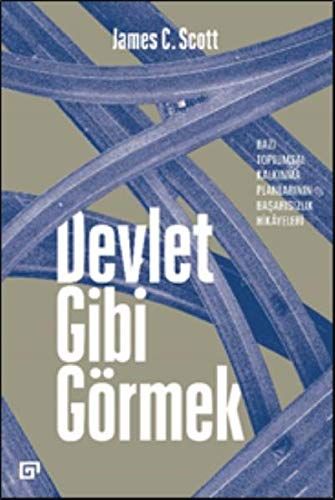
Orion: Exactly. And it’s the central question of James C. Scott's monumental book, 'Seeing Like a State.' We're going to unpack it today with someone who grapples with this every day, systems designer Freddie Williams. Freddie, your work is all about creating lawful, scalable, and most importantly, human-centered solutions. You're essentially on the front lines of preventing the disasters Scott writes about.
Freddie Williams: I try to be. It’s about ensuring the systems we build are aligned with the realities of the people they're meant to serve, not just with the blueprint on a desk somewhere.
Orion: Perfectly put. Today we'll dive deep into this from two perspectives. First, we'll explore what Scott calls the 'tyranny of the grid'—why these grand, top-down plans so often fail. Then, we'll uncover the 'wisdom of the ground,' looking at the power of local, practical knowledge as the key to building systems that actually work for people.
Deep Dive into Core Topic 1: The Tyranny of the Grid
SECTION
Orion: So let's start with that forest. Freddie, this story is the perfect entry point into Scott's main idea: the state’s need for 'legibility.'
Freddie Williams: Legibility. The need to see and measure.
Orion: Precisely. To understand this, we have to go back to late 18th-century Prussia and Germany. The state needed to maximize timber revenue. But the old-growth forests were a complete mess from their perspective. A chaotic mix of species, ages, and undergrowth. You couldn't easily assess the value or manage the yield. It was, in a word, illegible.
Freddie Williams: It was a complex, living system that couldn't be reduced to a few simple metrics.
Orion: Exactly. So, they came up with what they called 'scientific forestry.' They cleared the old forests and replaced them with a monoculture of the fastest-growing, most commercially valuable tree: the Norway spruce. They planted them in a perfect grid. Now, the forest was completely legible. A forester could stand at one end and see all the way to the other. They could calculate the timber yield almost to the cubic meter.
Freddie Williams: It’s the dream of an administrator. Clean, orderly, predictable.
Orion: For about one generation, it was a wild success. The revenues were fantastic. But then, the problems started. Scott calls it the 'revolt of the patient, silent variables.' The complex ecosystem of the old forest had been performing all these invisible services. The leaf litter from diverse trees enriched the soil in specific ways. The mix of trees prevented pests from spreading. The tangled roots held the soil on hillsides.
Freddie Williams: And the new, simplified forest had none of that resilience.
Orion: None. The single-species needles created an acidic soil that couldn't support the trees long-term. When a pest that liked Norway spruce appeared, it spread through the grid like fire through a gas station. The uniform root structure was shallow, so a strong wind could knock down entire sections like dominoes. The Germans even had a word for it:, or 'forest death.' The perfectly legible system had failed because it had ignored the complex, illegible reality of a forest ecosystem.
Freddie Williams: Wow. That is such a powerful, and frankly, terrifying metaphor.
Orion: It is. So, Freddie, as someone who designs and evaluates systems, where do you see this same impulse for 'legibility' causing problems today? This desire to create a clean grid, even if it kills the very thing you're trying to manage.
Freddie Williams: Oh, everywhere. It's the default mode for large institutions. A classic example is in public education. The state needs to measure school performance, so it creates standardized tests. The test becomes the single, legible metric of success. It's easy to read on a spreadsheet.
Orion: Right. School A gets an 85, School B gets a 72. Simple.
Freddie Williams: Exactly. But what does that number actually represent? It doesn't measure creativity, or critical thinking, or a student's sense of belonging, or a teacher's ability to inspire. So what happens? Schools start 'teaching to the test.' They strip away the 'messy' subjects like art and music. They sacrifice deep, project-based learning for rote memorization. They are optimizing for the legible metric, the test score, and in the process, they can strangle the very life out of education. They create a of the mind.
Orion: That’s a chilling parallel. You're optimizing for the spreadsheet, not for human flourishing.
Freddie Williams: Precisely. We see it in urban planning, too. A city planner might look at a dense, old neighborhood with narrow, winding streets and see chaos. Illegibility. Their solution? Bulldoze it and build a neat grid of high-rise apartments with wide, straight roads. It looks clean on the map. But they've just destroyed a complex social ecosystem of neighbors who know each other, local shops, informal support networks... all the 'messy' stuff that actually makes a community work. They replace a living neighborhood with a sterile housing project.
Orion: The legible grid wins, but the people lose.
Freddie Williams: Every time. Because the system is designed to see the grid, not the people.
Deep Dive into Core Topic 2: The Wisdom of the Ground
SECTION
Orion: Exactly. Optimizing for the spreadsheet. And that brings us to the perfect counterpoint. If the legible grid is the problem, Scott offers a solution, a concept he calls. It's a Greek word, but it basically means... street smarts on a civilizational scale.
Freddie Williams: I love that definition. It’s knowledge that’s embodied, not written down.
Orion: Yes! It’s the practical, intuitive, experience-based wisdom that can't be standardized or put in a manual. It's the farmer who knows their soil by its feel and smell, not just a chemical analysis. It's the skilled machinist who can tell a machine is off by a subtle change in its hum. It's the city dweller who knows which streets are safe at night and which shortcuts to take. It's illegible to the state, but it's essential for navigating the real world.
Freddie Williams: It’s the knowledge of the ground truth.
Orion: The perfect example is contrasting a planned city with an organic one. Take Brasilia, the capital of Brazil. It was designed from scratch in the 1950s by master architects. From an airplane, it's a stunning modernist masterpiece, shaped like a bird or a plane. A perfect, legible grid. But for decades, it was famously difficult to live in. The zones were rigidly separated—a hotel sector, a banking sector, a residential sector. You couldn't just walk to a corner store. It was designed for cars, not people. It lacked the spontaneous, human-scale life that makes a city vibrant.
Freddie Williams: It was a beautiful sculpture that people were forced to live inside.
Orion: Compare that to, say, Venice. From above, Venice is a chaotic, illegible mess of winding alleys and canals. It makes no logical sense. But at street level, it's a masterpiece of human-scale design that evolved over a thousand years of. Every corner, every bridge, every plaza is a response to the practical needs of the people who lived there. It’s a city built by ground truth.
Freddie Williams: And that's the core difference. One was designed from the sky down, the other from the ground up.
Orion: Exactly. And Freddie, this idea of feels ancient, but your work, especially with Indigenous-led institutional frameworks, seems to be about bringing this exact type of knowledge into modern system design. How do you do that? How do you make powerful institutions 'see' and value this kind of wisdom?
Freddie Williams: That's the whole challenge, and the whole opportunity. You're right, Indigenous frameworks are perhaps the most powerful example of living. We're talking about knowledge systems refined over hundreds, sometimes thousands of years of deep, continuous connection to a specific place. It’s a multi-generational understanding of an ecosystem, of social governance, of resilience. It is the polar opposite of the Prussian forest.
Orion: So how do you translate that into a modern infrastructure project or a government program?
Freddie Williams: The key is to shift from consultation to co-design. And then from co-design to community leadership. The old, failed model is: a government agency spends a year designing a project in a boardroom, then holds a 'community consultation' meeting to get 'feedback.'
Orion: The box-ticking exercise.
Freddie Williams: The ultimate box-ticking exercise. The plan is already set. The real work is acknowledging that the community members are the of their own reality. It's not about asking them for their opinion on your plan; it's about providing them with the resources and the power to design the plan themselves, with the state or the institution acting as a supportive partner, not a director.
Orion: You're flipping the entire power dynamic.
Freddie Williams: You have to. Because that's how you get alignment. You align the system with the, with the ground truth. You build a system that listens, that adapts, that respects the complexity of human life instead of trying to erase it. It’s slower. It’s messier. It's not as 'clean' on a project plan. But it's the only way to build things that last and that actually help people.
Synthesis & Takeaways
SECTION
Orion: So we have this constant battle, this fundamental tension that Scott identifies: the state's desire for a simple, legible grid versus the complex, effective, but 'messy' wisdom of.
Freddie Williams: And the goal isn't to destroy the state or abolish large systems. We need them. The goal is to make them smarter. To make them humble. To build in the feedback loops that force them to listen to the ground truth, to respect the of the people they serve.
Orion: It's about designing systems with humility.
Freddie Williams: That's the perfect word for it. The high-modernist ideology Scott critiques is pure hubris. It's the belief that a few smart people in a room can design a perfect system for millions of others. The antidote is humility. The understanding that the most valuable knowledge is often held by the people on the ground.
Orion: So, for our listeners, for anyone out there who is building something—whether it's a team at work, a piece of software, a new company policy, or a community garden—what is the one, powerful takeaway from 'Seeing Like a State'?
Freddie Williams: I think it boils down to a single, actionable question you have to ask yourself constantly. It's not 'Is my plan smart?' or 'Is my design elegant?' The question is: 'Who are the real experts of this reality, and am I truly listening to them?'
Orion: And not just listening, but giving them power.
Freddie Williams: Exactly. Are you just collecting their feedback, or are you handing them the pen? Your system's success, its resilience, and ultimately its humanity, depends entirely on that answer.