

Beyond the State: Rethinking Collective Action and Governance
Golden Hook & Introduction
SECTION
Nova: What if the very act of trying to make society 'perfectly ordered' is the fastest way to break it? We often admire grand designs, but sometimes the most elegant solutions are the ones no one planned at all.
Atlas: Whoa, that’s a bold claim, Nova. Are you saying order is inherently bad? Because I feel like most of us are constantly striving for more order, more control in our lives, whether it's our personal finances or our daily schedule.
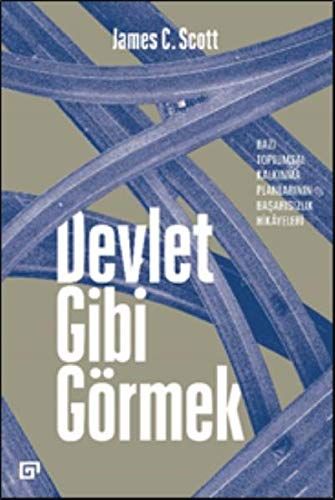
Nova: Not bad, Atlas, but often misplaced or misunderstood. Today, we're diving into a fascinating conversation sparked by two intellectual giants: James C. Scott's "Seeing Like a State," which profoundly shifted our understanding of state power, and Elinor Ostrom's Nobel Prize-winning work, "Governing the Commons," which completely upended traditional economic theories about shared resources. Ostrom, notably, was the first woman to win the Nobel Memorial Prize in Economic Sciences, not for a grand theory, but for meticulously studying real-world examples of communities making things work. It's a tale of two visions for how we govern ourselves.
Atlas: That’s incredible. The first woman to win the Nobel in economics for observing how people actually cooperate, not just theorizing. That's a huge deal in a field often dominated by abstract models. So, where do we start with these two titans?
Nova: We start with the problem, the "blind spot" that Scott so brilliantly illuminates.
The State's Blind Spot: When 'Order' Creates Chaos
SECTION
Nova: Scott, in "Seeing Like a State," argues that states, in their quest for legibility – that is, making society visible and understandable for administrative control – often simplify complex local realities to their peril. They want to map, measure, and manage everything, but in doing so, they often destroy the very intricate systems that make things work.
Atlas: Okay, but how does that play out in the real world? Can you give an example of a state trying to make something "legible" and having it backfire spectacularly?
Nova: Absolutely. One of his most compelling examples is the rise of "scientific forestry" in 18th-century Prussia and later Germany. For centuries, local communities managed diverse, messy forests, harvesting various products, knowing which trees grew best where, and understanding the complex ecological relationships. It was productive, but it wasn't neat.
Atlas: Right, like a natural ecosystem, full of quirks.
Nova: Exactly. But the state, wanting to maximize timber yields and tax revenue, saw this as inefficient. They introduced "scientific forestry," which meant clearing vast swathes of these complex forests and replacing them with monoculture plantations, typically fast-growing, uniform species like spruce.
Atlas: So, they turned a diverse forest into a tree factory. I imagine that looked very orderly on paper.
Nova: It did! And initially, it seemed incredibly efficient. It was easy to count the trees, predict yields, and collect taxes. But what happened? Over time, these simplified forests became ecological deserts. The uniform spruce trees depleted the soil of specific nutrients, making them vulnerable to pests and diseases that a diverse ecosystem would have naturally resisted. The complex web of local knowledge – about soil types, undergrowth, animal life, and varied species – was completely ignored.
Atlas: So they literally killed the forest by trying to make it too neat? It sounds like they engineered resilience out of the system. That sounds rough, but isn't legibility essential for any large-scale governance? How else do you manage millions of people or vast resources without some level of standardization?
Nova: That's the tension. Scott isn't against all planning, but he warns against "high modernism," an ideology that believes in the rational, scientific redesign of society from above, combined with an authoritarian state that has the power to impose these plans. It's when this belief in a perfect, abstract design overrides all local knowledge and practical experience.
Atlas: I mean, for anyone who's ever tried to implement a "master plan" at work, only to have it unravel because of some tiny, overlooked detail on the ground… this resonates. It sounds like a cautionary tale against over-simplification, where the map becomes more important than the territory.
Beyond the State: Community-Led Governance and the Commons
SECTION
Nova: And that naturally leads us to the second key idea we need to talk about, which often acts as a compelling counterpoint to what we just discussed: Elinor Ostrom's groundbreaking work. While Scott showed us the dangers of the state's blind spot, Ostrom, through decades of meticulous field research, demonstrated that communities aren't always trapped in the conventional economic theory of the "tragedy of the commons."
Atlas: Oh, the "tragedy of the commons." That's the idea that if a resource is shared, everyone will exploit it for their own gain until it's destroyed, right? Like a shared pasture where everyone over-grazes. It's often used to justify privatization or strong state control.
Nova: Precisely. For decades, that was the dominant view. But Ostrom, instead of theorizing from an armchair, went out and studied real-world examples of communities managing shared resources successfully. She found that, contrary to popular belief, people often devise sophisticated, self-governing rules to prevent depletion.
Atlas: So, basically, instead of a top-down rule or selling it off, they figured it out themselves? That’s a bit like how a good open-source software community works, right? Developers self-organize to maintain a massive codebase without a central authority dictating every line of code.
Nova: That's a great analogy for the spirit of it! One of her most famous examples comes from Swiss Alpine communes, where communal pastures have been managed sustainably for centuries. These weren't state-owned or privately owned in the typical sense. They were common-pool resources.
Atlas: How did they avoid the "tragedy"? Did they just have incredibly disciplined villagers?
Nova: Not necessarily. They developed intricate, localized rules. For instance, they might have limits on the number of livestock per household, specific pasture rotation schedules, or rules about who could access which parts of the mountain at different times of the year. These rules weren't imposed by a distant government; they evolved organically, negotiated by the users themselves.
Atlas: That makes sense. The people who are directly affected are often the most motivated to find solutions.
Nova: Exactly. They also had effective monitoring mechanisms – everyone knew who was following the rules and who wasn't – and graduated sanctions. If someone broke a rule, they might get a warning, then a small fine, then increasingly severe penalties. It wasn't about harsh, blanket punishments, but about building trust and ensuring fairness within the community.
Atlas: I’m curious, though. This sounds great for a small village in the Alps, or even an open-source software project. But how does this scale? For our listeners who are navigating massive, complex systems – say, global climate change or national healthcare – can these local, adaptive solutions really offer a roadmap? It feels like we're talking about two completely different scales of governance.
Synthesis & Takeaways
SECTION
Nova: That's the deep question, Atlas. It's not about replacing states entirely, but about recognizing the limits of centralized control and the power of distributed intelligence. Scott warns us against the hubris of simplifying, of trying to impose a 'master plan' on a messy, complex reality. He shows us how that often leads to ecological, social, and economic disasters because it ignores essential local knowledge.
Atlas: And Ostrom, then, provides the counter-narrative. She shows that when you empower local communities, when you allow for adaptive, context-specific rules to emerge, people can actually solve incredibly complex resource problems without top-down mandates or purely market-driven solutions.
Nova: Precisely. It's a profound insight into the very nature of human systems. It's about respecting complexity, valuing diverse knowledge, and empowering those closest to the problem to find solutions. It truly challenges the idea that "bigger" or "more centralized" is inherently better, or that order must always be imposed from above.
Atlas: That’s actually really inspiring. For anyone who feels disempowered by large, bureaucratic systems, or who's wrestled with a 'solution' that just created more problems, this offers a powerful reminder of the potential for localized agency and collective wisdom. It makes me wonder where in my own community I might find these kinds of self-organizing solutions already at play, or where I could help foster them.
Nova: Indeed. It's a call to look beyond the master plan and see the emergent solutions. It inspires us to ask, "Where can we foster conditions for local expertise and collective action to thrive?" because often, the best solutions aren't dictated from above, but grown from the ground up. It's about understanding that resilience comes from adaptation, not rigid control.
Atlas: That’s such a hopeful way to look at it. It shifts the focus from grand, perhaps doomed, projects to the incremental, intelligent work happening all around us.
Nova: Exactly. Look for the messy, the local, the adaptive. That's where the real solutions often lie. This is Aibrary. Congratulations on your growth!