

Beyond the Score: Measuring What Truly Matters in Learning
Golden Hook & Introduction
SECTION
Nova: What if I told you that the very act of measuring something, especially in learning, can actually make it?
Atlas: Whoa, that's a bold claim, Nova. I imagine a lot of our listeners, especially those driven by impact and continuous improvement, are thinking: "But isn't measurement how we we're getting better?"
Nova: Exactly! It feels counter-intuitive, doesn't it? But today, Atlas, we're diving into a powerful conceptual framework titled. It challenges us to look past the easy numbers and truly cultivate what matters.
Atlas: That title immediately hits home for anyone trying to genuinely improve outcomes, not just track numbers. So, what's the core insight here? Are we saying we shouldn't measure at all?
The Blind Spot: When Measurement Distorts Reality
SECTION
Nova: Not at all. We're saying we need to be incredibly mindful of we measure and. The core insight from this framework highlights what it calls "The Blind Spot." This is where we fall into the trap of measuring what is easy, not what is important. And when we do that, we create unintended consequences.
Atlas: That makes sense, but what kind of unintended consequences? Like, if we just measure attendance, kids show up, right? What's the downside?
Nova: Well, let's look at it through the lens of something called Goodhart's Law. It's a principle explored in economics and social science, and it basically states that when a measure becomes a target, it ceases to be a good measure.
Atlas: So you're saying the moment we for the measure, it loses its meaning? That’s a bit like saying if I only focus on my step count, I might just walk in circles to hit the number, rather than actually going anywhere useful.
Nova: Exactly! It’s a perfect analogy. Imagine a school district, for example, under immense pressure to improve its standardized test scores. The test score, which was originally designed as a of learning, becomes the.
Atlas: And then what happens? Teachers start teaching the test, I suppose.
Nova: Precisely. The curriculum narrows. Lessons become less about fostering deep understanding, critical thinking, or creativity, and more about rote memorization of facts that will appear on the exam. Students might learn how to pass, but they don't necessarily develop a genuine love for learning, or the ability to apply knowledge in novel situations.
Atlas: Oh, I see. So the test scores go up, but the actual, holistic learning experience, the critical thinking, the problem-solving—those things might actually. It’s like optimizing for a single metric at the expense of the entire system. That's going to resonate with anyone trying to lead an organization with genuinely equitable outcomes in mind. You can't just hit one number if it compromises the whole mission.
Nova: Absolutely. The "blind spot" means we're so focused on the easily quantifiable, we miss the rich, complex landscape of true development. We see the trees, but we completely miss the forest, and sometimes, in our zeal to count the trees, we even damage the ecosystem itself.
Seeing Beyond the Score: Cultivating Holistic Understanding
SECTION
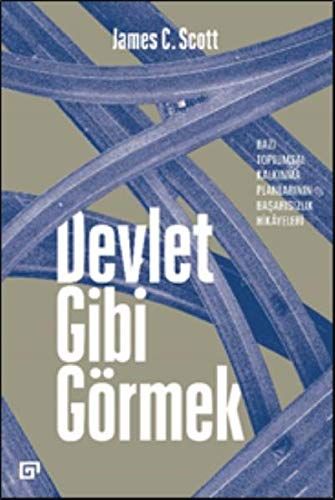
Nova: And that naturally leads us to a fascinating parallel that helps us understand this happens at a systemic level, and how we can begin to break free from this cycle. It comes from political science, from James C. Scott’s brilliant work,.
Atlas: I'm curious. What does political science have to do with measuring learning?
Nova: Scott illustrates how states, in their efforts to make societies 'legible' for control and management, often simplify complex realities. They create standardized categories, ignoring local knowledge and nuance, because it's easier to count and manage. Think about how forests were sometimes managed: cutting down diverse, complex ecosystems to plant uniform, easily measurable timber.
Atlas: So basically, governments reduce rich, messy reality into neat, quantifiable boxes so they can control it. That sounds... familiar in education. We take dynamic, individual human beings and try to fit them into a standardized bell curve.
Nova: You've got it. Applying this to education means recognizing that standardized metrics can flatten the rich, diverse landscape of student learning and unique needs. It loses the individual spark, the personal growth trajectory, the creative leaps that don't fit neatly into a multiple-choice bubble.
Atlas: That’s actually really inspiring. So, if we acknowledge this tendency to "see like a state" in our assessment, how do we, as leaders and innovators, design strategies that genuinely reflect and support the complex, individual learning journeys of students? Especially for those of us striving for advanced strategies and cultivating continuous improvement.
Nova: This is where the framework truly empowers us. By being aware of these systemic biases, we can design assessments that value depth over breadth, process over product, and individual growth over standardized comparison. Imagine, instead of a single high-stakes test, we use a portfolio-based assessment.
Atlas: Okay, so like a collection of student work over time? How does that change things?
Nova: Precisely. A portfolio can showcase critical thinking through a research project, collaboration through a group presentation, creativity through a piece of art or writing, and even resilience through drafts and revisions. It allows for qualitative feedback, for students to reflect on their own learning journey, and for educators to see a student thinks, not just they know. It's about capturing the of their learning, not just the final chapter.
Atlas: That sounds like it moves beyond just a score. For someone trying to cultivate continuous improvement and equitable outcomes, how do we measure things like critical thinking or emotional intelligence, which our current AI tools might struggle with, without falling back into those 'easy' metrics? It’s a deep question for future-forward leaders.
Synthesis & Takeaways
SECTION
Nova: And that, Atlas, is the profound insight of. True learning is complex, individual, and often messy. Our assessment strategies must reflect that complexity, not simplify it for our own convenience or to make it 'legible' for a system. When we understand Goodhart's Law and the tendency to 'see like a state,' we realize that the most powerful measurement tools aren't always the most quantifiable ones. They are the ones that honor the human element, the unique pathways, and the genuine growth that often happens in the spaces the scores.
Atlas: So basically you're saying, for us to truly cultivate learning and foster equitable outcomes, we have to start by measuring what truly matters, even if it's harder to count. And that means rethinking our entire approach to assessment. That gives me chills, honestly, because it feels like a genuine path to impact.
Nova: It is. It’s about cultivating wisdom, not just data points.
Atlas: That makes me wonder, for all our listeners out there, what is one key aspect of student learning or growth that your current AI tools struggle to measure effectively, and how might rethink its assessment?
Nova: Food for thought indeed.
Atlas: This is Aibrary. Congratulations on your growth!
Nova: Congratulations on your growth!