

Cracks in the Ivory Tower: How Bias and Fraud Shape What We "Know"
Golden Hook & Introduction
SECTION
Orion: Imagine a scientific superstar. A celebrated social psychologist in the Netherlands, a dean at his university, with dozens of publications in the world's top journals. His work on how stereotypes and environment affect human behavior was influencing policy and being cited everywhere. Now, imagine discovering that for over a decade, almost all of it was a lie. He never ran the experiments. He just... made it all up.
raj: Wow. That’s not just a small error. That’s a complete fabrication of reality. It’s a black hole where knowledge should be.
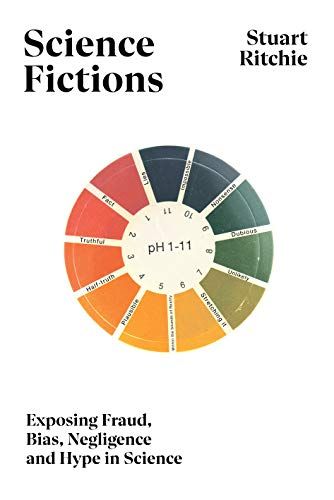
Orion: Exactly. And this isn't just a one-off horror story. It's a symptom of a deeper problem in how we create and validate knowledge, which is what we're exploring today through the lens of Stuart Ritchie's fantastic and frankly, terrifying, book, 'Science Fictions'. Welcome to the show, raj.
raj: Great to be here, Orion. That's a heavy-hitting opener.
Orion: It has to be, because the stakes are so high. Today we'll dive deep into this from two perspectives. First, we'll explore that human element—the shocking stories of fraud and the subtle psychology of bias that can lead researchers astray. Then, we'll zoom out to discuss the systemic sickness in science—the intense pressures that have led to a 'replication crisis' and what that means for everything we think we know.
raj: Sounds fascinating. A journey into the underbelly of how knowledge is made.
Orion: Precisely. So let me start with you, raj. You're someone who values skill and the acquisition of knowledge. When you hear a story like that, about a total fabrication at the highest level of academia, what's your immediate analytical reaction?
raj: My first thought is about the ripple effect. It's not just one person's career. It's the students he mentored, the other scientists who built their own research on his fake data, the public policies that might have been influenced. It’s a virus in the system. It makes you question the very concept of 'expertise' if it can be so convincingly faked for so long.
Deep Dive into Core Topic 1: The Human Element
SECTION
Orion: That's the perfect segue. Let's really get into the details of that case, because they're astounding. The man's name was Diederik Stapel. And as Ritchie's book lays out, Stapel wasn't just tweaking a few numbers to get a better result. He was a fiction writer.
raj: So he wasn't just bending the truth, he was inventing it from scratch?
Orion: Completely. He would describe these elaborate experiments to his students—for example, a study supposedly showing that a messy environment promotes discriminatory thinking. He'd tell them he would run the experiment at a different school to avoid bias. Then he’d go home, type up a fake dataset on his computer, and a few weeks later, he’d hand them this 'data' to analyze. They'd write it up, it would get published, and he'd be celebrated for another brilliant insight.
raj: And nobody checked? Nobody asked to see the raw data or the lab setup?
Orion: For years, no. The system runs on a certain level of trust. He was a charming, authoritative figure. A dean. Who would question him? It wasn't until a few graduate students noticed that his data was, well, perfect that the whole house of cards came crashing down. An investigation found at least 55 of his papers were based on completely fabricated data.
raj: That's staggering. But it also highlights a human vulnerability, doesn't it? We're wired to trust authority, to believe in a good story.
Orion: You've nailed it. And as Stuart Ritchie points out in the book, outright fraud like Stapel's is actually the most extreme, but maybe not the most damaging, problem. The bigger, more insidious issue is bias. It's less dramatic, but it's everywhere. Let me define two key types for our listeners.
raj: Okay.
Orion: First, there's. This is simple: scientific journals, and the media, love positive, new, and surprising results. A study that finds a new drug works is exciting. A study that finds it work is boring. A study that just re-confirms something we already knew is also boring. So, countless studies with negative or null results end up in a file drawer, never to be seen. This skews our entire understanding of the truth.
raj: So the public record of science is like a highlight reel, not the full game tape. We only see the successful shots, not all the misses.
Orion: Perfect analogy. And that leads to the second problem:. The 'p' stands for p-value, which is a measure of statistical significance. To put it simply, researchers are hunting for a p-value below a certain threshold, usually 0.05, to declare they've found a 'significant' result. P-hacking is when you keep analyzing your data in different ways—testing more people, throwing out certain outliers, measuring different outcomes—until you get the result you want. It's like torturing the data until it confesses.
raj: That's fascinating from a psychological perspective. It sounds like a supercharged, institutionalized version of confirmation bias. The entire system, with its publication bias, is pushing you to find a specific result. It's not necessarily malicious, it's... motivated reasoning.
Orion: Exactly! Ritchie argues many scientists who do this don't even realize it's wrong. They just think they're 'exploring the data'. Raj, you enjoy making connections. Where else do you see this kind of motivated reasoning, this p-hacking of reality?
raj: Oh, it's everywhere. Think about a business that launches a new marketing campaign. The campaign is a huge expense. The marketing team is under immense pressure to prove it worked. So what do they do? They might ignore the fact that overall sales didn't change. Instead, they'll find that 'engagement on Twitter among 18-24 year old females in the Midwest' went up 10%. They p-hack their business data to find a metric, any metric, that justifies their effort. We do it in our personal lives, too, to justify a bad decision. The scary part is that science is supposed to have safeguards against this, but it seems the incentives are just too powerful.
Deep Dive into Core Topic 2: The Systemic Sickness
SECTION
Orion: You've hit on the perfect word: incentives. The pressure to 'Publish or Perish'. And that leads us directly to our second major topic: the systemic sickness that has caused what's known as the 'Replication Crisis'.
raj: Right, this is something I've heard about. The idea that many famous findings just... don't hold up.
Orion: Precisely. Replication is supposed to be the absolute cornerstone of science. If I make a discovery in London, you, following my exact methods, should be able to get the same result in Mumbai. It's the ultimate fact-checker. But starting around 2010, a group of researchers began large-scale projects to systematically replicate classic studies, especially in social psychology and medicine. The results were a bombshell.
raj: What did they find?
Orion: In one major project, they attempted to replicate 100 psychology studies published in top journals. They only succeeded in getting a similar result about 39% of the time. More than 60% of these published 'facts' seemed to vanish into thin air when put to the test.
raj: Sixty percent. That's not a small error margin. That suggests the foundations are unstable.
Orion: Deeply unstable. And let's use a famous, concrete example from the book that many listeners will have heard of: the 'power posing' study.
raj: Ah yes, the Amy Cuddy TED talk. Stand like a superhero, feel more powerful.
Orion: That's the one. The original 2010 study was incredibly seductive. The claim was that standing in an expansive 'power pose' for just two minutes would decrease your stress hormone, cortisol, and increase your dominance hormone, testosterone. It would also make you more willing to take risks. The TED talk has over 65 million views. It became a global phenomenon.
raj: A classic piece of 'skill knowledge' that's easy to apply. I can see the appeal.
Orion: Absolutely. But then other, bigger, better-designed studies tried to replicate it. And what happened? The hormonal effects—the testosterone and cortisol changes, which were the biological core of the claim—completely disappeared. They weren't there. There might be a small subjective effect—posing might make you a bit more confident—but the powerful biological mechanism that made the story so compelling was shown to be an illusion, likely a product of those biases we just discussed, like p-hacking on a small sample size.
raj: So the 'science' part of the science fiction evaporated.
Orion: Poof. Gone. So, raj, as someone who thinks about how skills and knowledge are built, when a foundational, widely-publicized 'skill' like power posing gets debunked, what does that tell you about the thousands of other self-help or productivity 'hacks' out there that are based on a single, sexy study?
raj: It tells me that our entire model for consuming this kind of information is broken. We see a headline that says 'A Study Shows...' and we treat it as fact. But this crisis suggests that a single study is almost meaningless on its own. It's, at best, a preliminary signal, not a conclusion. It means we need a new mental filter for knowledge. The source isn't enough. We have to start asking, 'Is this a single study? Has it been replicated by independent labs? Was the study 'pre-registered'—meaning, did they lock in their hypothesis before they started, to prevent p-hacking?'
Orion: Yes! Pre-registration is a key reform Ritchie champions.
raj: It fundamentally changes the burden of proof. It suggests that much of what we call 'knowledge' in the popular sphere is actually just a collection of unverified, highly provisional findings. It's not a library of facts; it's a messy workshop full of half-finished projects, some of which will fall apart the moment you touch them.
Synthesis & Takeaways
SECTION
Orion: What a perfect summary. A messy workshop. So, as we pull this all together, we have these two powerful forces at play. On one hand, you have the human element that Ritchie details: the potential for outright fraud and the near-certainty of cognitive bias.
raj: And on the other hand, you have the systemic element: the 'publish or perish' incentive structure that rewards flashy, positive results over slow, careful, and correct ones. And these two forces feed each other. The pressure to publish creates the perfect environment for bias to thrive and even for fraud to go undetected for years.
Orion: So the crucial takeaway here, and I think the ultimate point of 'Science Fictions', isn't to become a cynic who dismisses all science. That would be a disaster. The book is ultimately a love letter to the scientific ideal, and a call to action to fix the process.
raj: Exactly. It's not about abandoning the pursuit of knowledge. It's about pursuing it more intelligently. The goal isn't to become a denier, but a sophisticated skeptic.
Orion: So let's leave our listeners with something actionable. Raj, based on this discussion, what is the one practical skill someone can cultivate to navigate this world of flawed information?
raj: I think the ultimate skill is to develop a 'replication mindset'. The next time you see a headline or hear a podcast or read a book that makes a stunning claim based on 'science,' pause. Don't just consume it. Interrogate it. Ask the hard questions: Is this based on one study or a meta-analysis of many? Who funded it? Has the finding been replicated by a team that didn't have a horse in the race? In a world of hype, being the person who asks 'But has it been replicated?' is a superpower. Becoming a better, more critical consumer of knowledge is the ultimate skill.
Orion: A superpower. I love that. Ask the hard questions. A perfect place to end. Raj, thank you for helping us dissect the fascinating and frightening world of 'Science Fictions'.
raj: My pleasure, Orion. It’s a crucial conversation to have.