

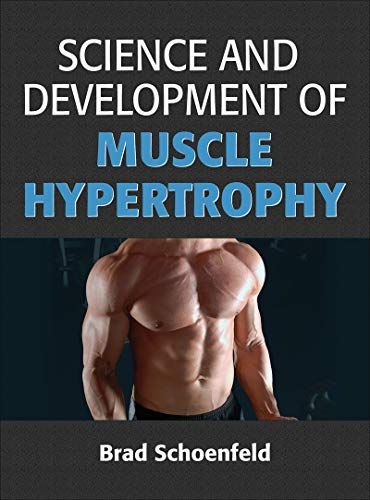
Science and Development of Muscle Hypertrophy
Introduction
Nova: Have you ever wondered why some people spend hours in the gym and barely see a change, while others seem to grow muscle just by looking at a dumbbell? It feels like there is some secret code to building a physique, but the truth is actually buried in thousands of peer-reviewed studies. Today, we are diving into the definitive guide on the subject: Science and Development of Muscle Hypertrophy by Dr. Brad Schoenfeld.
Nova: Exactly. He is a PhD and a former competitive natural bodybuilder, which gives him this unique perspective. His book is basically the gold standard textbook for anyone who wants to understand how muscle actually grows. It is not just a collection of workout routines; it is an exhaustive breakdown of the physiological and molecular mechanisms of muscle growth. We are talking over a thousand citations in the latest edition.
Nova: It is a mix of both. Some old-school wisdom holds up under the microscope, while other common practices are being completely debunked by the latest data. Today, we are going to unpack the three pillars of growth, the truth about the hypertrophy rep range, and why your rest periods might be sabotaging your gains. By the end of this, you will have a blueprint for muscle growth that is backed by hard evidence, not just gym lore.
Key Insight 1
The Three Pillars of Growth
Nova: To understand hypertrophy, we have to start with the three primary mechanisms Schoenfeld identified in his seminal 2010 paper, which he expands on in the book. These are mechanical tension, metabolic stress, and muscle damage.
Nova: That is actually one of the biggest shifts in the second edition of the book. For a long time, we thought muscle damage was a primary driver of growth. You lift, you create micro-tears, and the body repairs them. But Schoenfeld points out that while damage is associated with growth, it might not be a requirement. In fact, too much damage can actually hinder growth because the body spends all its energy on repair rather than adding new tissue.
Nova: Precisely. If you are so sore that you can't train effectively for several days, you are losing out on potential growth sessions. Schoenfeld emphasizes that mechanical tension is the undisputed king. This is the force applied to muscle fibers during a lift. It triggers a process called mechanotransduction, where the muscle cells literally sense the load and turn that physical signal into a chemical signal for protein synthesis.
Nova: Oh, it is definitely not just for ego. Metabolic stress is that burning sensation you get during high-rep sets. It is caused by the buildup of metabolites like lactate, hydrogen ions, and inorganic phosphate. This environment causes muscle fibers to swell, which is a physiological signal for the cell to grow. It also increases the recruitment of high-threshold motor units, which are the fibers with the most growth potential.
Nova: Schoenfeld suggests that for most people, the majority of training should focus on maximizing mechanical tension through progressive overload, but you should also incorporate some high-rep, short-rest work to capture those metabolic benefits. It is not an either-or situation; it is about using different tools to trigger every possible growth pathway.
Key Insight 2
The Hypertrophy Rep Range Myth
Nova: This is one of the most liberating parts of the book. Schoenfeld's research shows that the hypertrophy zone is much wider than we thought. He has conducted studies comparing low-load training to high-load training, and the results are shocking. As long as you are training close to failure, you can see similar muscle growth with 5 reps or 30 reps.
Nova: Theoretically, yes, provided the effort level is the same. This is the concept of effective reps. The last few reps of a set, where the speed of the bar naturally slows down despite your best effort, are the ones that really drive growth. Whether you reach that point at rep 8 or rep 28, the muscle doesn't really care. It just knows it is being challenged.
Nova: Efficiency and discomfort. Doing a set of 30 reps to true failure is incredibly taxing on your cardiovascular system and your mental fortitude. It takes a long time and it burns like crazy. Most people find it much easier to reach failure in the 8 to 12 range. Schoenfeld calls this the sweet spot, not because it is the only way to grow, but because it is the most practical way to accumulate volume without burning out.
Nova: Volume is the total amount of work you do, usually measured in hard sets per muscle group per week. Schoenfeld's meta-analysis found a clear dose-response relationship: more volume generally leads to more growth. However, there is a ceiling called the junk volume threshold. For most people, the sweet spot is around 10 to 20 hard sets per muscle group per week. If you go way beyond that, you risk overtraining and injury.
Nova: That brings us to frequency. Schoenfeld's research suggests that while total weekly volume is the most important factor, spreading that volume over at least two sessions per week might be slightly better for most people. It allows you to stay fresher for each set, which means you can maintain higher quality and more tension. If you try to do 20 sets of chest in one day, by set 15, you are probably just moving the weight with momentum rather than muscle.
Key Insight 3
Rest Periods and Exercise Selection
Nova: This is another area where the science has evolved. The old school thought was that short rest periods, like 30 to 60 seconds, would spike growth hormone and maximize metabolic stress. But Schoenfeld's research actually showed that longer rest periods, around 2 to 3 minutes, often lead to more muscle growth.
Nova: It goes back to our king: mechanical tension. If you only rest 60 seconds, your nervous system and your muscles haven't fully recovered. This means on your next set, you won't be able to lift as much weight or do as many reps. By resting longer, you can maintain a higher workload across all your sets. You are trading a little bit of metabolic stress for a lot more mechanical tension and total volume.
Nova: Probably not. Schoenfeld suggests a nuanced approach. For big, compound movements that use a lot of muscle mass, longer rest is better. For smaller isolation exercises, you can get away with shorter rest because they aren't as systemically taxing. It is all about managing fatigue so you can perform at your best.
Nova: Schoenfeld is pretty clear that muscles don't get confused. They are tissues, not brains. However, he does advocate for exercise variety, but for a different reason. Muscles have different regions and different fiber orientations. For example, the quadriceps are made up of four different muscles, and certain exercises like the sissy squat or the leg press might target different parts of that group more effectively than a standard back squat.
Nova: Exactly. He recommends a multi-planar approach. You want to hit muscles from different angles and through different ranges of motion. But you shouldn't change your exercises every week. You need to stick with a movement long enough to get good at it and apply progressive overload. If you change your routine every time you go to the gym, you can't track if you are actually getting stronger.
Key Insight 4
The Anabolic Window and Nutrition
Nova: Schoenfeld actually co-authored a massive meta-analysis on this very topic. The verdict? The anabolic window is much larger than we were led to believe. It is not a 30-minute window that slams shut. It is more like a large barn door that stays open for several hours, especially if you haven't eaten for a few hours before your workout.
Nova: Not necessarily. The most important thing is your total daily protein intake. Schoenfeld recommends around 1.6 to 2.2 grams of protein per kilogram of body weight. If you hit that number, the exact timing of your protein is secondary. However, he does note that for elite athletes or people training twice a day, timing becomes more important. For the average person, just having a high-protein meal within a few hours of training is perfectly fine.
Nova: It does, and it is a bit of a reality check. Schoenfeld discusses how things like bone structure, muscle fiber type distribution, and hormone levels set a baseline for your potential. Some people are high responders to resistance training, and others are low responders. But the key takeaway is that everyone can improve. Your genetics might determine your ultimate ceiling, but most people are nowhere near their actual potential because their training and nutrition aren't optimized.
Nova: Precisely. And that is why this book is so valuable. It gives you the tools to maximize whatever genetic hand you were dealt. It is about moving away from the shotgun approach where you just do everything and hope something sticks, and moving toward a sniper approach where every set and every meal has a purpose.
Conclusion
Nova: We have covered a lot of ground today, from the molecular signals of mechanical tension to the reality of the anabolic window. The biggest takeaway from Brad Schoenfeld's work is that muscle hypertrophy is a science, but it is also highly individual. There is no one-size-fits-all program, but there are universal principles that govern how our bodies adapt to stress.
Nova: You hit the nail on the head. If you focus on maximizing mechanical tension, getting enough volume, resting long enough to perform well, and hitting your protein goals, you are 95 percent of the way there. The rest is just fine-tuning the details based on how your body responds. Schoenfeld's book is a reminder that while the gym is a place of effort, it should also be a place of intelligence.
Nova: That is the spirit. Use the science to work harder, but also to work smarter. If you want to dive deeper, I highly recommend picking up a copy of Science and Development of Muscle Hypertrophy. It is a dense read, but it is the last book on muscle growth you will ever need to buy.
Nova: This is Aibrary. Congratulations on your growth!