

The Art of Athletic Mastery: Blending Science and Practice
Golden Hook & Introduction
SECTION
Nova: Atlas, I’m going to throw out two names: Brad Schoenfeld and Kelly Starrett. What's the first thing that comes to your mind?
Atlas: Oh, I love that game! Schoenfeld? The muscle growth guru, the hypertrophy whisperer. Starrett? The mobility maestro, the guy who makes you realize you've been moving wrong your entire life. It’s like the ultimate dynamic duo for anyone serious about their physical self.
Nova: Exactly! It’s like the theoretical physicist meets the practical engineer of the human body. And today, we're diving into how their insights, particularly from Schoenfeld's and Starrett's, offer a complete roadmap to what we’re calling 'athletic mastery.' It's not just about lifting heavy or running fast; it's about building an intelligent, resilient, and high-performing physique.
Atlas: That’s a powerful promise. I mean, who wouldn’t want that? Especially for our listeners who are not just working out, but genuinely seeking peak performance and a deeper understanding of the science behind it. I’m curious how these two seemingly different approaches actually complement each other.
Unlocking Your Body's Potential: The Science of Muscle Growth
SECTION
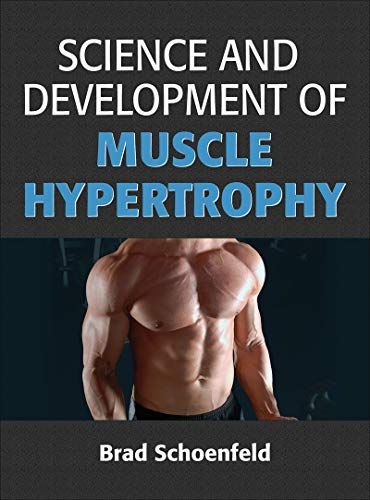
Nova: That's the magic, isn't it? Let's start with Schoenfeld. He’s often referred to as 'Dr. Hypertrophy' for a reason. His book is a deep dive into the physiological mechanisms of muscle growth. It’s not just a collection of exercises; it’s an evidence-based manual on how to optimally stimulate muscle adaptation.
Atlas: Oh, I like that. 'Optimally stimulate.' Because I think a lot of people, myself included sometimes, just 'do' exercises. They go through the motions. But Schoenfeld makes you think about you're doing something.
Nova: Absolutely. He unpacks the three primary mechanisms of hypertrophy: mechanical tension, muscle damage, and metabolic stress. Most people intuitively understand mechanical tension—lifting heavy things. But it's the nuanced interplay between all three that truly drives growth. For instance, he highlights how even light loads can be effective if taken to muscular failure, emphasizing metabolic stress.
Atlas: So you’re saying it’s not just about how much weight you lift, but you lift it, and the accumulated fatigue? That sounds like a game-changer for someone who might be limited by equipment or injury.
Nova: Precisely. He delves into how training volume, frequency, and intensity all play a role, but it’s not a one-size-fits-all. He dissects the research, explaining that while progressive overload is king, the of overload matters. Is it increasing weight, reps, sets, or even just improving recovery to allow for more effective training? He’s very clear that understanding these principles allows you to manipulate variables for continuous progress.
Atlas: And that’s where the 'scholar' part of this comes in, right? It’s moving beyond just following a program to actually understanding the behind the program. It enables you to design your own, or at least critically evaluate one.
Nova: Exactly. Think of it like this: many people bake a cake by following a recipe. Schoenfeld teaches you the chemistry of baking. He explains why certain ingredients react the way they do, and how temperature and mixing techniques affect the final product. So, when your cake doesn't rise, you know, and you know how to fix it. It's about moving from cook to chef.
Atlas: That’s a great analogy. It empowers you. And I imagine that deep understanding also helps with injury prevention, because you're not just mindlessly pushing.
Nova: You've hit on a critical point that actually bridges beautifully into our second text. While Schoenfeld helps you build the engine, Starrett, with, ensures the chassis and suspension are perfectly aligned and functional.
From Theory to Triumph: Mastering Movement and Preventing Injury
SECTION
Nova: Starrett’s work is a masterclass in human movement. He argues that most injuries and performance plateaus stem from poor movement patterns and a lack of mobility. He gives you the tools to identify and correct those dysfunctions.
Atlas: Hold on, so we've got the science of muscle growth, and now we're talking about movement patterns. How do these two connect on a practical level? Because I can see someone building a huge engine, but if their chassis is broken, what good is it?
Nova: That’s it! Starrett introduces concepts like the 'eleven foundational movements' and the importance of maintaining proper joint positions. He's big on the idea of a 'neutral spine' and 'torque' – essentially, how you generate force efficiently and safely. He provides practical techniques, often using simple tools like resistance bands or a foam roller, to improve range of motion and tissue quality.
Atlas: So, it's like a diagnostic tool and a repair manual for your body's mechanics? I remember watching some of his videos, and it’s incredible how he breaks down complex biomechanical principles into things you can actually and.
Nova: He truly does. Imagine someone trying to do a deep squat. Schoenfeld tells you how that squat builds glutes and quads. Starrett comes in and says, "But your ankles are stiff, your hips are tight, and your spine is rounding. You're losing power and setting yourself up for a back injury." He then gives you specific drills to mobilize those joints, improve your bracing, and ultimately, perform a more effective and safer squat.
Atlas: That makes perfect sense. It's about optimizing the of that mechanical tension we talked about earlier. Without proper movement, you might be lifting heavy, but you're not actually targeting the right muscles efficiently, and you’re probably putting stress on the wrong places.
Nova: Exactly. He's often lauded by professional athletes and everyday gym-goers alike because his methods are so practical and immediately impactful. Many readers report significant reductions in pain and dramatic improvements in their lifting numbers, not by getting stronger, but by moving better. He’s essentially saying, your body has an optimal operating system, and you’re probably running it with a lot of bugs. Let’s debug it.
Atlas: That’s actually really inspiring. Because it suggests that improvement isn't always about pushing harder, but often about moving smarter. It’s about building a robust, intelligent body. I imagine for someone who’s constantly pushing their limits in the gym, understanding these principles could mean the difference between a long, healthy athletic career and a series of frustrating injuries.
Nova: Absolutely. It transforms training from simply 'doing' to 'mastering.' It’s a holistic approach. You build the engine with Schoenfeld’s science, and then you ensure that engine runs smoothly, powerfully, and without breaking down, thanks to Starrett’s biomechanical insights. It's about creating an athlete who is not only strong but also resilient, agile, and intelligent in their movement.
Synthesis & Takeaways
SECTION
Nova: So, when you put these two together, you get this incredible synergy. Schoenfeld gives you the molecular-level understanding of adaptation, and Starrett gives you the macroscopic strategies for optimizing movement. It’s about building a body that performs at its peak, withstands challenges, and recovers effectively.
Atlas: That’s a powerful combination. It really shifts the mindset from just 'working out' to 'athletic mastery.' It's about being a disciplined scholar of your own body, an analytical athlete in practice, and an imaginative explorer of your physical potential. It's not just about getting bigger or stronger; it's about becoming intrinsically better.
Nova: Precisely. And the tiny step for anyone listening is to take just one exercise from their next workout. Reflect on how you could optimize its muscle stimulus using Schoenfeld's principles—maybe adjust the tempo, or focus on the eccentric phase. Then, immediately apply a mobility drill from Starrett to improve your range of motion for that very exercise. See how they connect, how they empower each other.
Atlas: That’s a fantastic, actionable step. Because it immediately brings the theory into practice. It makes you ask, 'How can a deeper understanding of muscle physiology and biomechanics transform my approach to training from simply 'doing' to 'mastering'?' And I think the answer is, profoundly. It’s about making every rep count, not just for today, but for a lifetime of movement.
Nova: It’s about truly unlocking your body's potential, not just scratching the surface. It’s a journey of discovery, where every question leads to deeper understanding, and every movement becomes more intelligent. This is Aibrary. Congratulations on your growth!