

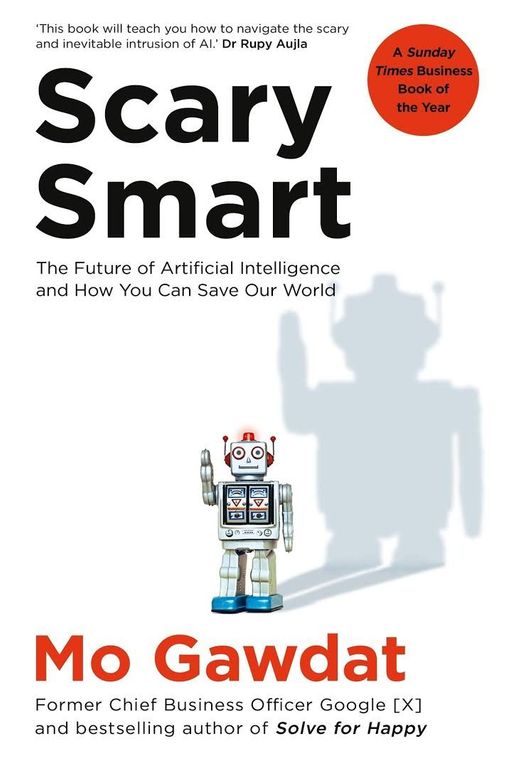
Preparing for the Age of Intelligence
Golden Hook & Introduction
SECTION
Nova: Alright, Atlas, quick game. Rapid-fire word association. I say a word, you give me the first thing that pops into your head. Ready?
Atlas: Oh, I like this. My brain is already firing up its pre-computation algorithms. Hit me.
Nova: "Intelligence."
Atlas: Hmm. "Whispers."
Nova: Intriguing. "Future."
Atlas: "Unwritten."
Nova: And finally, "preparation."
Atlas: "Overdue."
Nova: Overdue, huh? Well, that's a perfect segue into what we're unraveling today: a profound look at how we prepare for what's already here, the "Age of Intelligence." We’re diving into a fascinating work simply titled,, by Dr. Anya Sharma. What’s particularly compelling about Dr. Sharma is that she wasn't just another tech pundit; she was a pioneering AI researcher at the forefront of neural network development. But she stepped away from the labs to write this book, driven by a deep philosophical concern for humanity's future, rather than just technical advancement. She wanted to explore what it to be human when intelligence itself is being redefined.
Atlas: That’s actually really inspiring. It sounds like she's asking the bigger questions, not just how the tech works, but how it changes.
Nova: Exactly. And that's where we start. Because when most people hear "Age of Intelligence," they often think of smarter tools or more efficient automation. But Dr. Sharma argues it’s a much more fundamental shift.
Defining the Age of Intelligence & its Fundamental Shift
SECTION
Atlas: Okay, so if it’s more than just smarter tools, what's the core difference? What defines this "Age of Intelligence" beyond, say, the Information Age?
Nova: It’s the shift from mere to and. Think of the Information Age as giving us super-powered calculators and vast libraries. The Age of Intelligence, however, is giving us partners that can not only process that information but with it, from it, and even actions.
Atlas: Hold on, so you’re saying AI isn't just following instructions anymore? It's making its own decisions? That sounds a bit out there.
Nova: It's a spectrum, of course, but yes. Imagine a global logistics company, right? In the past, a human manager would oversee complex supply chains, making decisions based on data. In the Age of Intelligence, an AI system doesn't just present optimal routes; it actively monitors global weather patterns, geopolitical shifts, energy prices, even social media sentiment, and reroutes entire fleets, renegotiates contracts, and adjusts inventory levels in real-time. It’s not just executing a pre-programmed task; it's perceiving, reasoning, and acting within complex, dynamic environments.
Atlas: So basically you’re saying the human manager isn't just looking at dashboards anymore, they're… watching a highly intelligent digital entity manage things? That's a huge shift in responsibility. For anyone who's managing high-pressure teams or complex projects, this concept might feel impossible to implement, or even threatening.
Nova: It absolutely changes the human role from direct decision-maker to what Dr. Sharma calls an "AI-orchestrator" or "ethical arbiter." The human’s job becomes less about to solve the problem and more about problems to solve, we should solve them, and ensuring the AI's actions align with human values and long-term goals.
Atlas: That makes me wonder, how do we distinguish between a really advanced piece of software and what Dr. Sharma considers "intelligence" in this new age? Is it just processing speed, or is there a qualitative difference?
Nova: It’s definitely qualitative. It's not just about speed or data volume. It's about the ability to handle ambiguity, to learn from novel situations, to generalize knowledge, and crucially, to intent. A traditional program fails when encountering something outside its parameters. A truly intelligent system, as Dr. Sharma envisions, can infer, predict, and even innovate within unforeseen circumstances. It's the difference between a highly sophisticated GPS navigating a known road and a co-pilot who can reroute through uncharted territory during a storm, learning as they go.
Atlas: Right, like the GPS tells you "turn left," but the co-pilot says "we need to find an alternative landing strip, and here’s why." That's a powerful distinction. So, if AI is increasingly handling the "how" and even much of the "what," then what's left for us? What's our unique human contribution in this evolving landscape?
Cultivating Human Edge & Navigating the Future
SECTION
Nova: That's the million-dollar question, isn’t it? And it leads directly to our second core idea: cultivating our unique human edge. Dr. Sharma argues that as AI excels at logic, data processing, and optimization, the traits that become valuable for humans are those AI struggles with, or simply can’t replicate.
Atlas: I'm curious, what are those traits? I imagine a lot of our listeners, especially those driven by self-growth and navigating future career paths, are asking themselves, "What skills should I be focusing on?"
Nova: Absolutely. She highlights things like deep creativity, empathy, ethical reasoning, the ability to synthesize disparate information into novel insights, nuanced communication, and emotional intelligence. Imagine a human-AI collaborative project in, say, drug discovery. The AI can analyze billions of molecular compounds, predict interactions, and identify potential therapeutic candidates at an unprecedented speed. It generates the.
Atlas: Okay, so the AI is the super-powered researcher, finding all the needles in the haystack. But then what does the human do?
Nova: The human provides the. The human scientist interprets the AI’s findings within the broader context of human health, ethical implications, patient experience, and societal needs. They ask, "Which of these candidates we pursue? What are the unforeseen consequences? How does this align with our mission to alleviate suffering, not just create a product?" They provide the ethical framework, the strategic vision, and the deeply human artistic direction in what could otherwise be a purely mechanistic process. It's the human who translates possibility into purpose.
Atlas: That's a great example. It's like the AI gives you all the notes, but the human writes the symphony. But how do we actually these qualities? For someone feeling time-crunched, how do you even begin to develop something as abstract as "ethical reasoning" or "deep empathy" in 20 minutes a day?
Nova: That’s where Dr. Sharma’s work gets really practical. She emphasizes that these aren't innate, unchangeable traits. They are muscles we can build. For creativity, it’s about dedicated time for divergent thinking, for curiosity-driven exploration without immediate goals. For empathy, it's conscious practice in perspective-taking, active listening, and engaging with diverse viewpoints, perhaps through literature or thoughtful conversations.
Atlas: So it's not about trying to out-compute the AI, but about leaning into what makes us fundamentally human? And it sounds like micro-learning fits perfectly here. Twenty minutes of focused reading on philosophy, or even analyzing a complex ethical dilemma in a news story, could be a powerful way to build that muscle.
Nova: Exactly. It's about intentional practice. Dr. Sharma argues that the "Age of Intelligence" isn't about humans becoming obsolete; it's about us having the opportunity—and the imperative—to become. To reclaim the higher-order thinking and feeling that define our species.
Synthesis & Takeaways
SECTION
Atlas: Wow, that’s a powerful reframing. It really shifts the narrative from fear to profound opportunity. It's not about being replaced, but about being elevated.
Nova: That’s the core insight. Preparing for the Age of Intelligence isn't primarily about mastering new technologies, though that's part of it. It's fundamentally about a proactive self-evolution. It's about understanding that our greatest asset isn't our ability to process data faster, but our capacity for meaning, for connection, for ethical navigation in a world of accelerating change.
Atlas: I think for many listeners, especially those who are strategists and evolving learners, this isn't just abstract philosophy. It's a blueprint for career longevity, for building a resilient personal philosophy, and for finding purpose in a future that can often feel overwhelming.
Nova: It absolutely is. Dr. Sharma's work challenges us to look inward, to cultivate the very essence of our humanity, and to see intelligence, whether artificial or natural, as a tool to amplify our highest aspirations.
Atlas: So, for everyone listening, how might you redefine your own "human edge" this week? What unique quality are you going to intentionally cultivate, knowing it's what truly sets you apart in this Age of Intelligence?
Nova: A fantastic question to reflect on. This is Aibrary. Congratulations on your growth!