The 'Mindful Morsel': Reconnecting Your Plate to Your Inner Well-being.
Golden Hook & Introduction
SECTION
Nova: Atlas, I have a challenge for you today. In exactly five words, how would you describe the concept of 'mindful eating'? No pressure, just your immediate, unfiltered take.
Atlas: Oh man, five words? Okay... "Slow down, taste, feel, connect." Does that count? It feels a little... prescriptive.
Nova: It counts! And that "prescriptive" feeling is exactly what we're going to unpack today, because while it sounds simple, the implications are profound. We're diving into how we can transform one of life's most fundamental acts.
Atlas: I'm curious. What are we looking at to tackle something so... everyday?
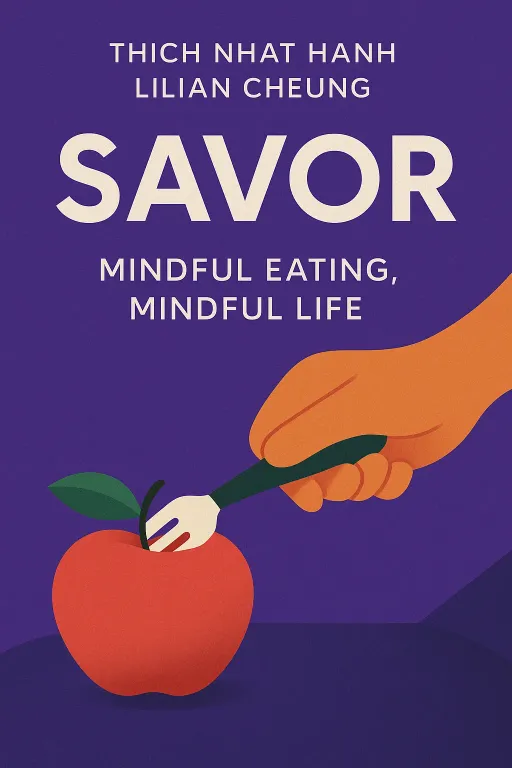
Nova: We're drawing insights from two incredible books today. First, "Savor" by the legendary Zen master Thich Nhat Hanh, who, get this, co-wrote it with a Harvard nutritionist, Lilian Cheung. It's this incredible bridge between ancient wisdom and modern science.
Atlas: Wow. A Zen master and a Harvard nutritionist? That's a collaboration I didn't know I needed to hear about. That’s fascinating, connecting spirituality to something as practical as food.
Nova: Absolutely. And to give us the scientific 'why' behind our eating habits, we're also looking at "Mindless Eating" by Brian Wansink, a celebrated behavioral scientist whose groundbreaking research at Cornell's Food and Brand Lab revealed the hidden environmental cues that shape our intake.
Atlas: So we're talking about not just the 'how-to' of mindful eating, but also the 'why' we're often so mindful in the first place?
Nova: Precisely. We live in such a fast-paced world, Atlas, eating can easily become this rushed, unconscious act. It detaches us from the very nourishment and pleasure it should offer. And that disconnection, ironically, often leads to unhealthy patterns and a deep lack of satisfaction, even after a full meal.
Atlas: That makes me wonder, why is this detachment so common? Is it just our busy schedules, or is there something more insidious at play?
The Hidden Costs of Mindless Eating
SECTION
Nova: It's definitely more insidious, and Brian Wansink's work in "Mindless Eating" really pulls back the curtain on it. He shows us that we're often eating on autopilot, completely unaware of the subtle environmental cues manipulating our choices and our consumption.
Atlas: Are you saying we're essentially puppets to our surroundings? How much control do we have if our environment is dictating our eating habits?
Nova: It can certainly feel that way, and Wansink's research provides some truly eye-opening examples. Think of his famous 'bottomless soup bowl' experiment. Participants were given soup bowls that subtly refilled themselves from underneath the table.
Atlas: Wait, so they didn't even know it was happening?
Nova: Exactly. They ate significantly more soup than a control group, often 73% more, without realizing it. They reported feeling just as full as the control group, yet they consumed almost twice as much. Their stomachs were full, but their minds, oblivious to the refilling bowl, hadn't registered the actual intake.
Atlas: That’s incredible. So it's not even about willpower, it's about the design of our and these hidden factors we're not even conscious of?
Nova: It's a powerful demonstration of how much our environment influences us. Wansink reveals countless examples: the size of our plates, the packaging of our food, even the background music in a restaurant. These aren't just minor details; they're architects of our eating behavior. And this mindless consumption, as you can imagine, leads to a profound lack of satisfaction. You finish a meal, you're physically full, but mentally, you haven't truly 'eaten' it.
Atlas: For someone in a demanding job, who's often grabbing food on the go or eating quickly between meetings, this sounds like a recipe for constant dissatisfaction and a cycle of unhealthy habits. It's like you're trying to build a strong foundation, but the ground keeps shifting beneath you. What's the fundamental shift we need to make to break free from this?
Reclaiming the Meal: Mindful Awareness & Conscious Choices
SECTION
Nova: That fundamental shift is exactly what Thich Nhat Hanh and Lilian Cheung guide us towards in "Savor." They present mindful eating as the antidote to mindless eating. It's about bringing conscious attention to every aspect of our food—from recognizing true hunger cues to fully experiencing the sensory journey of each bite, and even acknowledging the emotional aspects of why and how we eat.
Atlas: Can you give us a tangible example? What does 'savoring' actually look like in practice, beyond just 'eating slowly'? Because I imagine a lot of our listeners struggle to even slow down.
Nova: It starts with something incredibly simple, what they call a 'Healing Moment.' For your next meal, you choose just one bite. And before you swallow it, you experience it fully. You notice its texture, the subtle layers of taste, the aroma. You chew slowly, deliberately. It's about engaging all your senses, bringing your full presence to that single morsel.
Atlas: So it's about shifting from quantity of food to the quality of attention we give to it. That makes sense, but in our busy lives, how do we integrate this? Is this just for monks, or can a busy professional actually do this?
Nova: That's the beauty of it. It's not about an hour-long meditation session with every meal. It's about cultivating awareness, even in small pockets of time. It's about recognizing that every meal is an opportunity for self-care. When you engage mindfully, you start to foster a healthier relationship with your body. You become attuned to genuine hunger and fullness signals, rather than being swayed by external cues. It empowers you to make conscious choices, knowing that you're nourishing yourself holistically.
Atlas: That’s actually really inspiring. So it’s not just about what's our plate, but how we with it, and even how we the plate and our surroundings. It sounds like a holistic architectural approach to our own well-being, building a more intentional structure for our daily habits.
Synthesis & Takeaways
SECTION
Nova: Exactly! It's the synthesis of these two ideas that's so powerful. Understanding we eat mindlessly through Wansink’s research, and then learning to eat mindfully through Hanh and Cheung’s wisdom. It’s not just about diet or calories; it’s about transforming a daily necessity into a profound practice of self-care. It enhances both your physical and mental well-being simultaneously.
Atlas: It sounds like by simply bringing awareness to something as fundamental as eating, we can build a stronger foundation for ourselves. It's a small change with a potentially massive ripple effect, impacting our energy, our mood, and our overall sense of satisfaction.
Nova: It truly is. So, for everyone listening, I challenge you to try that 'Healing Moment' with your very next meal. Just one bite. Experience it fully. Notice its texture, taste, and aroma before swallowing. It’s a simple act, but it can be the gateway to reconnecting your plate to your inner well-being.
Atlas: What a powerful invitation to pause and truly engage with one of life's most basic pleasures. It makes me wonder, how many other 'unconscious' acts in our day could be transformed with just a little more awareness?
Nova: A profound question for us all to ponder.
Nova: This is Aibrary. Congratulations on your growth!