

Crafting Engaging Content: From Idea to Impact
Golden Hook & Introduction
SECTION
Nova: Atlas, I was today years old when I realized that the best content isn't just written, it's. Like a cathedral, brick by carefully considered brick.
Atlas: Oh, I like that, Nova. A cathedral of content. So, you’re saying we’re not just flinging words at a wall and hoping they stick? Because honestly, sometimes it feels like that’s the strategy out there.
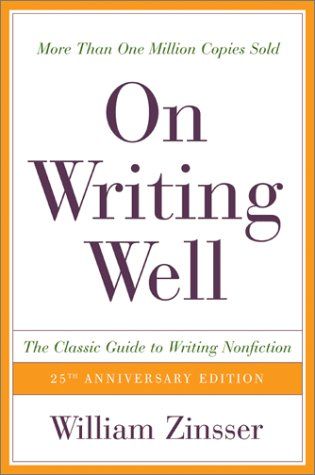
Nova: Exactly! We're diving into the architectural blueprints today, inspired by some brilliant minds. Specifically, we're unpacking "On Writing Well: The Classic Guide to Writing Nonfiction" by William Zinsser, and "Save the Cat! Writes a Novel" by Jessica Brody.
Atlas: Wow, those titles alone suggest a serious approach. Zinsser is a name I’ve heard whispered in reverent tones among writers, and "Save the Cat!" sounds like it’s got some serious structural chops. What's the thread connecting these two, seemingly different, guides?
Nova: Well, Zinsser, who taught writing at Yale and was a prolific author and editor, really championed clarity, simplicity, and finding your unique voice. He believed writing should be a human act, stripping away clutter. He wasn't just teaching grammar; he was teaching how to think clearly on paper. And Brody, on the other hand, brilliantly adapts the screenwriting beat sheet, made famous by Blake Snyder, for novelists. It’s a structural framework that’s all about pacing and character arcs. The common ground? Great content, whether it's a nonfiction essay or a sprawling novel, isn't accidental. It’s built on a strong, deliberate foundation.
Atlas: So, both are essentially saying: don't just write, your writing. That makes me wonder, for anyone crafting content, whether it's a blog post, a presentation, or a full-blown book, where do we even begin with this engineering process?
The Architecture of Narrative: Clarity and Structure
SECTION
Nova: That’s the perfect question, Atlas. Let's start with Zinsser's profound impact. He wasn't just a writing instructor; he was an editor at Life magazine and a syndicated columnist for The New York Times. His work fundamentally reshaped how many approached nonfiction. He was an absolute stickler for what he called "clutter," arguing that most writing is choked by unnecessary words and phrases.
Atlas: I totally know that feeling. You read something, and it just feels... dense. Like wading through intellectual mud. So, what's Zinsser's magic trick for cutting through that?
Nova: His core philosophy is surprisingly simple: "Strip every sentence to its cleanest components." He famously said, "Clutter is the disease of American writing." He’d advocate for ruthless self-editing, questioning every word. Is it necessary? Does it add meaning? If not, out it goes. He wanted writers to be themselves, to inject their personality, but only after they’d achieved absolute clarity. He believed that the best writing is a conversation between the writer and the reader, and you can't have a good conversation if you're mumbling.
Atlas: That’s actually really inspiring. Because I imagine a lot of our listeners, who are trying to make complex ideas accessible in their own fields, probably feel that pressure to sound "smart" by using big words. But Zinsser is saying the opposite: clarity is king.
Nova: Exactly. And it’s not just about word choice. It’s about the underlying thought. If your thinking is muddled, your writing will be too. He was a master of making the complex understandable. His book has been lauded for decades for its practical, no-nonsense advice, influencing generations of writers. Many reviewers say it’s the book they return to again and again, whether they're seasoned journalists or just trying to write a better email.
Atlas: So, Zinsser helps us get the sentences right, make them sing. But what about the bigger picture? The whole "cathedral" you mentioned earlier. How do we ensure the entire structure holds up and guides the reader effectively? Because clear sentences in a jumbled mess are still a jumbled mess.
Your Content's Blueprint: Pacing and Narrative Arcs
SECTION
Nova: That’s where Jessica Brody and "Save the Cat! Writes a Novel" come in. It’s a fascinating evolution of a screenwriting concept. Blake Snyder's original "Save the Cat!" was a phenomenon in Hollywood, teaching screenwriters a 15-beat structural roadmap for crafting compelling stories. Brody took that, adapted it, and showed how it’s just as vital for novels, or really, any long-form content.
Atlas: So, a "beat sheet" for a novel. I’m curious, what does that even mean? Is it like a super-detailed outline, or something more profound?
Nova: It's more profound than a simple outline; it's a structural skeleton that ensures emotional resonance and compelling pacing. Brody breaks down a story into 15 key "beats" or plot points, each occurring at a specific percentage of the narrative. Things like "The Opening Image," "The Catalyst," "Break into Two," "Bad Guys Close In," "All Is Lost," and "Break into Three."
Atlas: That sounds incredibly prescriptive. Doesn’t that stifle creativity? I can imagine some writers pushing back, saying, "I don't want a formula, I want to tell story!"
Nova: That’s the genius of it. It prescriptive, but it’s actually a liberator. Think of it like this: a musician has scales and chords, an architect has principles of load-bearing walls. These aren't limitations; they're the language that allows for infinite creativity within a framework that. Brody’s book received overwhelmingly positive reviews from authors who found themselves unstuck, finally understanding why their stories weren't connecting. It's about understanding the universal patterns of human storytelling that resonate with audiences.
Atlas: So, it's not about you say, but you say it, and how it builds? That’s going to resonate with anyone who struggles with keeping an audience engaged through a long presentation or a complex report.
Nova: Exactly! It’s about the emotional and narrative journey. For instance, the "Save the Cat" moment itself – where the protagonist does something small but good, showing us why we should root for them – that’s pure character arc. And the "All Is Lost" beat, where everything seems to fall apart, that’s crucial for raising the stakes. These aren't just novelistic devices; they're human experiences we connect with.
Atlas: That’s a perfect example. I can see how even in a technical white paper, you need a "Save the Cat" moment where you establish why the problem you're solving matters to the reader, and an "All Is Lost" moment where you show the dire consequences of adopting your solution. So, Zinsser gives us the microscopic clarity, and Brody gives us the macroscopic structure.
Synthesis & Takeaways
SECTION
Nova: Precisely. The core of our podcast today is really an exploration of how great content is a fusion of both. It's the elegant sentence meeting the compelling narrative arc. It’s about stripping away the unnecessary while building a framework strong enough to hold profound ideas.
Atlas: That gives me chills, Nova. Because it means that anyone, from a seasoned author to someone just trying to communicate better in their daily work, can learn to craft content that isn't just understood, but felt. It's about clarity, yes, but also about impact.
Nova: And that impact comes from deliberate choices. Zinsser’s timeless advice on clarity and simplicity grounds us, reminding us that writing is ultimately an act of hospitality to the reader. And Brody’s structural insights, adapted from the world of screenwriting, show us how to guide that reader on an unforgettable journey.
Atlas: So, for our listeners, the tiny step here isn't to write a novel, but to take a piece of content they're working on – maybe a presentation or an important email – and try to identify its core beats. What's the "opening image"? What's the "catalyst" that starts the problem? What's the "climax" where the main point is made?
Nova: Absolutely. It’s about consciously designing that narrative arc. Because when you combine crystal-clear language with an engaging structure, you don't just inform; you inspire. You don't just present ideas; you make them resonate. And that, Atlas, is how you craft content that truly makes an impact.
Atlas: That’s a powerful way to put it. This is Aibrary. Congratulations on your growth!