Uncovering Hidden Patterns: How History Reveals the Future of Culture
9 minGolden Hook & Introduction
SECTION
Nova: Atlas, if you had to review human history in exactly five words, what would they be?
Atlas: Oh, man. That’s a tough one! Let's see... "Ambitious, messy, surprising, repetitive, evolving."
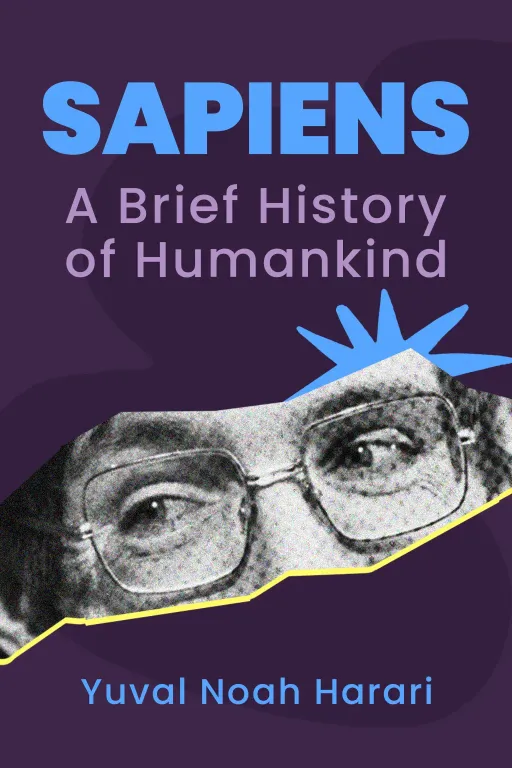
Nova: "Evolving." I like that one. It suggests a direction, a journey, not just a static record. And that's actually a perfect lead-in to what we're dissecting today, because we're diving into two absolute titans that redefine how we even at that messy, evolving story: by Yuval Noah Harari, and by Jared Diamond.
Atlas: Those are massive books! And what’s fascinating is that neither Harari, a medieval historian, nor Diamond, an evolutionary biologist, came from the traditional historical establishment. They both approached history from these wild, interdisciplinary angles.
Nova: Exactly! And that outsider perspective, that willingness to pull from biology, anthropology, geography, it allowed them to see patterns that traditional historians often missed. They weren't just chronicling events; they were excavating the of civilization.
Atlas: So, they're not just telling us happened, but fundamentally changing how we understand it happened, and maybe even what's coming next?
Nova: Precisely. Because, here's the thing: we often have this massive "blind spot" when it comes to history. We tend to see it as a collection of isolated events, like individual waves crashing on the shore, right? But we miss the profound, underlying ocean currents that are actually driving those waves.
The 'Blind Spot' of History: Beyond Isolated Events
SECTION
Atlas: That makes a lot of sense. I mean, when I think of history, I usually think of dates, battles, famous figures… you know, the highlight reel. Why does how we it, this "blind spot," actually matter beyond just academic curiosity?
Nova: It matters because that narrow, event-centric view prevents us from anticipating future trends and truly understanding current cultural shifts. It's like trying to predict the weather by only looking at today's clouds, instead of understanding the global climate system.
Atlas: Okay, so give me an example. How does this blind spot play out?
Nova: Think about a major societal shift, like the rise of the digital age and social media. Many people might point to, say, the invention of the internet, or the iPhone, or specific social platforms, as the sole cause. But that's just the surface, the "what."
Atlas: Yeah, that seems logical. You have the invention, then the change.
Nova: But if you apply the lens these authors give us, you see deeper roots. The cognitive revolution Harari talks about, our unique ability to create and believe in shared fictions—like currencies, or even the concept of a "nation"—that capacity for collective belief was essential for inventing and adopting something as abstract as the internet. It's built on layers of shared agreements.
Atlas: Wow, that’s deep. So, the internet isn’t just a tech invention; it leverages a fundamental human capacity for shared belief that evolved hundreds of thousands of years ago? That's incredible.
Nova: Exactly! And if we only focus on the tech, we miss the deeper, slower-moving currents that made that tech possible and shaped its widespread adoption. We then struggle to understand phenomena like misinformation or echo chambers, because we're not seeing the ancient cognitive wiring they exploit.
Atlas: So, our historical blind spot might actually be making it harder for us to solve current challenges like societal polarization or the complexities of rapid technological change, because we’re only looking at the symptoms, not the deep historical causes?
Nova: Absolutely. These books fundamentally shift our understanding from 'what happened' to 'why it happened.' They offer a powerful, almost diagnostic lens for future analysis.
Unveiling the 'Why': Harari's Revolutions and Diamond's Geography
SECTION
Nova: Speaking of 'why,' these two books offer some of the most compelling answers, dissecting the very architecture of civilization. Harari, for instance, talks about three major revolutions that fundamentally altered humanity. The first is the.
Atlas: Cognitive Revolution? That sounds fancy. What exactly do you mean by that?
Nova: It's essentially the point, around 70,000 years ago, when developed unique cognitive abilities, particularly the capacity for complex language and, crucially, the ability to create and believe in shared fictions or myths.
Atlas: Wait, are you saying our ability to tell stories about things that don't exist, like spirits, or even the concept of a nation or money, is we rule the world? That sounds almost… magical.
Nova: It magical in a way! These shared myths allowed us to cooperate flexibly in large numbers, far beyond the small, intimate groups of other hominids. A chimpanzee troop can't organize a religion or a multinational corporation. Our ability to believe in these collective fictions is what allowed us to build cities, empires, and eventually, global economies. It’s a fundamental human superpower.
Atlas: That is an amazing way to put it. So, these shared fictions are like the invisible glue that holds our massive, complex societies together. And that leads directly into the, I imagine?
Nova: It does. Around 12,000 years ago, humans started cultivating plants and domesticating animals. This sounds like progress, right? More food, settled life.
Atlas: Totally! Farming equals stability, growth.
Nova: But Harari argues it was actually, in many ways, a trap. It led to settled populations, which meant higher birth rates, but also disease, back-breaking labor, and eventually, social hierarchies. It fundamentally altered our behavior and societal structures, creating patterns of inequality and exploitation that still echo today.
Atlas: So, farming, which sounds so simple, actually laid the groundwork for everything from empires to epidemics? That's incredible. It's like we traded one set of problems for a whole new, more complex set.
Nova: Precisely. And then, Jared Diamond comes in with, offering another profound 'why'—focusing on the. Diamond argues that it wasn't racial superiority or inherent intelligence, but rather accidents of geography, that led to disparate societal developments.
Atlas: You mean like, where you were born fundamentally dictated your civilization's trajectory?
Nova: Exactly. Eurasia, for example, had a huge advantage: a large number of easily domesticable plants and animals, like wheat and cows. Plus, its east-west continental axis allowed for the rapid spread of these innovations and technologies because climates were similar along those latitudes.
Atlas: That sounds rough, but it makes so much sense when you think about it. It’s like some parts of the world just got a better starting hand in the game of civilization, not because people were inherently better. How does that geographical determinism still impact us today?
Nova: It created a head start, a momentum. The societies that developed agriculture earlier, domesticated animals, and built up immunities to diseases from those animals, they were the ones who developed writing, specialized labor, and ultimately, advanced weaponry—the "guns, germs, and steel" that allowed them to conquer and colonize other regions. The echoes of that initial geographical lottery are still visible in global inequalities and power structures.
Atlas: So, Harari shows us the internal human architecture, our cognitive leaps, and Diamond reveals the external environmental blueprint that constrained or enabled those leaps. They're two sides of the same coin, explaining the deep, long-term patterns that dictate cultural evolution.
Synthesis & Takeaways
SECTION
Nova: When you put Harari and Diamond together, it's like getting X-ray vision for history. You move beyond the superficial narrative and start to see the deep currents, the fundamental forces that have shaped not just 'what happened,' but we are the way we are, and our societies function as they do. It gives you a powerful lens to analyze current societal challenges and cultural trends.
Atlas: So, for someone who wants to be an expert, to understand the 'why' and not just the 'what,' these books are like the foundational code for understanding the world? It's about seeing the matrix of history, not just the movie playing on top.
Nova: Absolutely. It’s not just academic theory; it's about equipping yourself with the tools to critically assess the world around you. When you see a new cultural trend, instead of just reacting to it, you start asking: "What deep historical currents is this riding on? What ancient cognitive biases is it tapping into? What geographical or environmental legacy is influencing its trajectory?"
Atlas: That’s truly insightful. If history isn't just a story, but a pattern book, what current trend do you think we're misinterpreting most right now because we're missing its historical roots?
Nova: I think it's the sheer speed of technological change. We often see it as a purely modern phenomenon, but its roots are in our ancient cognitive capacity for abstract thought and our agricultural revolution's drive for surplus and efficiency. Understanding that deep lineage helps us temper our awe with a healthy dose of historical perspective. It's a powerful reminder that while the tools change, some human patterns endure.
Atlas: That’s a fantastic challenge for our listeners. To look at something they think is brand new and ask, "What old story is this telling?"
Nova: Exactly. It's about seeing beyond the immediate, beyond the headlines, and into the profound, underlying forces that shape our collective future.
Atlas: What an episode. Thank you for that, Nova.
Nova: Always a pleasure, Atlas.
Atlas: This is Aibrary. Congratulations on your growth!