Uncovering Hidden Histories: The Power of Context in Decision-Making
8 minGolden Hook & Introduction
SECTION
Nova: Atlas, five words. "Uncovering Hidden Histories" – what's your lightning review of that idea?
Atlas: Future vision, past wisdom: Essential.
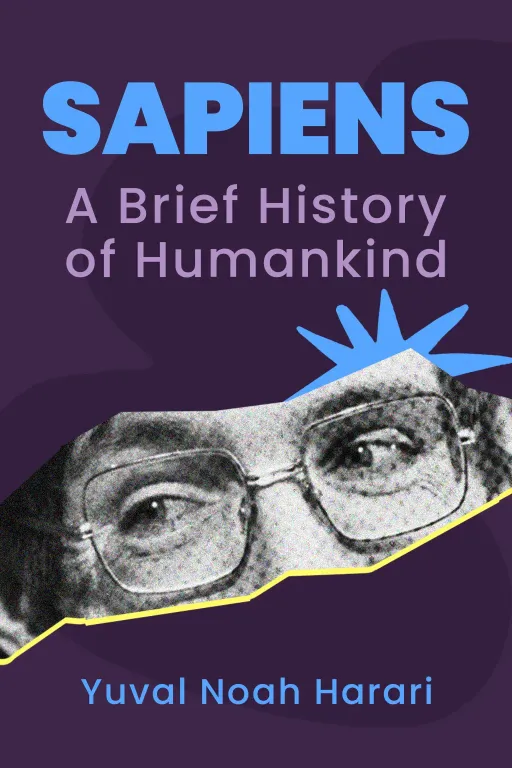
Nova: Ooh, concise! I like that. Mine: "Stop reacting, start predicting now." Because honestly, that's what we're talking about today. We’re diving into two absolute titans of non-fiction, books that profoundly reshaped how we understand human history and our place in it: "Sapiens: A Brief History of Humankind" by Yuval Noah Harari and "Guns, Germs, and Steel" by Jared Diamond.
Atlas: Oh, I love those. Both are massive, sweeping narratives.
Nova: Absolutely. And what's fascinating is that Harari initially wrote "Sapiens" as a world history textbook for his students at the Hebrew University, and it just exploded, showing how hungry people were for accessible, profound historical analysis. Diamond's "Guns, Germs, and Steel" actually won the Pulitzer Prize, cementing its status as a groundbreaking work that redefined how we think about civilization's development.
Atlas: That’s a great way to put it. So we’re talking about books that didn’t just get popular, they changed the conversation. And for our listeners, who are often visionary leaders and strategic builders, the core idea here is about using that historical lens to gain clarity. We often look at today’s headlines, today’s market shifts, and we see them as isolated events. We call that the "blind spot," right?
Nova: Exactly, Atlas. It's like watching a single frame of a movie and trying to understand the entire plot. You see the immediate action, maybe a character's expression, but you have no idea what led to that moment, or what's coming next. You're missing the entire narrative arc, the character development, the underlying themes.
The Blind Spot – Current Events in Isolation
SECTION
Atlas: That makes perfect sense. So, if I'm a leader trying to strategize for next quarter, trying to build a movement, how does this "blind spot" manifest in the real world? Am I just looking at market trends instead of underlying societal shifts, or something even deeper?
Nova: You're hitting the nail on the head. Imagine a company that’s suddenly blindsided by a shift in consumer behavior, say, a sudden demand for sustainable products, or a rapid adoption of a new technology. Their immediate reaction might be to launch a new product line, or double down on advertising. But if they only look at the last quarter's data, they miss the decades-long environmental awareness movements, the generational shifts in values, the slow but steady advancements in alternative energy sources that made this disruption inevitable.
Atlas: So it’s not just a market trend, it’s a deep current that’s been flowing for a long, long time.
Nova: Precisely. They're trying to solve a symptom, not the root cause. This narrow, "presentist" view limits our understanding, makes our strategies brittle, and ultimately prevents us from playing the "long game." We’re constantly reacting instead of anticipating.
Atlas: That sounds rough. But wait, isn't it incredibly hard to constantly zoom out? There's so much immediate pressure, so many urgent fires to put out. It feels like adding more work to an already overflowing plate.
Nova: I hear you. It's not about adding more work, Atlas, it's about shifting your perspective. It's about having the right mental models. And that's where these two books become absolutely indispensable. They don't just give you facts; they give you a framework for seeing these vast, interconnected historical forces at play. They transform those isolated events into products of something much, much bigger.
The Grand Canvas – Historical Context as a Strategic Tool
SECTION
Nova: So, let's talk about that framework, starting with "Sapiens." Harari explores the cognitive, agricultural, and scientific revolutions that shaped humanity. But his most profound insight, for me, is about "shared fictions." He argues that our ability to believe in collective myths – things like money, nations, religions, even corporations – is what allowed us to cooperate flexibly in large numbers, far beyond the small tribes of our ancestors.
Atlas: Shared fictions? So you're saying the very foundations of our economy, our societies, are... stories? That sounds almost subversive for someone trying to build a stable business, a meaningful movement. If it's all a story, is it inherently unstable?
Nova: That’s a brilliant question, and exactly the kind of critical thinking Harari wants to provoke. It’s not about instability; it’s about understanding their constructed nature. When you realize that a company is a legal fiction, a narrative we all agree to believe in, you see its immense power, but also its potential for transformation. You can question its rules, reshape its purpose, rather than just accepting it as an immutable, natural law. It gives you agency.
Atlas: So, it’s not that these fictions are "untrue," but that their power comes from our collective belief, and that belief can shift. That changes everything.
Nova: Exactly. And then, as a powerful complement, we have Jared Diamond's "Guns, Germs, and Steel." Diamond takes a different angle, examining how environmental and geographical factors profoundly influenced the development of civilizations. He argues that things like the availability of domesticable plants and animals, or the orientation of continents, had a massive, long-term impact on which societies developed agriculture, technology, and political complexity first.
Atlas: So, if "Sapiens" shows us the "software" of human history – our narratives, our shared beliefs – then "Guns, Germs, and Steel" is the "hardware" – the physical constraints and advantages of the planet itself?
Nova: That’s a perfect analogy, Atlas! And it’s not just an academic exercise. Diamond shows how the Fertile Crescent, with its abundant wild grains and easily domesticable animals, gave early societies a massive head start. They developed agriculture earlier, leading to population density, specialization, and eventually, the "guns, germs, and steel" that allowed them to dominate other populations.
Atlas: Wow. So understanding that "hardware" and "software" – the deep geographical currents and the shared fictions – how does a strategic builder use that insight today? Is it just about understanding why things happened, or does it tell us what happen?
Nova: It’s not about predicting the future with a crystal ball, but about building resilience and agility. When you understand that a current market trend might be a symptom of a geographical shift in resource availability, or that a societal challenge is rooted in a centuries-old "shared fiction" that’s now breaking down, your strategy becomes far more robust. You can anticipate shifts, rather than being blindsided. It helps you see which "fictions" are under pressure from "hardware" realities, and where new opportunities for creating value might emerge.
Synthesis & Takeaways
SECTION
Nova: So, when you put these two together, they fundamentally shift our perspective. They transform those isolated events we often focus on into products of vast, interconnected historical forces. It’s about seeing the long game.
Atlas: So the deep question then is: what current challenge are facing that might be better understood through this vast historical lens? For our listeners, who are often trying to build something meaningful, trying to create impact, how does embracing this "messy middle" of historical context help them navigate uncertainty and truly build a movement, not just a product?
Nova: It helps them enormously. For visionary leaders and empathetic architects, this historical perspective isn't about dwelling on the past or regretting what happened. It's about understanding the deep currents, the systemic forces, and the narratives that shape our present. It fosters a kind of radical empathy for the systems at play, allowing them to design solutions that are not only innovative but also enduring.
Atlas: It sounds like it's about seeing the entire chessboard, not just the next few moves. It’s about building something truly resilient and meaningful by understanding the very foundations it rests upon.
Nova: Absolutely. It’s moving beyond reactive problem-solving to proactive, purposeful building. It’s how you truly define core value and build something that lasts.
Atlas: That’s a powerful insight.
Nova: This is Aibrary. Congratulations on your growth!