The Unseen Hand: How History Shapes Today's Market Shifts
10 minGolden Hook & Introduction
SECTION
Nova: History as market's secret architect.
Atlas: Wait, you mean spreadsheets?
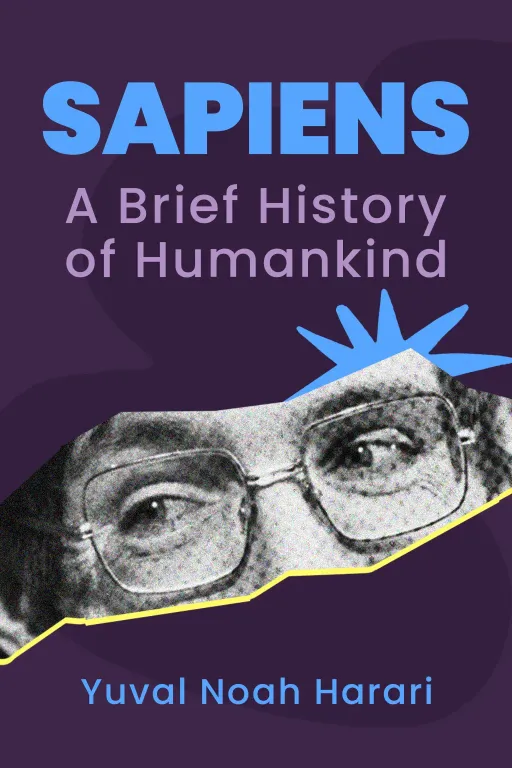
Nova: Exactly! Today, we're pulling back the curtain on the "unseen hand" of history, revealing how it orchestrates today’s market shifts and shapes tomorrow's opportunities. We're diving into the profound insights of two intellectual titans: Yuval Noah Harari’s groundbreaking and Jared Diamond’s Pulitzer Prize-winning. Harari, an Israeli historian, really made waves by blending history, biology, and economics to explain the entire saga of humanity. Diamond, a geographer and ornithologist, shifted the conversation about societal differences from race to environment, winning the Pulitzer for it.
Atlas: Oh, I love that. So we're talking about market forces that are way bigger than quarterly reports or the latest tech trend. My curiosity is definitely piqued. This is going to challenge a lot of assumptions.
The Power of Shared Fictions: How Collective Beliefs Shape Markets
SECTION
Nova: Absolutely. Harari's central argument in is that humans dominate the planet not because we're stronger or smarter individually, but because we can cooperate flexibly in massive numbers. And the secret sauce for that cooperation? Shared myths, or what he calls "collective fictions."
Atlas: Collective fictions? So you’re saying my stock portfolio is just a really popular bedtime story?
Nova: In a way, yes! Think about it. What is money, really? It's not inherently valuable. A dollar bill is just paper, a Bitcoin is just code. But because billions of people it has value, because we collectively agree to trade goods and services for it, it becomes incredibly powerful. That shared belief is the fiction.
Atlas: That makes me wonder, how does something like that even start? Like, one day someone says, "Hey, let's all agree this shiny rock is worth a week's labor"?
Nova: It's far more organic, often evolving out of necessity. Harari illustrates this beautifully by tracing the history of money. Before money, you had barter – a farmer with wheat trying to trade with a shoemaker. Very inefficient. As societies grew, they needed a universal medium of exchange. Early forms might have been shells or cattle, chosen for their durability or scarcity. The crucial step was when societies moved beyond things with intrinsic value to of value.
Atlas: So it’s like a giant, unspoken agreement. And that’s what makes our global economy tick?
Nova: Exactly. Consider the modern corporation. A company like Apple or Google isn't a physical entity you can touch. It's a legal fiction, a story we've all agreed upon, with rights and responsibilities. This fiction allows thousands, even hundreds of thousands, of people to work together towards a common goal, to build products, generate profits, and innovate on a scale that would be impossible if cooperation relied solely on personal relationships.
Atlas: Wow. So the idea of a "brand" or "company culture" is essentially another layer of these fictions, right? It’s the story we tell ourselves and others about what this collective entity stands for.
Nova: You've got it. These fictions provide the glue. They allow us to create complex hierarchies, global supply chains, and intricate financial systems. Without these shared beliefs, our markets, as we know them, would simply collapse. It's a profound insight because it means that understanding market shifts isn't just about supply and demand curves; it's about understanding the narratives, the collective beliefs, and the stories that are gaining or losing traction in the human imagination.
Atlas: So this isn’t just abstract history. For someone looking to innovate or strategize, this changes everything. It’s about crafting a compelling new fiction, a new story that people collectively buy into.
Nova: Precisely. The most successful market disruptors often introduce a new "fiction" or reframe an old one. Think about the rise of social media platforms. They created new forms of social capital and connection, new narratives about identity and community, that billions now believe in and participate in.
Geography's Long Shadow: Environmental Determinism and Economic Power
SECTION
Nova: Now, while Harari delves into the power of abstract human constructs, Jared Diamond, in, brings us back to the stark, undeniable realities of the physical world. He argues that deep geographical and environmental factors, not inherent superiority, explain why some societies developed faster and became more powerful than others.
Atlas: That’s a strong claim. So, is Africa’s economic trajectory still being dictated by the lack of wild horses two thousand years ago?
Nova: That’s a bit of an oversimplification, but it gets at the core of Diamond’s argument. He shows that early advantages, often geographical, created a significant head start. Take the Fertile Crescent, for instance. It had an unparalleled abundance of domesticable plants like wheat and barley, and animals like goats, sheep, and pigs. This allowed for the early development of agriculture, which in turn led to settled communities, food surpluses, population growth, and ultimately, specialization of labor, writing, and complex political structures.
Atlas: So, it was just luck of the draw, geologically speaking?
Nova: In large part, yes. Contrast that with, say, the Americas. While they had some domesticable crops, the suite of large domesticable animals was much smaller – mainly the llama, which wasn't suitable for riding or heavy plowing like horses or cattle. The geographical orientation also played a huge role. Eurasia stretches east-west, allowing crops and innovations to spread easily across similar latitudes and climates. The Americas, however, are oriented north-south, meaning diffusion was much harder due to vastly different climates.
Atlas: That makes sense. It's much easier to spread a crop that thrives in a certain climate along a similar climate zone.
Nova: Exactly. And this "historical lottery" had profound consequences. Early agricultural societies developed immunities to diseases from their domesticated animals. When Europeans arrived in the Americas, they brought with them a devastating array of pathogens against which indigenous populations had no immunity. Germs, along with guns and steel, became powerful tools of conquest, not because of European inherent superiority, but due to a long, complex historical and geographical chain of events.
Atlas: This is fascinating. What does this mean for our modern markets? Are there still "geographical advantages" or "historical legacies" playing out today, even with globalization and technology?
Nova: Absolutely. While we might think we've overcome geographical constraints with modern logistics and communication, the historical distribution of wealth, power, and infrastructure still carries the echoes of these ancient advantages. Nations that industrialized early, often those with those initial agricultural head starts, built institutions, educational systems, and capital that continue to give them an edge. It’s like a runner who started a marathon miles ahead of everyone else. Even if others are catching up, that initial lead is a significant factor.
Atlas: So, for an innovator, this means looking beyond immediate economic data to understand the deep historical currents that might create inherent advantages or disadvantages for certain regions or industries. It's about seeing the entire chessboard, not just the current move.
Nova: Precisely. It challenges the purely economic view of development and market opportunity. It suggests that some "market shifts" are not new at all, but rather the slow unfolding of millennia-old geographical and historical processes. Understanding this allows you to identify where the deep tides are flowing, rather than just chasing the surface waves.
Synthesis & Takeaways
SECTION
Nova: So, when we put Harari and Diamond together, we get this incredibly rich tapestry. Harari shows us how our shared beliefs, our collective fictions, allow us to build complex market structures. Diamond reveals how the very land we stand on, the environment and geography of our ancestors, laid the foundational inequalities that still shape which fictions gain traction and where market power concentrates.
Atlas: That’s actually really inspiring. It means that while history has these deep, powerful currents, our ability to create and believe in new fictions, new narratives, gives us agency. We’re not just passively accepting our geographical inheritance. We can innovate new ways of cooperating, new market structures.
Nova: Exactly. The real market opportunity for the innovator or strategist isn't just about identifying a need; it's about understanding which historical fictions are fading, which geographical legacies are being overcome by new technologies or new narratives, and then crafting the next compelling story that allows millions to cooperate and build something new. It’s about seeing the entire, multi-layered game board.
Atlas: So, how might a historical lens change our approach to identifying the next big market opportunity?
Nova: It pushes you to look beyond the immediate. It makes you ask: What deep-seated beliefs are people holding that might be ripe for disruption? Or conversely, what ancient geographical or historical constraints are we finally able to overcome with new technology or a new collective vision? It's about understanding the deep roots of both opportunity and inertia.
Atlas: That’s a profound thought. It really makes you rethink every assumption about why things are the way they are in the market.
Nova: Indeed. It transforms market analysis from a short-term forecast into a long-term, deeply informed strategy.
Atlas: Thank you, Nova. This has been truly eye-opening.
Nova: My pleasure, Atlas. And to all our listeners, we encourage you to reflect on this: What historical 'fiction' or geographical 'legacy' is currently shaping your industry, and how might understanding it allow you to innovate in ways no one else has considered?
Atlas: That’s a powerful question to end on.
Nova: This is Aibrary. Congratulations on your growth!