The Power of Story: Why Narratives Shape Our Reality
8 minGolden Hook & Introduction
SECTION
Nova: Stop thinking of money as a fact. Think of it as a story. A very powerful, globally agreed-upon story. And that's just the beginning of how narratives shape everything.
Atlas: Whoa, wait. Money as a story? I mean, I know it's not gold coins anymore, but a story? That sounds a bit out there.
Nova: Hear me out, Atlas. It's the ultimate shared fiction, right? We collectively agree it has value, and because of that shared belief, entire economies function. If we stopped believing that story, poof, it's gone. This idea, this profound insight, is at the heart of our discussion today, drawing inspiration from the overarching theme of "The Power of Story: Why Narratives Shape Our Reality." It’s about how much of what we perceive as objective reality is, in fact, a carefully constructed narrative.
Atlas: I see. So, basically, we’re talking about the invisible architecture of our world.
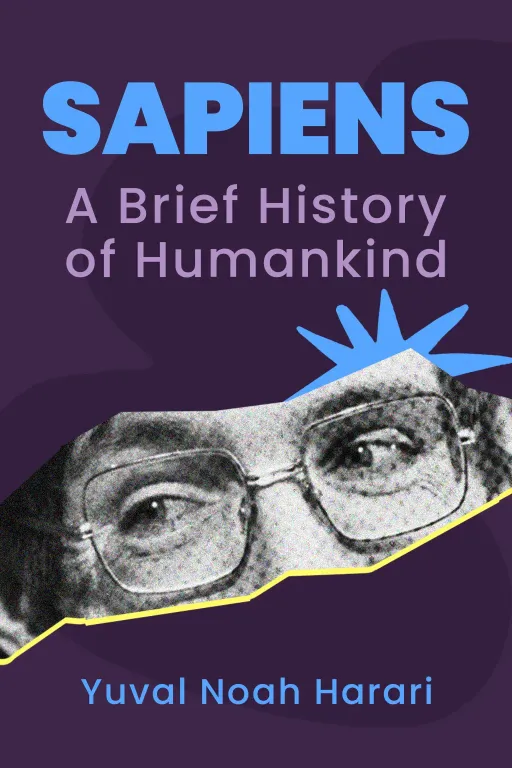
Nova: Exactly! And one of the most brilliant minds to unpack this is historian Yuval Noah Harari, particularly in his global phenomenon,. Harari is fascinating because he bridges so many disciplines—biology, anthropology, philosophy—to tell the human story. This interdisciplinary lens allowed him to illuminate how our unique ability to create and believe in shared fictions is what propelled us to dominate the planet. His work truly brought this concept to the forefront, earning him widespread acclaim.
Atlas: So the "blind spot" isn't just about missing details; it's about missing the very fabric of our shared existence.
The Invisible Architecture of Reality: How Shared Fictions Shape Our World
SECTION
Nova: Precisely. We tend to see facts and logic as the primary drivers of human behavior. But Harari argues that Homo Sapiens didn't conquer the world because we were stronger or faster. It was our unique capacity for large-scale cooperation, which is enabled by believing in these shared fictions, these 'imagined realities.'
Atlas: So you're saying that things like nations, laws, even human rights—they’re all just… stories? That sounds like a radical idea for someone who's spent their life building systems and structures.
Nova: They are incredibly powerful stories, Atlas. Let me give you a classic example Harari uses: a company like Peugeot. Now, a chimpanzee troupe can't form a company. You can't point to Peugeot and say, "There it is!" It's not a physical object. It’s a legal fiction, a story we collectively believe in. Millions of people cooperate—employees, customers, suppliers, investors—all because they believe in the story of Peugeot, its legal existence, its brand.
Atlas: Okay, so a company, a nation, a religion… these are all narratives we've constructed. The cause is human imagination, the process is collective belief, and the outcome is global commerce, complex societies, and even wars.
Nova: Exactly! And the magic is, because we all agree on the story, it becomes real in its effects. It allows us to cooperate flexibly in vast numbers, something no other animal can do. Imagine if just a small percentage of people suddenly stopped believing in the story of a currency. The system would collapse.
Atlas: That’s going to resonate with anyone who struggles with getting large teams aligned. It’s not just about the task; it's about the shared belief in the purpose. But wait, if everything is a story, does that mean objective truth doesn't matter? What about scientific facts?
Nova: A great question, and it's important to distinguish. Harari isn't saying objective truth doesn't exist or doesn't matter. Gravity is real, whether you believe in it or not. But, how we decide what's important, what's ethical, what's valuable—that's where the stories come in. Science itself relies on a shared story of methodology and peer review. The 'blind spot' is ignoring the profound influence of these narratives, even when we're trying to be purely rational.
Atlas: So, for someone who values building robust systems and impactful products, understanding these underlying narratives is actually more crucial than ever. It's not just about the code or the blueprint; it's about the story the code tells, the future the blueprint promises.
The 'Why' Behind the 'What': Unlocking Power Through Purposeful Storytelling
SECTION
Nova: Absolutely. And that naturally leads us to the second key idea we need to talk about, which often acts as a counterpoint to simply recognizing shared fictions: how do we craft and communicate compelling stories to drive action and create impact? This is where Simon Sinek's work, particularly "Start with Why," becomes incredibly illuminating.
Atlas: Ah, Sinek. The Golden Circle guy. I've been thinking about this a lot lately, especially when trying to motivate a team or explain a new product. It feels like everyone always starts with 'what' they do.
Nova: And that's exactly the trap Sinek identifies. Most organizations, most people, communicate from the outside-in: 'Here's what I do, here's how I do it.' But truly inspiring leaders and organizations communicate from the inside-out. They start with the 'why.' The 'why' isn't about profit or features; it's about your purpose, your cause, your belief. It's the foundational story that resonates deeply with people.
Atlas: Can you give an example? Like how does that play out in the real world?
Nova: Think about Apple. In their early days, they were just another computer company. But their 'why' was never just "We make great computers." It was about challenging the status quo, empowering individuals to think differently, to be creative. They believed in putting powerful tools in the hands of the people to change the world. Their 'what' and 'how' flowed directly from that 'why.'
Atlas: Right, like, "Think Different." That wasn't about the specs of a Mac; it was about the philosophy.
Nova: Exactly. Now, consider their competitors who often led with "We make faster, cheaper computers with more memory." They focused on the 'what.' They might have had superior specifications, but they struggled to inspire the same level of loyalty and passion. Apple's story, their 'why,' created a movement. People didn't just buy a product; they bought into a belief system.
Atlas: That’s a perfect example. I can definitely see how that would be critical for building an unbreakable team. If everyone understands and believes in the, they're not just executing tasks; they're fulfilling a shared purpose. But for someone like me, who's always looking for proven paths and building robust systems, isn't it hard to articulate that 'why'? It feels a bit… intangible.
Nova: It can be. It requires deep introspection and clarity. It's not about inventing a 'why'; it's about discovering the authentic one that already exists within yourself or your organization. Sinek argues that people don't buy you do, they buy you do it. And that 'why' is a powerful, compelling story that connects on an emotional level, far beyond logic or features. It's the story that drives human progress.
Synthesis & Takeaways
SECTION
Nova: So, bringing these two powerful ideas together: if Harari shows us that our world is built on shared stories, then Sinek gives us a blueprint for how to build stories, more compelling 'whys' that inspire action and create genuine, lasting impact. The real power of story isn't just about communication; it's about consciously shaping collective reality and driving human progress. It’s about recognizing that the answers aren't just in the facts, but in the narratives we choose to believe and live by.
Atlas: That's actually really inspiring. It means we're not just passive recipients of reality; we're active architects. For our listeners who are driven by impact and creating something meaningful and sustainable, this is profound. Understanding that foundational stories shape everything, from global economies to team dynamics, means we can be more intentional about the stories we tell ourselves and others.
Nova: Absolutely. And that brings us to our deep question today: What foundational story in your life or work could you re-examine or re-tell to unlock new possibilities or deeper understanding? Take some time this week for reflection. Journal your insights. Because the answers, as you know, are within you, too.
Atlas: What a powerful thought to end on. It's about empowering ourselves to rewrite our own narratives, and in doing so, perhaps rewrite a piece of the world.
Nova: Indeed. This is Aibrary. Congratulations on your growth!