The Narratives We Live By: Why Understanding Stories Shapes Your Reality
8 minGolden Hook & Introduction
SECTION
Nova: What if the most solid realities in your life—your money, your nation, even your sense of self—are actually just incredibly compelling stories we've all agreed to believe?
Atlas: Whoa, that's quite a statement, Nova. Are you saying our entire world is just... a collective hallucination? Because my bank account certainly feels real when I check it.
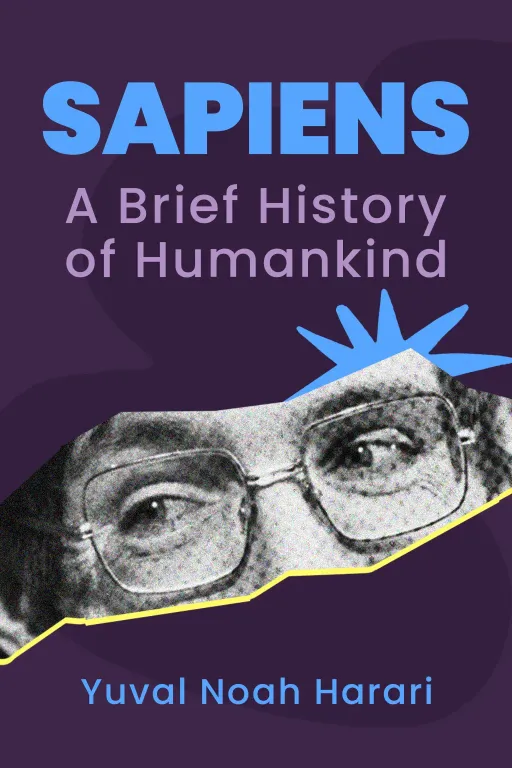
Nova: Not a hallucination, Atlas, but something far more powerful: a shared fiction. Today we're cracking open a truly mind-bending idea, inspired by two phenomenal books: Yuval Noah Harari's and Stephen Fry's.
Atlas: Ah, Harari. The historian who makes you question everything you thought you knew about, well, history!
Nova: Exactly! Harari, a historian with a background in medieval warfare, unexpectedly became a global phenomenon. He blends history, biology, and economics to show how these shared beliefs shape us. And Fry, a beloved actor and polymath, brought the ancient myths to life with such wit and accessibility that he introduced them to a whole new generation.
Atlas: So we're not just talking about history books; we're talking about the that history is built on. I imagine a lot of our listeners, especially those drawn to understanding systems and historical patterns, might initially resist the idea that facts aren't the ultimate foundation.
Nova: That's precisely the blind spot we're addressing. We often think of history as a collection of facts. But the true power lies in the stories we tell ourselves, and the stories that bind us together. Understanding these deep narratives is key to seeing the world clearly, especially now. And it starts with what Harari calls "shared fictions."
The Power of Shared Fictions: How Collective Narratives Build Reality
SECTION
Atlas: Shared fictions. That sounds a bit like... a conspiracy theory, or just plain make-believe. How can something that isn't objectively "true" be the bedrock of our world?
Nova: That's the brilliance of Harari's insight. He argues that what makes humans unique is our ability to cooperate flexibly in large numbers, far beyond the small tribes of our ancestors. And we do this not through biological instinct or direct personal knowledge, but through believing in common myths, or what he terms 'inter-subjective realities.'
Atlas: Okay, so give me an example. What's one of these powerful, shared fictions that isn't "real" but shapes everything?
Nova: Money. Think about it. What is a dollar bill? It's just a piece of paper, or a number on a screen. It has no inherent value. A lion can't eat it, a tree can't grow from it. Yet, billions of people across the globe trust it implicitly. They'll exchange their labor, their food, their homes for it.
Atlas: Right, like, I can't pay my rent with a really nice rock, no matter how much I believe in its intrinsic value.
Nova: Exactly! The cause for its power is our collective belief. The process is that we all agree, often unconsciously, to assign value to it. And the outcome is that this collective belief allows strangers in different countries, speaking different languages, to engage in complex global trade. Without that shared story, our entire economic system would collapse. It's not a lie; it's a useful construct.
Atlas: So it's not about whether it's "true" in a scientific sense, but whether it's "believed" in a social sense. For someone who analyzes systems, this is a fascinating layer beneath the surface. It’s like the operating system running all the applications we see.
Nova: Precisely. Nations are another example. What is a nation? A collection of people, a piece of land. But the idea of "France" or "America" as a unified entity, with specific rights and duties, is a powerful story. It inspires patriotism, sacrifice, and collective action, even among people who will never meet each other. This capacity to believe in stories, to create these shared fictions, is what allowed us to build civilizations on a grand scale.
Atlas: That's incredible. It makes you realize how fragile, yet how robust, our reality is. It's built on these invisible threads of agreement. But wait, if modern fictions shape our visible world, what about the invisible ones that shape our minds? Do these narratives have deeper, older roots?
Echoes of Ancient Myths: How Foundational Stories Persist in Modern Understanding
SECTION
Nova: That's a perfect segue, Atlas, because while Harari focuses on the collective fictions that enable cooperation, Stephen Fry, in, unveils the foundational stories that continue to echo in our individual and collective psyche. These are the ancient myths.
Atlas: Oh, the Greek gods and goddesses, heroes and monsters. I loved those stories as a kid. But are they really more than just, you know, good stories? Do they actually still influence us beyond a cool movie plot?
Nova: Absolutely. Fry brings these ancient Greek myths to life, not as mere historical curiosities, but as profound insights into the human condition. They might not be literally believed anymore, but they provide templates for human psychology, archetypes, and cultural understanding that are still deeply ingrained.
Atlas: Can you give me an example? How does some ancient tale about Zeus or Hades actually show up in my daily life or explain something about human behavior today?
Nova: Think about the myth of Narcissus. The story goes that he was a beautiful youth who scorned all who loved him. He was cursed to fall in love with his own reflection in a pool of water, and he eventually wasted away, unable to tear himself away from his own image.
Atlas: Oh, I know that one! And we have the word "narcissism" from it.
Nova: Exactly. That's a clear example of how these myths provide a framework for understanding psychological patterns. Narcissus isn't just a character; he's an archetype. The cause of his downfall was his self-obsession and inability to see beyond himself. The process involved his fascination with his own reflection. And the outcome was self-destruction. This ancient story perfectly explains a modern personality trait – an excessive self-admiration and a lack of empathy for others.
Atlas: Wow. So it’s not just a word; it’s a whole narrative that helps us understand a complex human flaw. It’s like the myths are a kind of ancient psychology textbook. I've been thinking about how analysts look for patterns, and these myths are just bursting with them, aren't they? They're like the original pattern recognition software for human behavior.
Nova: They absolutely are. Or take "Achilles' heel." We use that phrase all the time to describe a fatal weakness, referring to the one vulnerable spot on the otherwise invincible warrior. These stories are embedded in our language, our art, our therapy, our politics. They are the deep narratives that shape how we perceive heroism, tragedy, love, betrayal, and power. They are the software, if you will, that runs many of our emotional and psychological programs.
Atlas: That’s such a hopeful way to look at it. It means these stories, even though they're thousands of years old, are still giving us tools to understand ourselves and the world around us.
Synthesis & Takeaways
SECTION
Nova: So, whether we're talking about the shared fictions that allow millions to build nations and economies, or the ancient myths that provide blueprints for our deepest psychological patterns, the core message is clear: our perceived reality is often a construct of powerful, enduring narratives. Both historical and mythological.
Atlas: It makes you wonder, then, what narratives am living by. I mean, we're all operating within these frameworks, often without even realizing it. The historian in me wants to uncover them, the analyst wants to deconstruct them, and the seeker wants to understand their impact.
Nova: Exactly. And that's the deep question we want to leave our listeners with today: What core narrative are you currently living by, and how might it be subtly limiting your view of what's possible? Are you operating under a narrative of scarcity, or abundance? Of competition, or collaboration? Of victimhood, or agency? Understanding these narratives isn't just an academic exercise; it's about gaining agency over your own operating system. It's about realizing that if we can collectively create the story of money or nations, we can also choose to rewrite our personal and collective stories.
Atlas: That's powerful. It feels like a call to self-reflection and even empowerment. I encourage everyone listening to take a moment this week to think about the stories you tell yourself about your work, your relationships, your potential. Share your insights with us on social media – we’d love to hear what narratives you uncover.
Nova: Because sometimes, recognizing the story is the first step to writing a new, more expansive one.
Atlas: This is Aibrary. Congratulations on your growth!