The Historian's Edge: Why Deep Time Gives You Strategic Clarity
10 minGolden Hook & Introduction
SECTION
Nova: What if the biggest challenge staring you in the face right now isn't new at all? What if its solution has been hiding in plain sight for centuries, just waiting for you to look deeper?
Atlas: Oh, I love that. Because honestly, Nova, it feels like every problem today is "unprecedented," "unforeseeable," "never-before-seen." We're always in crisis mode.
Nova: Exactly! And that's often our strategic blind spot. We fixate on the immediate, the quarterly report, the next trend. But without understanding the deep currents of history, we miss the true drivers of change. Today, we're diving into how embracing "deep time" gives you an unparalleled strategic edge.
Atlas: Deep time. I like that phrase. It sounds like something out of a sci-fi novel, but you're talking about real history.
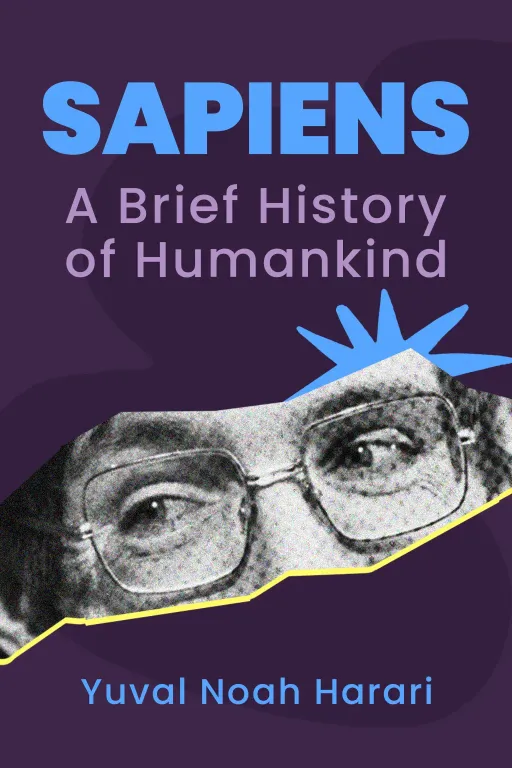
Nova: Absolutely real history, but viewed through a very wide lens. We're drawing insights from two intellectual giants who completely redefined how we see human history: Yuval Noah Harari's and Jared Diamond's.
Atlas: Ah, two titans! And what's particularly fascinating about these authors?
Nova: What's fascinating about both is how they took incredibly broad, multidisciplinary approaches – Harari, a historian who blends biology, anthropology, and economics; Diamond, a polymath physiologist and geographer – to fundamentally challenge our conventional understanding of why we are where we are. They don't just give us facts; they give us entirely new frameworks for understanding the world.
Atlas: So, they're not just giving us facts; they're giving us entirely new lenses to look at the world. I'm already intrigued. Where do we start with these new lenses?
Nova: Precisely. And our first lens comes from Harari, who argues that the real architects of human progress aren't kings or conquerors, or even individual geniuses, but something far more abstract and pervasive.
The Unseen Architect: How Collective Fictions Shape Our World
SECTION
Nova: Harari's central argument in is that what truly distinguishes Homo sapiens and allowed us to dominate the planet is our unique ability to cooperate flexibly in. And how do we do that? Through shared myths, or what he calls "collective fictions."
Atlas: Collective fictions? Like, Santa Claus? Or the Tooth Fairy?
Nova: Even bigger than that! Think about money, nations, religions, or even corporations. None of these exist objectively in nature. A tree is real. A river is real. But a corporation, with its legal personhood, its brand, its mission statement—that's a story we all agree to believe in.
Atlas: Wow. Hold on. So you're saying a company like Apple isn't real in the same way a tree is real? It's a story we all agree on? That sounds a bit out there.
Nova: It is, but it's incredibly powerful. Harari shows how these shared narratives allow thousands, even millions, of complete strangers to work together towards common goals, something no other animal can do on that scale. Imagine a group of chimpanzees trying to build a cathedral or launch a global tech company. Impossible! They lack the fiction.
Atlas: That's a great way to put it. So, for an analytical strategist, someone trying to navigate complexity and build with purpose, understanding these "invisible stories" isn't just academic; it's about identifying the narratives that drive markets, employee loyalty, or even political movements. It's about finding the leverage points, right? The stories people are living by, consciously or unconsciously.
Nova: Exactly. Think about how a powerful brand narrative can command loyalty far beyond the functional utility of a product. Or how a national identity can mobilize millions. The biggest shifts, the most successful ventures, often begin with a compelling collective fiction that people buy into. Leaders aren't just making decisions; they are expert storytellers, narrating reality in a way that aligns vast numbers of people.
Atlas: So, when a company struggles with internal alignment or market adoption, it might not just be a product problem or a management problem. It could be a narrative problem. The collective fiction isn't strong enough, or perhaps it's contradictory.
Nova: Precisely. It's about understanding the deep-seated beliefs and stories that underpin human endeavors. And once you see them, you can strategically work with them, or even create new ones. This shifts your focus from just managing people to managing the stories that manage people.
Beyond the Individual: The Deep Roots of Systemic Advantage
SECTION
Nova: While shows us the power of shared stories, takes us even deeper, arguing that sometimes, the biggest stories are written by geography itself.
Atlas: Oh, I remember that one. Diamond's argument that it wasn't about racial superiority, but environmental factors.
Nova: Exactly. Diamond's thesis is that the disparate trajectories of civilizations – why some developed complex societies, advanced technology, and powerful militaries, while others didn't – can be traced back to fundamental geographical and environmental factors. Things like the availability of domesticable plants and animals, and the geographical orientation of continents.
Atlas: Can you give an example? Like how?
Nova: Take Eurasia. It's oriented on an East-West axis. This meant that domesticated crops and animals, and agricultural innovations, could spread relatively easily across vast distances because climates and daylight hours were similar. Wheat domesticated in the Middle East could thrive in Europe, for instance.
Atlas: And that's not what happened elsewhere?
Nova: Not at all. The Americas, for example, are primarily North-South. Moving a crop like corn, domesticated in Mesoamerica, north to what is now the US, or south to the Andes, meant crossing drastically different climate zones, making diffusion much harder and slower. This seemingly simple geographical fact had profound implications for the development of agriculture, population density, and ultimately, technological advancement.
Atlas: But wait, that sounds a bit like fatalism. Are you saying individual effort and innovation don't matter if you're born on the "wrong" continent? That sounds rough.
Nova: Not fatalism, but rather an acknowledgment of foundational constraints and advantages. It's about understanding that the playing field was never level to begin with. It means recognizing that many "modern problems" – like disparities in global development or resource distribution – aren't just contemporary issues; they're echoes of ancient environmental legacies.
Atlas: I see. So, for an analytical strategist, this isn't about blaming geography, but about recognizing fundamental systemic forces. It’s about understanding that market shifts might be driven by long-term climate patterns, or resource distribution, rather than just quarterly reports or individual genius.
Nova: Precisely. It's about asking, as the original text suggests: "What seemingly modern problem are you facing that might have an echo from centuries past?" For instance, if you're strategizing about global supply chains, understanding the historical flow of trade routes, or the environmental factors that shaped population centers centuries ago, can give you foresight others lack. It’s seeing the underlying, often invisible, forces that dictate the landscape you're operating in.
Atlas: That makes me wonder about the resource wars we see today, or even the geopolitical tensions around certain regions. Are those just new conflicts, or are they replaying very old environmental scripts? It's like the land itself has a memory.
Nova: Exactly! The land, the resources, the historical ease or difficulty of connection between peoples – these aren't just backdrops; they are active characters in the story of strategic advantage and disadvantage. Ignoring them is like trying to understand a chess game by only looking at the last three moves, without understanding the opening setup or the board itself.
Synthesis & Takeaways
SECTION
Nova: So, bringing these two powerful ideas together – the profound influence of collective fictions, and the inescapable forces of deep geography and environment – what we're really talking about is gaining strategic clarity by understanding the "matrix" of history.
Atlas: It sounds like the historian's edge isn't just about knowing dates and names; it's about seeing the underlying code, the deep patterns that still run our world today. It’s about being able to predict the tide, not just react to the waves.
Nova: Exactly. It's about understanding that many of your "new" problems are just old songs with new lyrics, or old patterns manifesting in contemporary forms. This perspective empowers the analytical strategist to move beyond surface phenomena and identify the root causes and long-term implications.
Atlas: That’s actually really inspiring. It means we're not just reacting; we're anticipating the tides. It gives you a much stronger foundation for making decisions. So, what's one concrete step our listeners, especially those confident builders and practical achievers, can take from this?
Nova: Next time you face a truly complex challenge, whether it's a market disruption, a team dynamic, or a strategic pivot, ask yourself: what ancient pattern, what collective fiction, or what deep environmental factor might be at play here? Look for the echoes. See if you can trace its roots back further than your immediate context.
Atlas: I love that. A powerful way to trust your instincts and articulate your insights, as our user profile would say. A true strategic clarity that goes beyond the obvious. It's about applying that deep knowledge.
Nova: Absolutely. It’s about making history your secret weapon. Thank you for joining us on this journey through deep time.
Atlas: And thank you, Nova, for illuminating these profound connections and giving us a whole new way to think strategically.