The Hidden Threads: How Past Narratives Shape Today's World
10 minGolden Hook & Introduction
SECTION
Nova: You know, Atlas, sometimes I wonder if we’re all just characters in a colossal story that started long before we were born. What if I told you that the invisible threads of ancient beliefs and geographic luck, not some grand design, are actually pulling the strings of your modern life? We're talking about forces so subtle, you probably haven't even noticed them.
Atlas: Whoa, that's a bold claim, Nova. Invisible threads, ancient beliefs, geographic luck? That sounds like something out of a fantasy novel, yet you're making it sound like reality. Tell me more, because I’m already intrigued about what those unseen puppeteers might be.
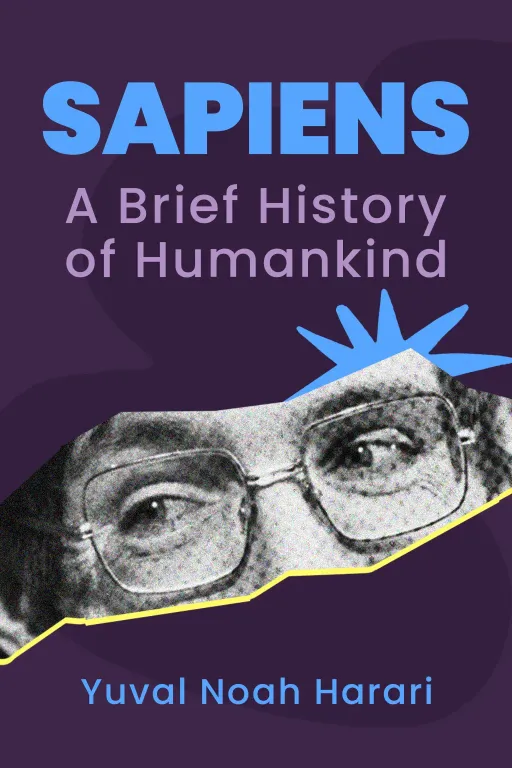
Nova: Well, today, we're pulling back the curtain on those very forces, drawing insights from two monumental books that have profoundly reshaped how we understand human history and our present world. We're talking about Yuval Noah Harari's and Jared Diamond's.
Atlas: Ah, and. Both are titans in their fields. I remember won a Pulitzer Prize, right? It really shook up conventional thinking about why some civilizations advanced faster than others. And Harari, he's a historian who writes with such a broad, synthetic view, pulling together anthropology, biology, economics... it's like he sees the whole forest, not just the trees.
Nova: Exactly! These authors aren't just recounting history; they're offering new frameworks for understanding it. Harari, with his sweeping synthesis, shows us the power of collective belief, and Diamond, with his multidisciplinary lens, gives us a profound geographic explanation for human destiny. It's a powerful combination.
Atlas: So, we're talking about the deep currents that shaped everything. I'm ready to dive into those hidden threads.
Nova: Absolutely. And the first thread we need to tug on is what Harari calls "shared fictions."
The Power of Shared Fictions
SECTION
Nova: Think about it, Atlas. What makes millions of strangers cooperate, build cities, or even go to war together? It's not always rational self-interest. Harari argues it’s our unique human ability to believe in shared myths, in collective fictions. Things that don't exist in the physical world, but we all agree to believe in their existence.
Atlas: So you're saying a dollar bill is just a story? But it so real when I pay my rent! I mean, I certainly believe it enough to work for it. How is this "fiction" different from, say, just simple trust or a shared understanding? Because if it's just a story, why does it have such undeniable power?
Nova: That's the brilliance of it! It’s not just trust; it’s a profound, collective agreement on something that has no objective reality outside of our minds. Take money, for instance. A dollar bill is just paper, or a number on a screen. A gold coin is just a shiny metal. Yet, we all assign immense value to it. This shared belief in money allows a farmer in Iowa to sell corn to a buyer in Japan, without ever meeting, without speaking the same language. It's a massive, flexible system of cooperation built entirely on an imaginary construct.
Atlas: That makes sense, but it’s still kind of mind-bending. So, are you saying a company like Apple or Google is also a shared fiction? We give it legal personhood, we talk about its values and its culture, but it's not a physical thing you can point to, is it? It's just a name and a logo and a bunch of people who agree to work under that banner.
Nova: Precisely! A corporation is a legal fiction. It has rights and responsibilities, it can own property, it can be sued, but it doesn't have a body or a consciousness. It exists only in our collective imagination, upheld by laws and agreements that we, as a society, have invented. This ability to create and believe in these fictions—nations, religions, human rights, corporations—is what allowed to organize into vast, complex societies, far beyond the small, intimate bands of our ancestors. Other species can cooperate, but usually only with close relatives or small, familiar groups. We can cooperate with millions of strangers because we share these stories.
Atlas: Wow, that’s actually really powerful. It means that so much of what we perceive as foundational in our society – our economic systems, our political structures – are essentially elaborate stories we tell ourselves. And it makes me think, for our listeners who are passionate about exploring new knowledge areas, how much of what we accept as "truth" in our learning is just another incredibly well-told, widely-believed fiction?
Nova: It's a fantastic question, Atlas. It forces us to look behind the curtain of perceived reality. These shared fictions are incredibly powerful tools for human progress, but they also mean that our reality is, in many ways, a consensual hallucination. Understanding that gives us agency to question, and perhaps even reshape, the stories we live by.
Geography's Invisible Hand
SECTION
Nova: Speaking of invisible forces shaping our world, let's talk about the one that quite literally lies beneath our feet and has profoundly impacted human destinies: geography. This is where Jared Diamond’s comes in.
Atlas: Oh, I'm ready for this. I remember that book being a huge eye-opener. It really challenged the idea that some cultures were inherently "better" or more "advanced."
Nova: Absolutely. Diamond argues that the major differences in the fates of human societies over the last 13,000 years are not due to inherent differences in people themselves—their intelligence or drive—but rather to differences in their environment. He makes a compelling case that geographical and environmental factors, like the availability of domesticable plants and animals, determined which societies developed agriculture, technology, and complex political organizations first.
Atlas: So, the luck of the draw in terms of where you happened to be born? That's a pretty radical idea, especially compared to the traditional narratives of history focusing on great leaders or specific innovations. What's a prime example of this geographical lottery at play?
Nova: One of the most striking examples is the orientation of continents. Eurasia, for instance, has a predominantly east-west axis. This seemingly simple fact had monumental consequences. Along an east-west axis, regions at similar latitudes tend to have similar climates, day lengths, and ecological zones. This meant that domesticated plants and animals, and even technologies and ideas, could spread relatively easily and quickly across vast distances in Eurasia.
Atlas: Wait, so the shape of a continent determined who got ahead? That completely flips the script on what I learned in history class! I always thought it was about ingenuity or cultural superiority. But you're saying the spread of agriculture was literally easier in Europe and Asia than, say, in the Americas?
Nova: Exactly! In the Americas, the continents are oriented north-south. This means that if you had a successful crop or domesticated animal in, say, Central America, it faced significant climatic and ecological barriers—deserts, rainforests, mountain ranges—to spread north or south. It was much harder for innovations to diffuse. Eurasia got a massive head start in agriculture, which led to denser populations, settled communities, surplus food, and thus specialists—people who could develop writing, metallurgy, political structures, and, yes, even weapons and resistance to diseases.
Atlas: Wow, that's incredible. So, it wasn't just about agriculture, it was about the of agriculture—the surplus, the specialization, the diseases that came from living with animals. That gives me chills, thinking about how that initial advantage just snowballed over millennia. When we look at global inequalities today, how much of it is still a ripple effect from these ancient geographical advantages? Are we still living in the shadow of those initial conditions?
Nova: That's the profound question, isn't it? Diamond isn't saying geography is destiny, but he's arguing it gave some societies a significant initial push. The ripple effects are still very much with us. The diseases that devastated indigenous populations in the Americas and Australia, for example, were often diseases that Eurasian populations had built up immunity to over centuries of living in close proximity to domesticated animals. That's a direct consequence of geographical luck in having those animals available for domestication. It's a stark reminder that our present circumstances are deeply rooted in these ancient, often invisible, threads.
Synthesis & Takeaways
SECTION
Nova: So, we've talked about these invisible stories we tell ourselves, these shared fictions that bind us together, and these invisible geographical advantages that set the stage for entire civilizations. Together, Atlas, they form a powerful, often unseen, matrix shaping our world.
Atlas: It really does make you think. You know, that "Deep Question" from the book content really resonates now: "What cultural belief do you hold today that might have roots in a historical event or idea you've never considered?" I imagine a lot of our listeners are asking themselves that right now. For someone who loves to explore new knowledge, what's the most profound implication of understanding these hidden threads?
Nova: For me, the profound implication is empowerment through awareness. Recognizing that much of our reality is constructed by shared fictions, and that our current world was profoundly shaped by geographical happenstance, isn't about fatalism. It’s about gaining a more nuanced, critical understanding of why things are the way they are. It allows us to step outside the immediate snapshot of the world and see the long, winding movie that led us here. This perspective allows us to question assumptions, challenge narratives, and ultimately, build a more informed and equitable future.
Atlas: Absolutely. It encourages us to be active participants in shaping the stories we tell ourselves, and to continuously question the underlying factors that influence our present. It means that being a curious learner isn't just about absorbing new facts, but about digging into the of those facts and the systems they support.
Nova: Exactly. It's about seeing the world with new eyes, understanding the hidden forces, and becoming a more conscious inhabitant of this complex tapestry we call human civilization. For anyone who's ever felt like the world operates on rules they don't quite understand, these books offer a masterclass in decoding those rules.
Atlas: Amazing. So, listeners, we encourage you to take that deep question with you: what seemingly fundamental belief do you hold that might be a thread from a historical narrative or geographical legacy you've never considered? Share your thoughts with us online!
Nova: This is Aibrary. Congratulations on your growth!