The Hidden Power of Narratives: How Stories Shape Your Culture
9 minGolden Hook & Introduction
SECTION
Nova: What if I told you that the very foundation of your company, your team, even your nation, isn't built on bricks and mortar, or even just rules and regulations? It's built on something far more ephemeral, yet infinitely more powerful: a really good story.
Atlas: A story? Hold on, Nova. For leaders out there building products, building teams, making real decisions, that sounds a bit… poetic. Are we talking about marketing slogans here, or something deeper? Because I imagine many listeners are thinking, "My culture is our values statement, not a bedtime story."
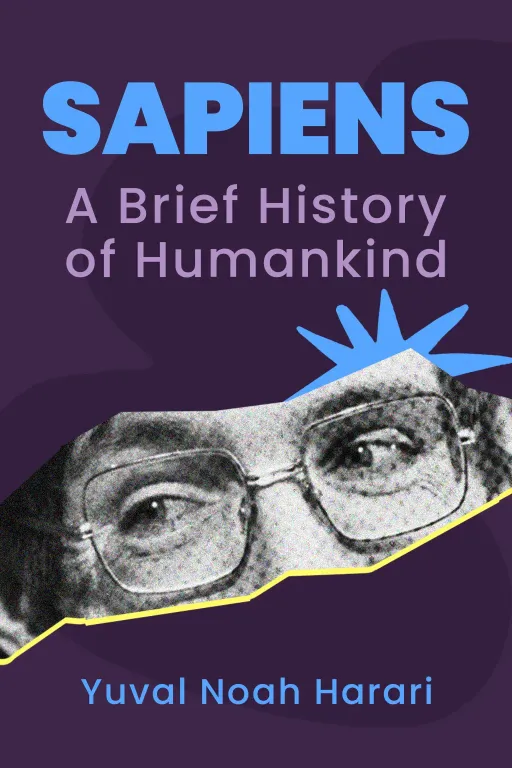
Nova: Oh, it's profoundly deeper, Atlas. And it’s precisely it’s so fundamental that we often overlook it. Today, we're diving into this fascinating idea, heavily inspired by "Sapiens: A Brief History of Humankind" by Yuval Noah Harari. He’s a historian, looking at the grand sweep of humanity, and his unique lens shows us what truly binds us together.
Atlas: Right, Harari's work is widely acclaimed, and it's certainly given humanity a lot to chew on. But how does this grand historical perspective on, say, the rise of civilizations, connect to the day-to-day realities of organizational culture for strategic builders and visionary leaders?
Nova: It connects directly, because Harari argues that humans dominate the planet not because we're the strongest or fastest, but because we're the only species that can believe in shared fictions. These aren't lies; they're collectively imagined realities—like nations, money, or even the very concept of a company. And our company cultures are exactly that: powerful, shared fictions that allow large groups of people to cooperate effectively.
The Unseen Architecture of Culture: Shared Narratives as the Foundation
SECTION
Atlas: So you're saying our entire organization, with its mission, its values, its brand identity, is essentially a sophisticated 'story' we all agree to believe in? That’s a powerful reframing, but for a leader, does it mean our culture is just… made up?
Nova: Not "made up" in a dismissive sense, but "made by us" through collective belief and shared understanding. Think about it: a company isn't a natural entity like a tree. It exists because we collectively believe in its existence, its purpose, and its rules. Harari's point is that our ability to create and believe in these shared fictions is what enables massive human cooperation beyond immediate family or tribe.
Atlas: I see. So it's less about a literal fiction and more about a shared mental model that allows for scale. But how does a company's 'story' actually guide someone's daily actions, beyond just a mission statement on a wall? Can you give an example of a good or bad 'fiction' at play in a workplace?
Nova: Absolutely. Consider two hypothetical tech companies. Company A has a dominant, unspoken narrative: "We are a lean, mean, code-shipping machine. Mistakes are inefficient, and we must always be 'on'." This narrative, this shared fiction, drives engineers to work insane hours, hide errors, and prioritize speed over quality, because the story they believe in values output above all else, often at the expense of well-being.
Atlas: Oh man, I’ve seen versions of that. The 'hero culture' where burnout is a badge of honor. That sounds rough.
Nova: Exactly. Now, Company B's narrative is different: "We are pioneers, pushing boundaries through experimentation. Failure is a data point, and collaboration is our superpower." This story, this shared fiction, encourages engineers to take calculated risks, share their failures openly in retrospectives, and actively seek help, because the collective belief system values learning, growth, and collective problem-solving.
Atlas: That’s a great way to put it. It’s like a collective operating system, but instead of code, it’s made of stories. The first one, the "code-shipping machine," creates a culture of fear and exhaustion. The second, the "pioneers," fosters innovation and resilience. That’s a profound thought for leaders who often focus on processes and rules, missing this deeper, narrative layer.
Nova: Precisely. Missing this deeper layer means missing how influence truly works. It's not just about the rules you write down; it's about the stories that are whispered in the hallways, celebrated in meetings, and embody the unspoken expectations.
Intentional Storytelling: Building Trust and Identity Through Deliberate Narratives
SECTION
Atlas: So, if our cultures are built on these powerful, often unspoken narratives, the question for empathetic leaders and resilient visionaries becomes: how do we intentionally these stories? Because if they're so powerful, leaving them to chance feels like a huge missed opportunity.
Nova: Absolutely. And that leads us directly to our second core idea, which is beautifully explored in "The Culture Code" by Daniel Coyle. While Harari gives us the 'what' – that shared fictions are the bedrock – Coyle gives us the 'how' – how successful groups actively build safety, purpose, and identity through deliberate communication and storytelling.
Atlas: Okay, so if Harari explains culture is made of, Coyle sounds like he's telling us. For empathetic leaders, what are the key ingredients Coyle highlights for crafting these narratives effectively? What does intentional storytelling look like in practice?
Nova: Coyle shows how high-performing groups build trust and identity through clear, consistent communication. This isn't just about mission statements; it’s about sharing stories – of triumphs, yes, but crucially, also of struggles, failures, and the lessons learned. These narratives, consistently told and embodied, are what truly build trust and a strong collective identity.
Atlas: That's interesting. Sharing failures seems counter-intuitive for building trust. Wouldn't that create fear or a perception of weakness, especially for a leader? How does that actually work in practice?
Nova: It’s counter-intuitive until you realize the profound impact of vulnerability. When a leader shares a story about a significant past mistake they made, how they felt, what they learned, and how they ultimately overcame it, it doesn't diminish them. Instead, it fosters psychological safety. It tells the team, "It's okay to make mistakes here, as long as we learn from them." It builds a narrative of resilience, growth, and authenticity.
Atlas: I can see that. It shifts the story from "we must be perfect" to "we grow by overcoming challenges together." That’s a powerful narrative for building an unbreakable culture. So it's not just about telling story, but telling the stories, with intention. For resilient visionaries, what's a simple first step to uncover the 'core stories' currently being told in their organization, and then begin to shape them?
Nova: Start by listening. What anecdotes are repeated in meetings? What unspoken rules govern behavior? What triumphs are celebrated, and what failures are swept under the rug? These are your current narratives. Then, with intention, start crafting new stories that embody the culture you aspire to. Share your own vulnerabilities, celebrate small wins that reflect your values, and consistently reinforce the narratives you want to see flourish.
Atlas: So, make the invisible visible, and then actively, consciously start to rewrite or reinforce the script. It’s about becoming a deliberate storyteller for your organization’s future.
Synthesis & Takeaways
SECTION
Nova: Absolutely. We've gone from Harari's grand view of shared fictions as humanity's superpower – the very architecture of our cooperation – to Coyle's practical guide on how successful teams intentionally build their own powerful narratives. The blind spot, as we started, is seeing culture as static rules; the shift is recognizing it as a living, breathing, evolving story that we are all co-authoring.
Atlas: That's spot on. It's moving from passively inheriting stories to actively, strategically authoring them. For anyone leading a team, this isn't just fluffy theory; it is the bedrock of sustainable growth and, as you said, an unbreakable culture. It’s about understanding that the stories you tell, and importantly, the stories you, are your culture.
Nova: Exactly. So, our deep question for you, our listeners, especially those strategic builders and visionary leaders: What core stories are currently being told in your organization? And do they truly reflect the culture you want to build? Because that alignment, or misalignment, is profoundly shaping everything.
Atlas: And if you're ready to start shaping those stories, remember, it begins with awareness. Pay attention to the narratives around you, the ones you're perpetuating, and then, with intention, start writing the next chapter. Your team is waiting to hear it, and to live it.
Nova: This is Aibrary. Congratulations on your growth!