Culture is Not Just Art: Why It Shapes Everything You Understand
9 minGolden Hook & Introduction
SECTION
Nova: Most people think of culture like a nice painting on a wall, or maybe a fancy dance we do on holidays. Something extra, a pleasant addition to life, right?
Atlas: Definitely. Like a garnish on a plate. It’s lovely to look at, adds a little flair, but it’s certainly not the main course.
Nova: Exactly! But what if I told you culture isn't just the garnish, or even the main course? It’s the entire kitchen, the recipe, the chef's DNA, and the very hunger that drives us all. It's not just a part of life; it’s the invisible operating system running everything we understand.
Atlas: Whoa. That’s a bold claim. It sounds like we’re about to peel back some serious layers.
Nova: We are. Because our conventional view of culture often creates this massive blind spot. We tend to separate it from our daily lives, relegating it to museums or quaint customs. But this perspective severely limits our understanding of history, human nature, and even our current global landscape.
Atlas: I can see that. For anyone trying to analyze complex historical trends or even just make sense of today’s headlines, if you miss the fundamental role of culture, you’re missing a huge piece of the puzzle.
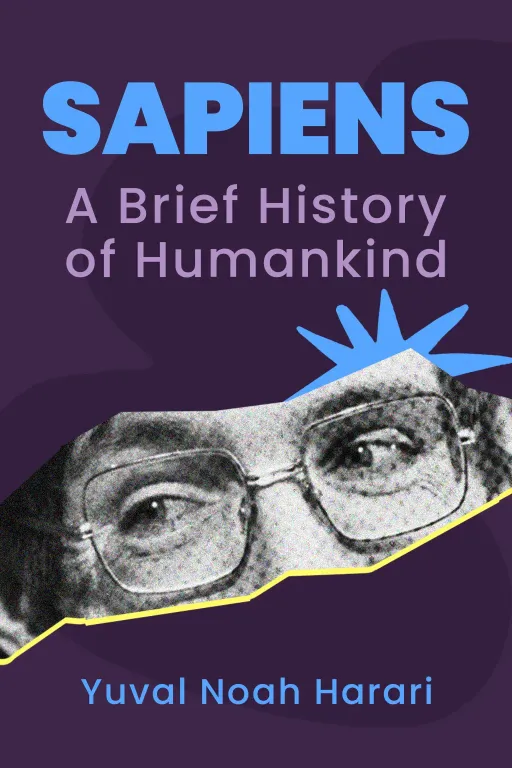
Nova: Absolutely. And two groundbreaking books really force this shift in perspective. We’re talking about "Sapiens: A Brief History of Humankind" by Yuval Noah Harari, and "Guns, Germs, and Steel: The Fates of Human Societies" by Jared Diamond. Harari, a historian by training, has this incredible knack for synthesizing vast amounts of information across disciplines, making his work incredibly accessible yet profoundly challenging to conventional narratives. And Diamond, a physiologist and geographer, brings this entirely fresh, environmental lens to human history that was truly revolutionary when his book came out.
Atlas: So, both authors are approaching history from these really unique, interdisciplinary angles. That’s fascinating. It’s like they're looking at the same human story but through different, powerful microscopes.
Nova: Precisely. And together, they reveal that culture isn't just an outcome of human endeavor; it's a fundamental driver, an invisible architect of our collective journey.
Culture as Shared Fictions: The Harari Lens
SECTION
Nova: So, let’s start with Harari’s incredible insight. He argues that the cornerstone of human cooperation, and ultimately our dominance as a species, is our unique ability to create and believe in what he calls "shared fictions."
Atlas: Shared fictions? So you're saying the entire global economy, nations, religions—they all run on collective stories we agree to believe? That sounds… a bit unsettling.
Nova: It can sound unsettling, yes, but it’s also incredibly powerful. Think about it: a lion can’t convince a thousand other lions to march into a battle for an abstract concept like "homeland" or "democracy." But humans can. We create these abstract ideas – money, nations, human rights – and because enough of us believe in them, they become real in their consequences. They become our social software.
Atlas: Okay, so, like money. A piece of paper, or a number on a screen, has value because we all agree it does. There's no inherent gold backing it anymore; it's a shared fiction.
Nova: Exactly! Consider how complex our global trade is. You can buy something manufactured on another continent, using a currency that has no inherent physical value, from a company you’ve never visited, under a legal system you don't fully understand. That entire intricate dance is facilitated by shared fictions: the value of the currency, the concept of a corporation, the rule of law, the idea of a nation-state. Without these collective beliefs, large-scale cooperation beyond immediate family or tribe would be impossible.
Atlas: That makes me wonder, for anyone trying to understand historical power structures, how does this idea of 'shared fictions' really change their analysis? You can't just look at armies and resources; you have to look at the stories people believed.
Nova: It’s a profound shift. It means that to understand why empires rose or fell, or why certain ideologies gained traction, you have to dissect the narratives that bound people together. Was it a shared religious belief that motivated crusades? A shared national identity that fueled revolutions? These fictions aren't just abstract; they dictate behavior, resource allocation, and ultimately, the course of history.
Atlas: That’s actually really inspiring, in a way. It means if we can these fictions, we can also them, or even them. But also, it makes me think about how powerful things like misinformation or ideological divides can be today. If our reality is so tied to these shared stories, then controlling the narrative becomes everything.
Nova: Precisely. The power to shape those fictions is immense. And it's why understanding this cultural operating system is so critical for an engaged citizen today. It helps us discern which narratives are serving us, and which might be limiting our collective potential.
Culture as Environmental Response: The Diamond Lens
SECTION
Nova: Now, if Harari gives us the internal software of culture – the shared fictions that allow us to cooperate – Diamond brings us the hardware. He shows us the geographical and environmental conditions that shaped where and how those cultural operating systems developed.
Atlas: Hold on. So you're saying geography, not just human ingenuity, is a primary determinant of cultural 'advancement' or even just its particular trajectory? That sounds a bit deterministic.
Nova: It's less about 'advancement' in a moral sense, and more about how environmental circumstances created different pathways for development. Diamond's core argument is that some societies advanced faster than others, not due to inherent superiority of their people, but due to circumstance. Think about the Fertile Crescent.
Atlas: The cradle of civilization, often cited for its early agricultural innovations.
Nova: Exactly. That region was a biological goldmine. It had abundant, easily domesticable plants like wheat and barley, which are calorie-rich and self-pollinating. It also had a wealth of domesticable animals like goats, sheep, cows, and pigs – animals that could provide meat, milk, fertilizer, and labor. These aren't found together in such abundance in many other places on Earth.
Atlas: So the environment literally handed them the tools for an agricultural revolution.
Nova: It gave them a massive head start. Agriculture allowed for food surpluses, which led to population density, which then allowed for specialization – not everyone had to farm. You could have artisans, soldiers, priests, scribes. This density and specialization fostered innovation, writing systems, complex social structures, and eventually, states and empires. These became fundamental cultural developments.
Atlas: I guess that makes sense, but what does this imply for efforts to transfer cultural practices or technologies between disparate regions? Like, if a culture developed in a certain environment, trying to just transplant its 'advancement' somewhere else might not work if the underlying environmental conditions are different.
Nova: That's a crucial point. It explains why some innovations spread easily along certain latitudes because climates and ecosystems are similar, but struggle to cross vast north-south divides. It’s not just about sharing ideas; it’s about the environmental receptivity for those ideas to take root and flourish culturally.
Atlas: So, for an engaged citizen looking at global inequality or regional conflicts today, this lens adds another layer. It’s not just about current politics or economics; it's about these deep, ancient environmental legacies that continue to shape cultural possibilities and challenges.
Nova: Precisely. It helps us move beyond simplistic explanations and understand the profound, long-term impact of factors that were literally etched into the landscape thousands of years ago.
Synthesis & Takeaways
SECTION
Nova: So, when we put Harari and Diamond together, we get this incredibly rich, multi-faceted view of culture. It's the shared fictions we invent to cooperate, it's powerfully shaped by the geographical and environmental hand we're dealt.
Atlas: It’s like saying culture is the software we write, but the hardware it runs on – and what that hardware is capable of – profoundly influences what kind of software we can even imagine or develop.
Nova: That’s a brilliant way to put it, Atlas. This understanding isn't just academic; it fundamentally changes how we interpret everything. If we acknowledge culture as this foundational operating system, it makes us question the narratives we’ve inherited, and truly understand the deep historical forces at play in our world today.
Atlas: And for anyone who seeks understanding, who connects eras, who finds patterns, and is driven by truth, recognizing culture as this foundational operating system isn't just an interesting thought experiment. How might it change your analysis of current global events or historical trends? That’s the real question, isn’t it?
Nova: It’s the question that opens up entirely new pathways of insight. It transforms observations into profound analyses, allowing us to see patterns and connections we might have otherwise missed. It’s about building a more informed perspective, one that reaches beyond the surface.
Atlas: It's about seeing the entire kitchen, not just the garnish.
Nova: Exactly. And once you see it, you can’t unsee it.
Atlas: This is Aibrary. Congratulations on your growth!