Beyond the Battlefield: How History Informs Your Strategic Decisions
7 minGolden Hook & Introduction
SECTION
Nova: Atlas, quick game. Give me a five-word review for "history."
Atlas: Oh, man. Okay. "Old, dusty, boring, irrelevant… wait, that’s five."
Nova: Oh, Atlas, you wound me! You truly wound me! But you know what? That's exactly the strategic blind spot we're tackling today. Welcome to Aibrary, where we're going "Beyond the Battlefield: How History Informs Your Strategic Decisions."
Atlas: Okay, so you're telling me 'old, dusty, boring, irrelevant' is actually 'critical, predictive, foundational, essential'? That's a reframe that I can get behind.
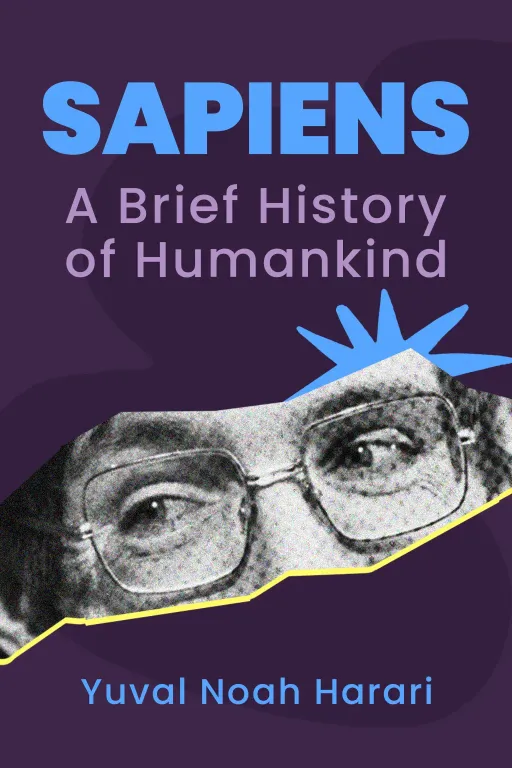
Nova: Exactly! Today, we're exploring why the past isn't some dusty archive, but the most powerful lens for your future strategic moves. We're drawing insights from two monumental works: Yuval Noah Harari's global phenomenon, "Sapiens: A Brief History of Humankind," and Will and Ariel Durant's masterful distillation of human experience, "The Lessons of History."
Atlas: "Sapiens" was everywhere, a true cross-disciplinary hit. And the Durants? I remember hearing they spent their entire lives writing their epic "Story of Civilization," and then basically summarized it in "The Lessons of History." That's dedication!
Nova: It absolutely is. Harari, with his background blending history, anthropology, and philosophy, really synthesized vast knowledge to challenge how we see ourselves. And the Durants, after decades immersed in the human story, gave us this incredible, concise wisdom. So let's dive into that strategic blind spot and how these books illuminate it.
The Blind Spot: Overcoming Short-Termism with Historical Perspective
SECTION
Nova: So many strategists, especially in today's fast-paced world, get caught in what I call the "tyranny of the immediate." They’re looking at quarterly reports, the latest market data, the current news cycle. All crucial, yes, but it often creates a profound blind spot.
Atlas: You mean like staring at the dashboard of a car, perfectly aware of your speed and fuel, but completely oblivious to the road conditions a mile ahead?
Nova: That's a perfect analogy. You see the immediate data, but you miss the deep, recurring patterns woven throughout human history. These patterns aren't about specific events, but about how humans and systems tend to react under certain conditions.
Atlas: But wait, isn't every crisis unique? How can ancient history tell me anything about, say, the rise of AI or volatile crypto markets? Those feel like unprecedented challenges.
Nova: That’s where the magic is, Atlas. It's not that history repeats itself exactly, but as Mark Twain supposedly said, it. Take the printing press in the 15th century. It wasn't just a new technology; it fundamentally transformed information dissemination, challenged religious and political authority, created new social classes, and led to centuries of upheaval. Sound familiar?
Atlas: Whoa. You’re talking about the internet. The printing press was the internet of its day.
Nova: Precisely! The is different, but the to a radical shift in information control, the over narrative, the and that followed—those patterns echo. Understanding that historical rhyme gives you a framework for anticipating the long-term impact of AI, for instance, beyond just its immediate capabilities.
Atlas: So you're saying the changes, but the or the often rhymes? That's actually really insightful for anyone trying to build a robust plan. It's not about predicting specifics, but about understanding the.
The Power of Shared Fictions and Human Nature in Shaping Strategy
SECTION
Nova: And that naturally leads us to the heart of what Harari and the Durants uncover – the invisible forces shaping our world: shared fictions and unchanging human nature. Harari, with his sweeping interdisciplinary approach, really hammered home how our ability to cooperate on a grand scale comes down to believing in shared stories.
Atlas: Shared fictions. You mean like... Santa Claus? Or are we talking more about the narratives that drive entire economies and political systems? Because for someone trying to design with purpose, understanding those foundational principles is huge.
Nova: Definitely the latter, though Santa Claus is a shared fiction too! Think about money, nations, corporations. These aren't physical realities; they are powerful, collective fictions we all agree to believe in. Without that shared belief, they collapse. Harari argues these fictions are what allowed us to move beyond small tribal groups and build complex societies.
Atlas: So, it's not just about what people is real, but what they to treat as real, creating invisible structures that underpin everything. That's a profound thought. How does that connect with the Durants' work?
Nova: The Durants, in "The Lessons of History," provide the perfect counterpoint. They distill millennia of human experience into concise observations on governance, economics, and human nature. Their work shows that while technology and these "fictions" change, the fundamental human behaviors—our desires for power, security, belonging, status—often repeat. They are the constant in the equation.
Atlas: So, the fictions are the operating system, but human nature is the core hardware, always running the same basic programs. That makes me wonder, for a strategist, how do you this understanding? How do you use the knowledge of these 'invisible forces' and 'unchanging human nature' in a practical way?
Nova: It's about being able to see through the surface noise. When you understand that a market trend might be driven by a shared narrative about scarcity, or that team dynamics are often rooted in age-old desires for status and recognition, you gain a massive strategic advantage. You can anticipate shifts, design more resilient systems, and communicate in ways that resonate at a deeper, more primal level. It allows you to build plans that account for the enduring currents of human behavior, not just the fleeting waves of technology.
Synthesis & Takeaways
SECTION
Nova: So, what we're really saying is that history isn't just a record of the past; it's a predictive tool, a pattern recognition engine for the future. It allows you to zoom out, seeing your current challenges not as isolated events, but as part of a grand, evolving human story.
Atlas: That's a powerful shift in mindset. The real 'strategic foresight' isn't just about predicting the next quarter, but understanding the millennia-old dance of human cooperation and competition. It's about seeing the forest AND the trees, but knowing the forest often tells you more about where the trees are headed.
Nova: Exactly! It's about asking, "What historical pattern is this current challenge part of?" not just "What is this challenge?" And for our listeners, the architects and seekers who crave mastery and foundational principles, this means trusting that deep intellectual curiosity. Look beyond the immediate dashboard. Dive into a history book, or revisit a classic like "Sapiens" or "The Lessons of History."
Atlas: That's a different kind of mastery. It's not just about data analytics, but about human analytics on a grand scale. So, for anyone facing a complex problem right now, maybe the first step isn't another spreadsheet, but a trip to the library.
Nova: Precisely. The battlefield might change, but the strategic lessons often remain.
Atlas: And that's a lesson worth learning.
Nova: This is Aibrary. Congratulations on your growth!