Beyond the Battlefield: How History Informs Your Strategic Decisions
9 minGolden Hook & Introduction
SECTION
Nova: Atlas, five words. How would describe "history"?
Atlas: Oh, I like that. Five words for history… Hmm. Echoes, patterns, ignored, powerful, future.
Nova: "Ignored, powerful, future." That’s a brilliant way to frame it! Because so often, we think of history as this dusty, academic pursuit, right? Something for the scholars, safely tucked away in the past. But what if it’s actually the most potent strategic weapon in your arsenal for navigating the future?
Atlas: Exactly! For anyone who’s trying to design with purpose, trying to build something robust, the past feels like a luxury we can’t afford in a fast-paced world. But you’re suggesting it’s the exact opposite.
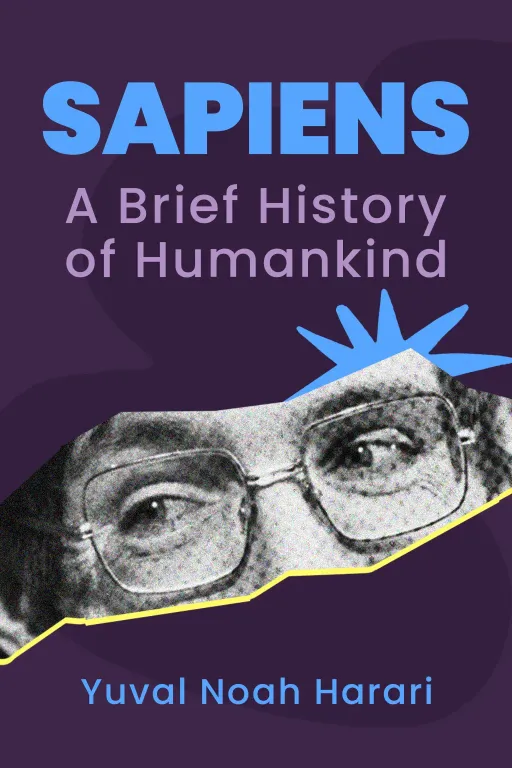
Nova: Absolutely. Today, we’re diving into a deep truth, one that underpins our conceptual discussion, which we're calling "Beyond the Battlefield: How History Informs Your Strategic Decisions." And we're drawing profound insights from two monumental works: Yuval Noah Harari's "Sapiens" and Will Durant's "The Lessons of History." Harari, with his sweeping, almost poetic narrative, shows how our shared fictions shaped humanity. Durant, on the other hand, a Pulitzer-winning historian who spent decades distilling millennia of human experience, gives us these concise, almost brutal observations on the recurring patterns of governance, economics, and human nature. They're like two sides of the same coin, both screaming that the past isn't over.
Atlas: That makes me wonder, though. For a strategist staring down a complex problem, maybe a market shift or a team dynamic that feels unprecedented, how do you convince them to look back at ancient civilizations or philosophical treatises? Isn't that just a massive "blind spot" in itself, to think the past holds all the answers?
The Blind Spot – Overcoming Short-Termism with Historical Perspective
SECTION
Nova: Well, that's precisely our first core topic, Atlas: "The Blind Spot." Many strategists, especially in high-stakes environments, are so focused on immediate data – quarterly reports, daily news cycles, the latest market fluctuations – that they completely miss the deep, recurring patterns woven throughout human history.
Atlas: Right, like trying to navigate a super-yacht by only looking at the speedometer and current wave height, completely ignoring the tide charts, the long-term weather patterns, or even the fundamental physics of the ocean.
Nova: A perfect analogy! Imagine a tech company in the early 2010s, obsessed with user growth and immediate monetization metrics. They're looking at all the right numbers, but they might be blind to a deeper, historical pattern: the public's cyclical relationship with privacy and corporate power. History shows us repeated instances of societies pushing back against unchecked authority, whether it's monarchies, monopolies, or in this case, data-hungry corporations.
Atlas: So, they're seeing the immediate data, but they're not seeing the historical tide that's inevitably going to turn on data privacy, for example. So, for a strategist who's trying to build robust plans, how do you even begin to identify these long-term trends? Are we talking about digging through dusty archives or is there a more accessible way?
Nova: That’s where Durant’s "The Lessons of History" becomes invaluable. He distills millennia into these almost aphoristic observations. He shows that while technology changes at warp speed—we go from horse-drawn carriages to self-driving cars—fundamental human behaviors, our greed, our fear, our desire for connection, our susceptibility to groupthink, often repeat. A speculative bubble in tulips in 17th-century Holland, as Durant might point out, has eerie parallels to a dot-com bubble or a crypto craze. The assets change, the technology changes, but the human psychology driving the boom and bust? That's a recurring pattern.
Atlas: That’s a bit like saying, "The stage props change, but the play is fundamentally the same human drama." But wait, for someone who needs to design with purpose in a complex system, how do you differentiate between a genuine historical pattern and just a coincidence? I mean, everything repeats eventually, right? How do you know what to pay attention to?
Nova: That’s the art of it. It’s not about finding exact replicas, but understanding the underlying. Durant would argue that if you see similar outcomes across vastly different cultures and time periods, driven by similar human motivations, then you're likely observing a pattern. For instance, the rise and fall of empires, the cycles of wealth concentration and redistribution, the ebb and flow of individual liberty versus collective security. These aren't coincidences; they're echoes of human nature playing out on a grand scale. And understanding that gives you an edge. It allows you to anticipate shifts, not just react to them.
Unveiling Invisible Forces – Shared Fictions, Human Nature, and Strategic Impact
SECTION
Nova: And this naturally leads us to an even deeper layer of historical insight: the invisible forces at play. Harari, in "Sapiens," gives us a profound perspective on this. He argues that what truly allowed to dominate the planet wasn't our individual strength, but our unique ability to cooperate flexibly in large numbers, often around "shared fictions."
Atlas: Shared fictions? Are we talking about myths and legends? Or something more insidious? For someone tasked with optimizing complex early-stage dynamics, these invisible forces sound… well, invisible. How do you even begin to leverage them?
Nova: He means things like money, nations, religions, and even corporations. These aren't biological realities; they're stories we collectively agree to believe. The dollar bill has value because millions of people it has value. A company like Apple exists as a legal fiction, a story that enables thousands of people to cooperate towards a common goal. These fictions are incredibly powerful because they create shared meaning and trust, allowing for coordinated action on a massive scale.
Atlas: Wow, that’s actually really inspiring. So, you’re saying that understanding the stories people tell themselves, or are told, is more important than just the raw market data? For someone building complex systems, whether it's a new product or a team, how do you even identify these crucial 'fictions' and leverage them without being manipulative?
Nova: It’s about understanding the narratives that drive behavior. For example, a startup's culture is a shared fiction. Its mission statement, its values—if genuinely embraced, they become a powerful force for cooperation. If they're just words on a wall, they crumble. In markets, brand loyalty isn't just about product quality; it's about the story the brand tells, the identity it helps consumers project. Economic bubbles, again, are often fueled by a shared fiction of endless growth, overriding rational analysis.
Atlas: So, connecting this back to Durant, while the specific fictions change—from ancient gods to modern brands—the human for these unifying stories, and our fundamental responses to them, remain constant. It's the human operating system that hasn't changed.
Nova: Exactly! Durant's observations on human nature—our drive for power, our search for meaning, our tribal loyalties—provide the bedrock. Harari shows us the sophisticated architecture we build on that bedrock with our shared fictions. A strategist who understands that a market isn't just a collection of transactions, but a web of shared beliefs and narratives, can anticipate shifts far more effectively. They can see why a team might resist a logical change if it clashes with a deeply held, perhaps unspoken, "fiction" about how things be done.
Atlas: That gives me chills. So, how does a strategist actually 'zoom out' and apply this grand, evolving human story to their current challenges? What's the first step for someone who wants to integrate this perspective, not just as an academic exercise, but as a real competitive advantage?
Synthesis & Takeaways
SECTION
Nova: The first step is to cultivate what we might call "historical humility." It’s acknowledging that your current challenge, no matter how unique it feels, likely has precedents or echoes in the past. It’s about asking, "What human behaviors am I seeing here that have played out before?" "What shared fictions are at play?" It's like having a superpower that allows you to see the roots and branches of a problem, not just the leaves.
Atlas: That’s a great way to put it. For anyone seeking mastery, who approaches challenges analytically and designs with purpose, history isn't just a subject; it's the ultimate strategic toolkit. It's about seeing the matrix, not just the code. It’s about understanding that the battlefield isn't just in front of you, but stretching back through time, offering lessons if you know how to read them.
Nova: And that’s the deep question we started with: How might a long-term historical perspective change your approach or predictions? It changes everything because it moves you from reacting to symptoms to understanding systemic causes. It allows you to build plans that are antifragile, because you've accounted for the enduring patterns of humanity.
Atlas: That’s actually really inspiring. So, next time you're facing a strategic challenge, don't just look at the latest spreadsheet. Take a moment. Ask yourself: What would Harari say about the shared fictions at play? What would Durant observe about the human nature repeating itself? The answers might just redefine your entire approach.
Nova: Indeed. The past is not dead; it’s not even past. It’s the constant hum beneath every strategic decision we make today.
Atlas: Powerful stuff.
Nova: This is Aibrary. Congratulations on your growth!